Conductivity floor
An electromagnetic flow meter needs a minimum conductivity, and a near-deionised loop can sit below it.
This is an adjacent application, and it is worth saying so. The fluid is glycol-heavy rather than the dilute premix a data-centre loop runs, the qualification language is automotive, and volumes are counted in production units rather than halls. The seal physics are unchanged.
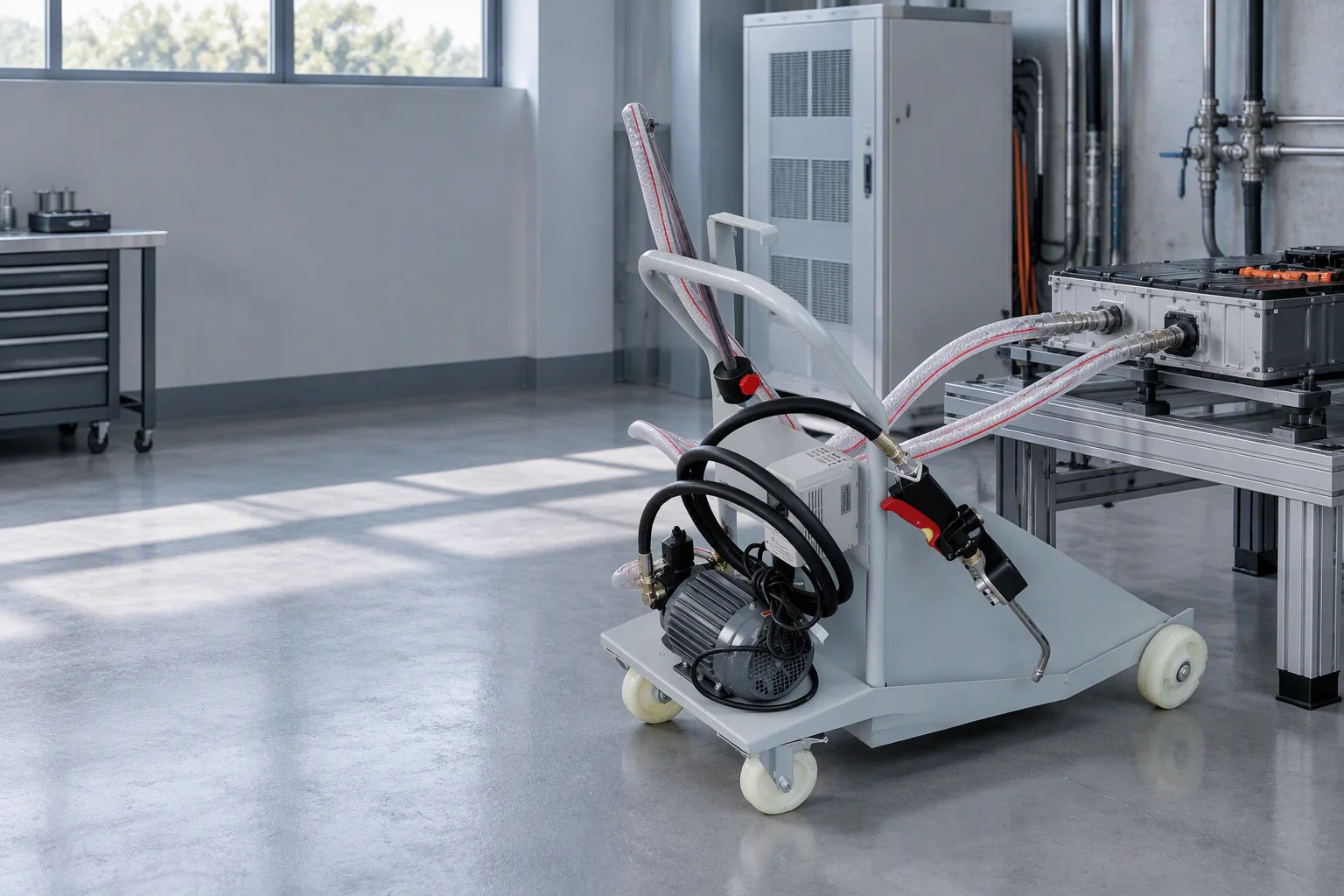
Module fixture · coolant lines coupled, charge cabinet behind
EPDM is a non-polar hydrocarbon elastomer. That is why it performs in water, glycol and phosphate-ester fluids, and poorly in hydrocarbon oils. Cure system decides what the fluid extracts.
| Row | Figure or mechanism | Basis |
|---|---|---|
| 10 % or less · target | At PG50, after 168 hours at 70–100 °C. | |
| 5 % or less · target | The same immersion, with extraction reported. | |
| ISO 1817 | A figure to ask a supplier for and verify, not a limit published here. | |
| Peroxide | Sulphur cure introduces sulfate; it shows as chemistry drift, not a visible leak. | |
| 1.68–8.20 mPa·s | Across 15 % to 55 % propylene glycol. Turndown and low-flow cut-off move with it. |
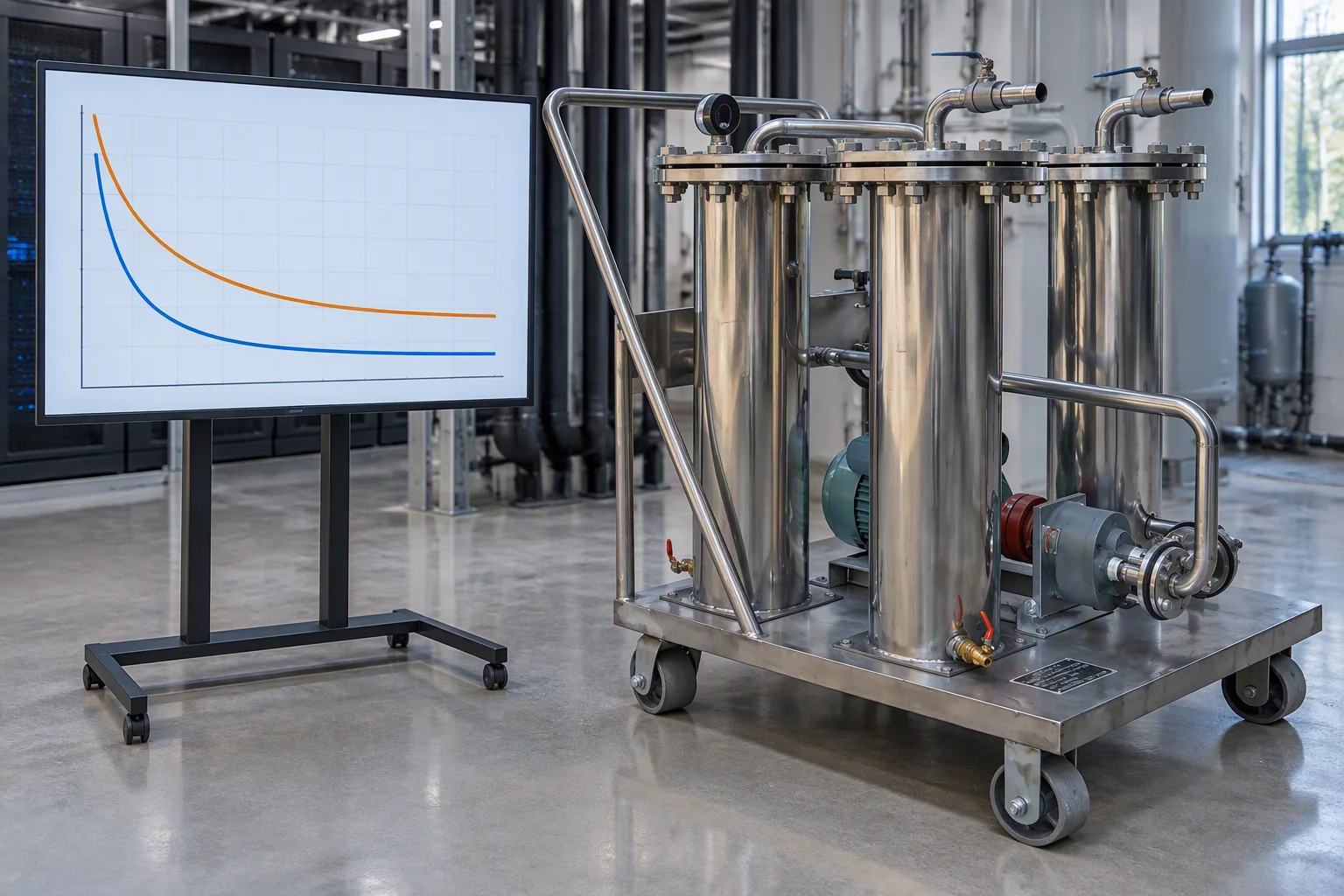
A side-stream unit treats a fraction of circulating volume and polishes the loop over hours. Full-flow filtration of a large volume demands pump energy and footprint, which is why side-stream is the usual answer here.
| Item | Figure |
|---|---|
| Nominal media | 90 % retention |
| Absolute media | 99.98 % retention |
| Sizing, full flow | about 2× the required rating |
| Sizing, side-stream | about 10× the required rating |
| Change-out trigger | 35 psid, inside a 60 psid collapse limit |
A leak here is a safety event rather than a cost event, so the detection requirement is derived from the fluid and the enclosure rather than from a catalogue page.
An electromagnetic flow meter needs a minimum conductivity, and a near-deionised loop can sit below it.
Conductive rope sensing is rated from 15 % propylene glycol by weight upward, covering PG15, PG25 and PG35.
A blend above that envelope needs the tray-probe arrangement rather than rope coverage alone.
Point probes inside enclosures, with alarm latching and a reset that requires a deliberate action.
Leave your work email and the model code. One datasheet per model, with position resolution and locating repeatability stated as separate rows.