
A specification becomes a shipment in six steps
Each step names what the buyer supplies and what this company does with it.
Nothing here is a promise about the manufacturing end of the chain. The plant that made the part is not ours; the specification, the test and the paperwork are.
Six steps · five documents · one working day
Steps 1 to 3: specification, selection, sample
Specification
Fluid, glycol concentration, temperature, flow, connection sizes, annual volume.
We read the schedule against the catalogue and name what the catalogue cannot cover.
Selection
The loop problem, where no model code is known yet.
We propose codes with the numbers that decide the choice.
Sample
A delivery address and the trial quantity.
The sample is bought, run through the incoming tests and shipped with its test record.
Steps 4 to 6: order, inspection, shipment
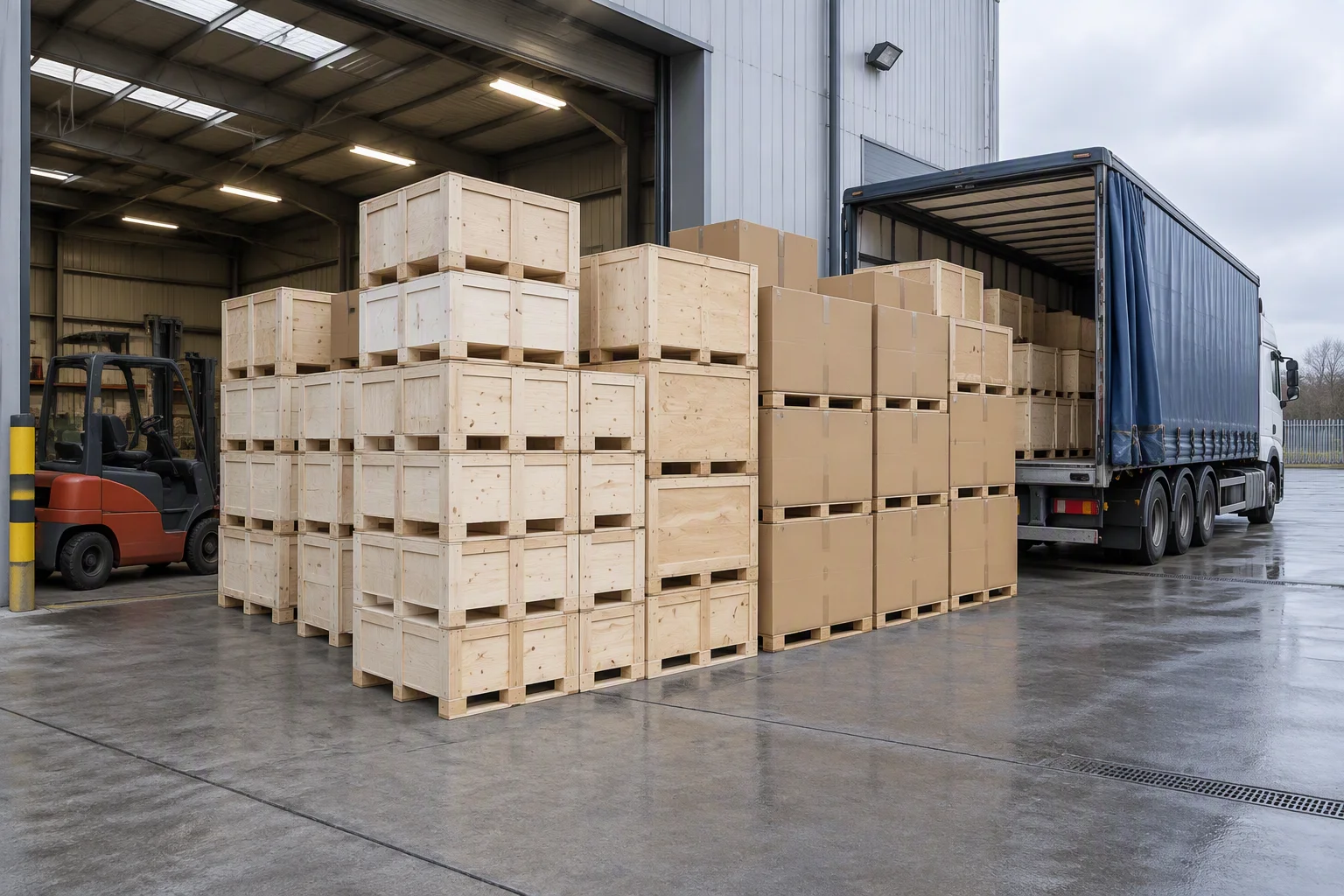
| 4 Order | A purchase order naming model codes, quantities, destination and incoterm. The specification is frozen against the drawing revision. Payment is a deposit against the order with the balance against the shipping documents; a letter of credit is accepted for a larger order, and the split is confirmed on the quotation. |
|---|---|
| 5 Inspection | The buyer supplies nothing. Dimensional check, hydrostatic proof, immersion sheet and packaging check. |
| 6 Shipment | Consignee and the documentation the destination requires. Pack, document, book the freight, send the document set. |
The fields that change the answer
Decides the compound and the seal material.
Decides the class of hose, pad or cable.
Decides the bore and the pressure band.
Decides the fitting family. A thread that matches on pitch but not standard leaks.
Decides whether a code is stocked or made to order.
Decides the document set.
The four verbs, and what each one produces
Integrate
A loop schedule usually spans three or four product lines, and the codes have to agree on bore, thread and material.
Stock
The codes a maintenance window cannot wait for, held in Shenzhen.
Ship
Packed, documented and booked. There is no plant behind this catalogue, and this page will not pretend there is.
Minimum order quantity and lead time
A stocked code ships from stock in small quantities. A made-to-order code, or a die-cut part, carries a minimum order quantity; the figure for that code is on the quotation.
Repeat-order lead time follows the stock position of that code when the order is placed. The sample window in this class is 5 to 10 working days.
| MOQ | per model code, on the quotation |
|---|---|
| Sample lead time | 5 to 10 working days |
| Sample cost | free on thermal materials, with custom die-cutting |
| Repeat order | quoted against the stock position of that code |
How the specification is held stable between batches
| The contract | the drawing revision; an order names the model code and the revision |
|---|---|
| A reorder naming no revision | checked against the last revision shipped to that buyer, and the check is written on the order |
| Every batch | ships with its inspection record, so batch two can be compared with batch one |
The document set that ships with the goods
| Documents | packing list · commercial invoice · certificate of origin · batch inspection record · datasheet per model code |
|---|---|
| Destination declaration | named on the quotation, so it is priced before the order |
| One address | sales@ems-cool.com handles all of it |
-
EMS-CF-F1-10 The datasheet that travels with the carton. PDF