Point probes in catch trays
One probe per tray, 0 to 4.8 mm above the surface. Local, unambiguous.
A fab already filters harder than a data centre. What changes is the consequence: a particle excursion is a yield event, not a downtime event. The loop is many parallel small ones, and the sensitive item is the test socket.
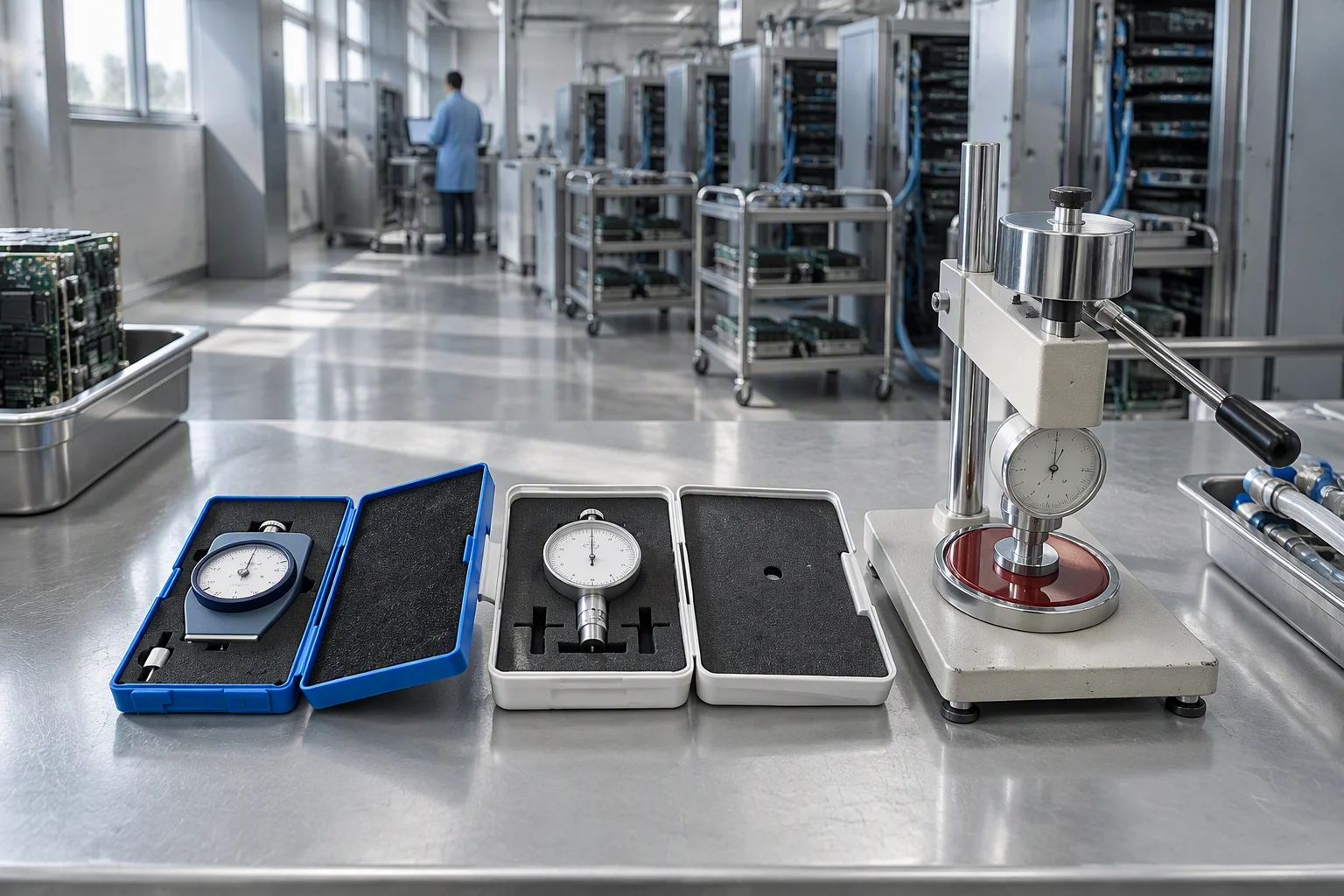
Burn-in bay · trays into racks, filtered ceiling
Above half the channel width, blockage probability at an entrance or a bend rises materially. A blocked microchannel loses local heat rejection, so the part runs slower before anything fails.
| Figure | Value | Category and basis |
|---|---|---|
| Cold-plate channel | 100–300 µm | A channel dimension, not a rating. |
| Blockage threshold | >150 µm | Half the channel width, at entrances and bends. |
| Supply-chain specification | 100 & 200 µm | A tightening specification band moving toward 50 µm and below. Not a filter rating. |
| Cold-plate cleanliness | <5 µm | A protection rating on the operating element. |
| Verification | VDA 19.1 · ISO 16232 | Internal flushing extraction onto a 2 µm analysis membrane. |
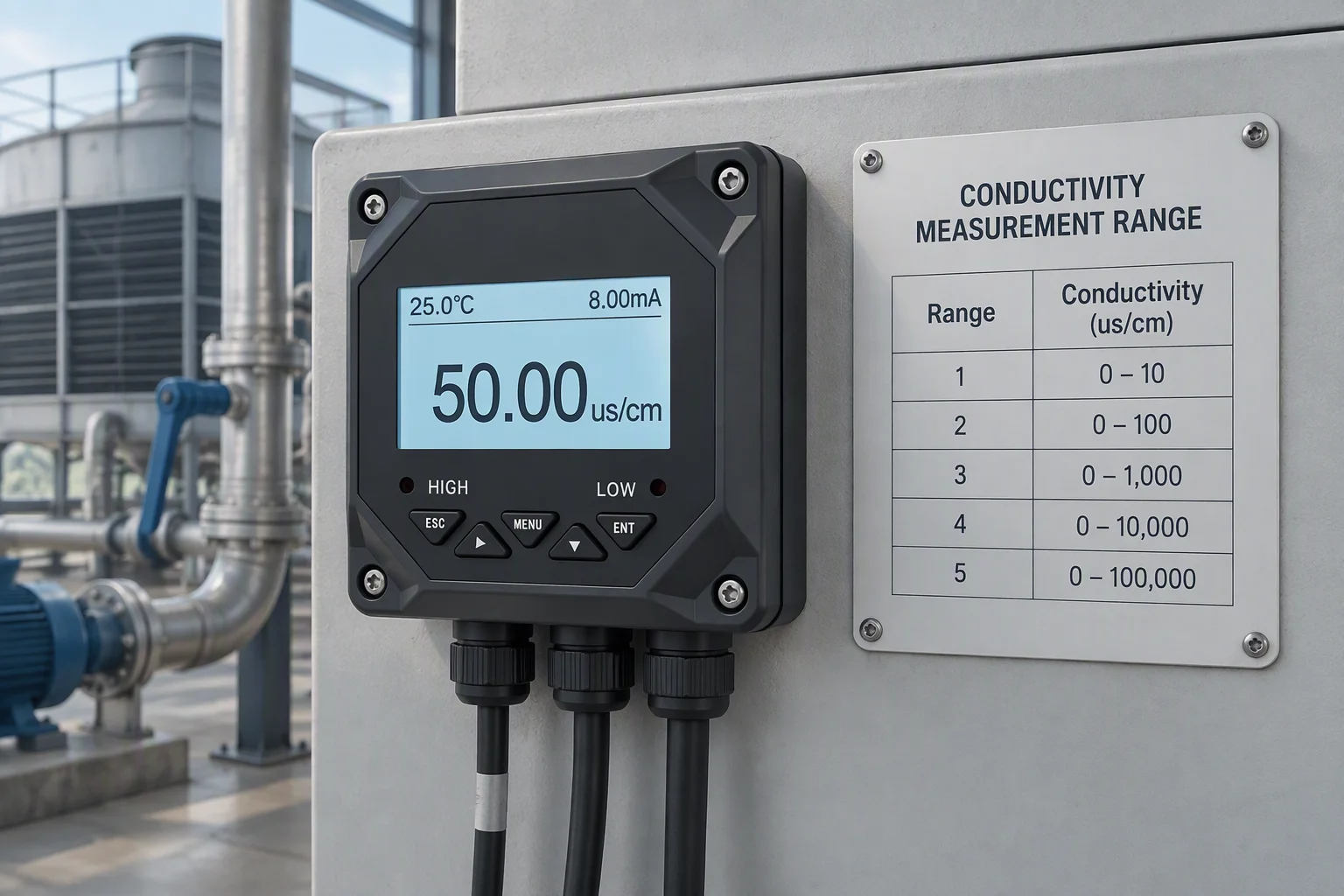
A band without its loop type is not a target. The measurement range spans both, so one part number serves a de-ionised technology loop and a glycol or facility-water loop.
| Item | Figure |
|---|---|
| Conductivity range | 0.04–20 µS/cm at 0.01 cm⁻¹ · 10–200 µS/cm at 0.1 cm⁻¹ |
| De-ionised technology loop | 0.2–20 µS/cm at pH 8.0–9.5 |
| Glycol or facility-water loop | 50–300 µS/cm at pH 7.0–9.0 |
| Nominal media | Quoted at 90 % retention |
| Absolute media | Reaches 99.98 % retention |
| Sampling and calibration | Laboratory panel every 50–100 days · calibration interval printed per instrument |
A mop is not acceptable on a gowned floor. Point probes sit in catch trays and rope runs on the manifolds. Either detecting raises an alarm, and both detecting triggers intervention.
One probe per tray, 0 to 4.8 mm above the surface. Local, unambiguous.
Coverage along the run, so an unlisted joint is still supervised.
Set against the measured site noise floor, not accepted from a factory default.
1 to 300 µA. Flux or swarf crosses the 150 µA setpoint with no water present.
150 µA held 20 s separates a drip from a splash.
Every entry is gowned and logged, so a nuisance trip costs gowning time twice.
Leave your work email and the model code. One datasheet per model, with position resolution and locating repeatability stated as separate rows.