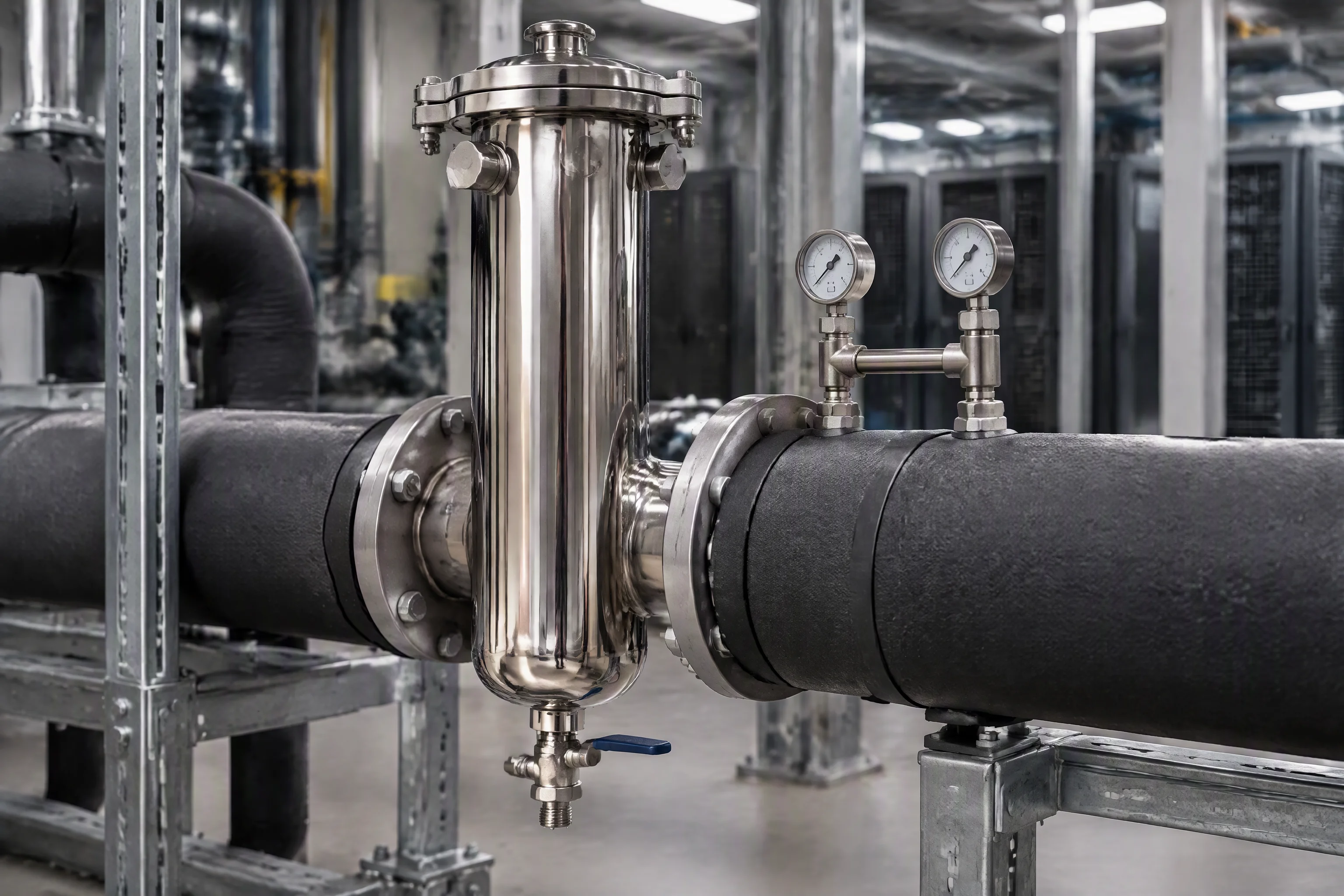
Quick disconnect duty cycles: what the datasheet leaves out
A coupling arrives with a pressure rating and a connect-cycle figure, and the two are quoted as if they were independent. On a real row they are not. Every connect wipes the same seat, flexes the same latch and loads the same chamfer, so the number of times a loop is opened is what decides when the joint starts leaving a drop on the tray.
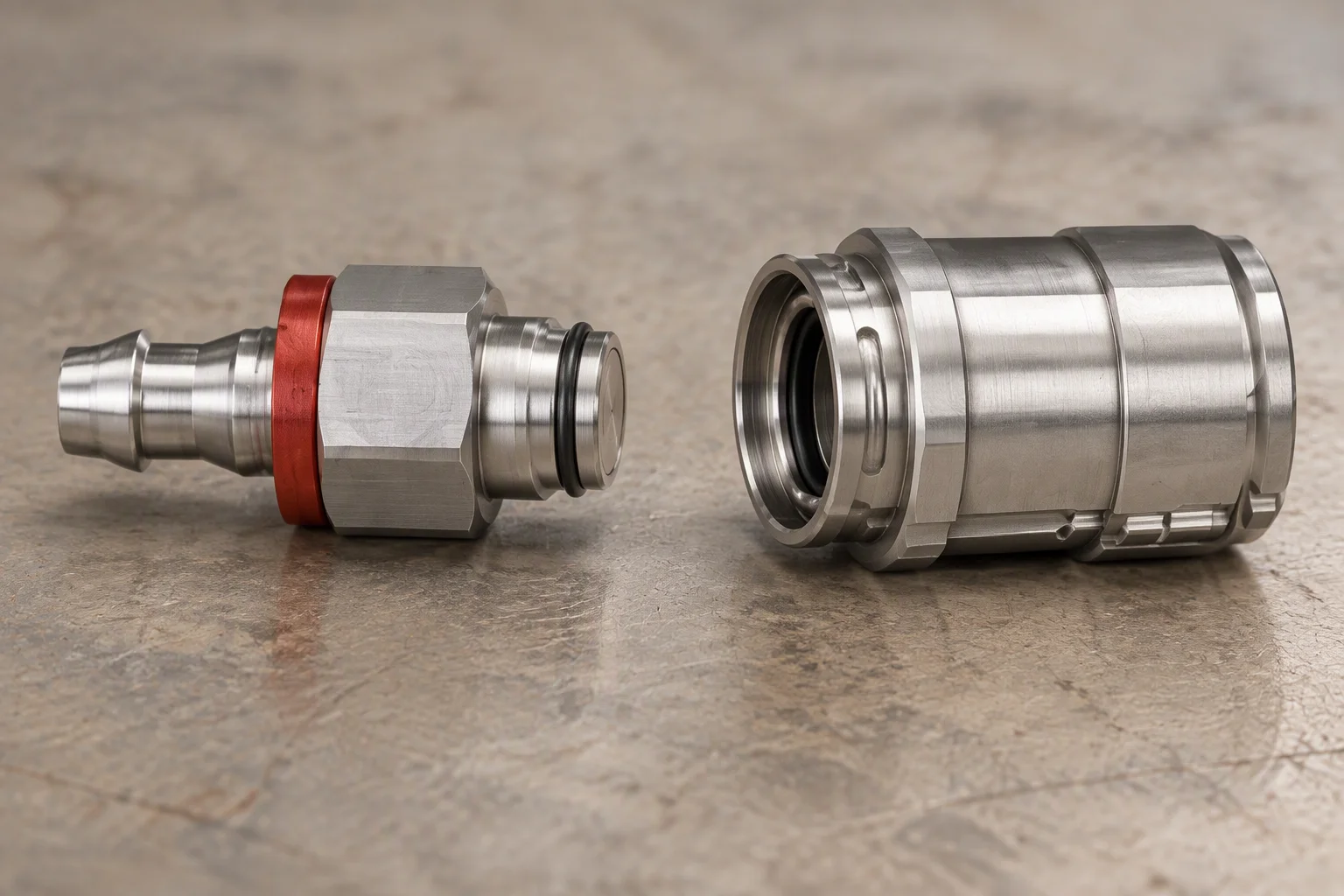
Two halves, one seat, one latch. Everything this note is about happens in the few millimetres where they meet.
The connect count is a wear budget
A pressure rating describes a coupling that is closed and left alone. A duty cycle figure describes a coupling that is opened and closed. Neither one covers the loop that is at its pressure rating and gets opened far more often than the figure assumes, which is the normal condition on a row where racks are swapped between tenants.
The budget is spent in two ways. A connect spends it on the seat and the latch. A disconnect spends it again, because the halves separate the same distance at the same angle. A joint opened once a quarter for a filter change is not the same asset as one opened every time a node is replaced.
What to count: opens per joint per year, against the pressure the loop actually holds. If the first number is rising and the second has not moved, the schedule is the thing to change.
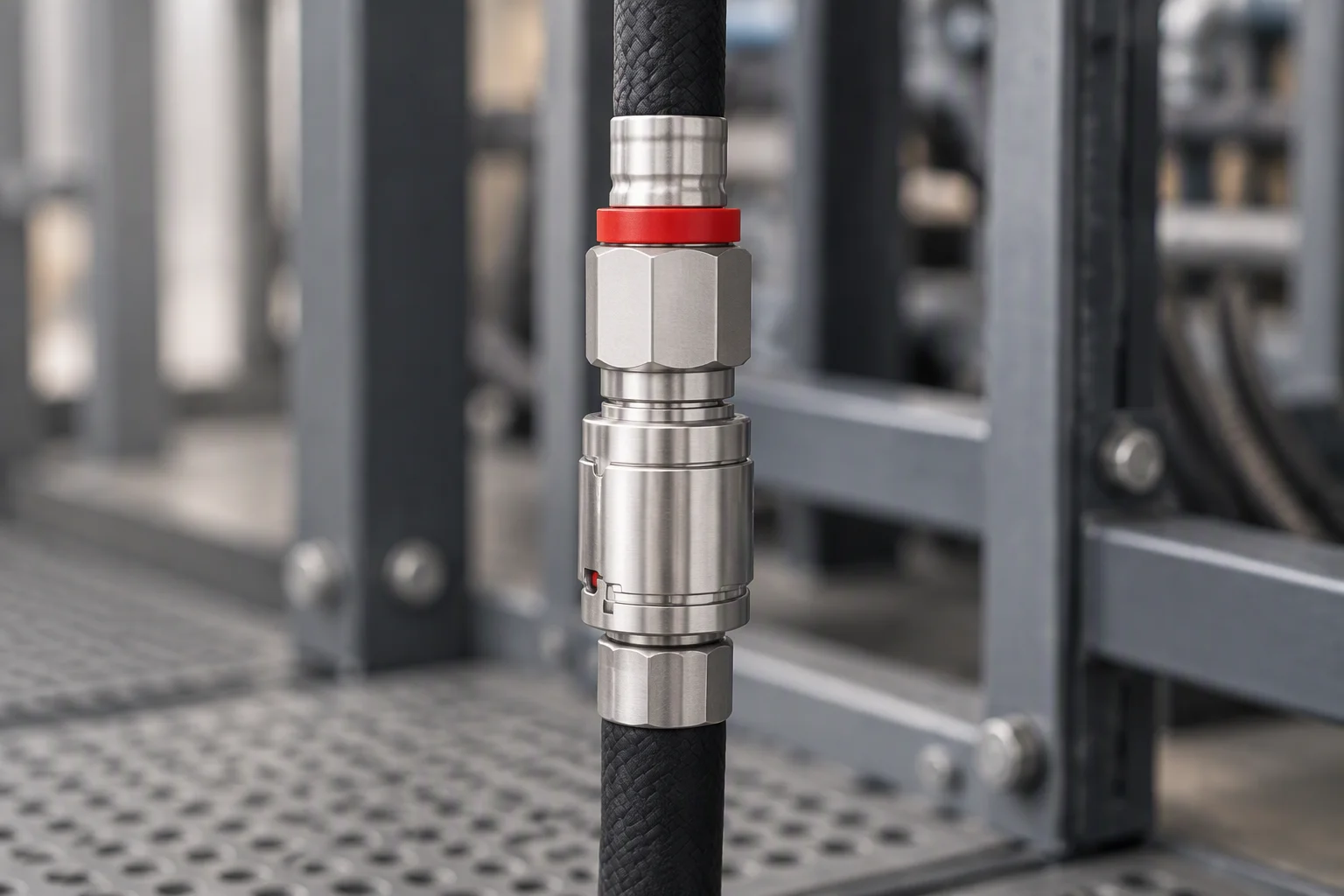
Closed and left alone, the coupling is doing what its pressure rating describes.
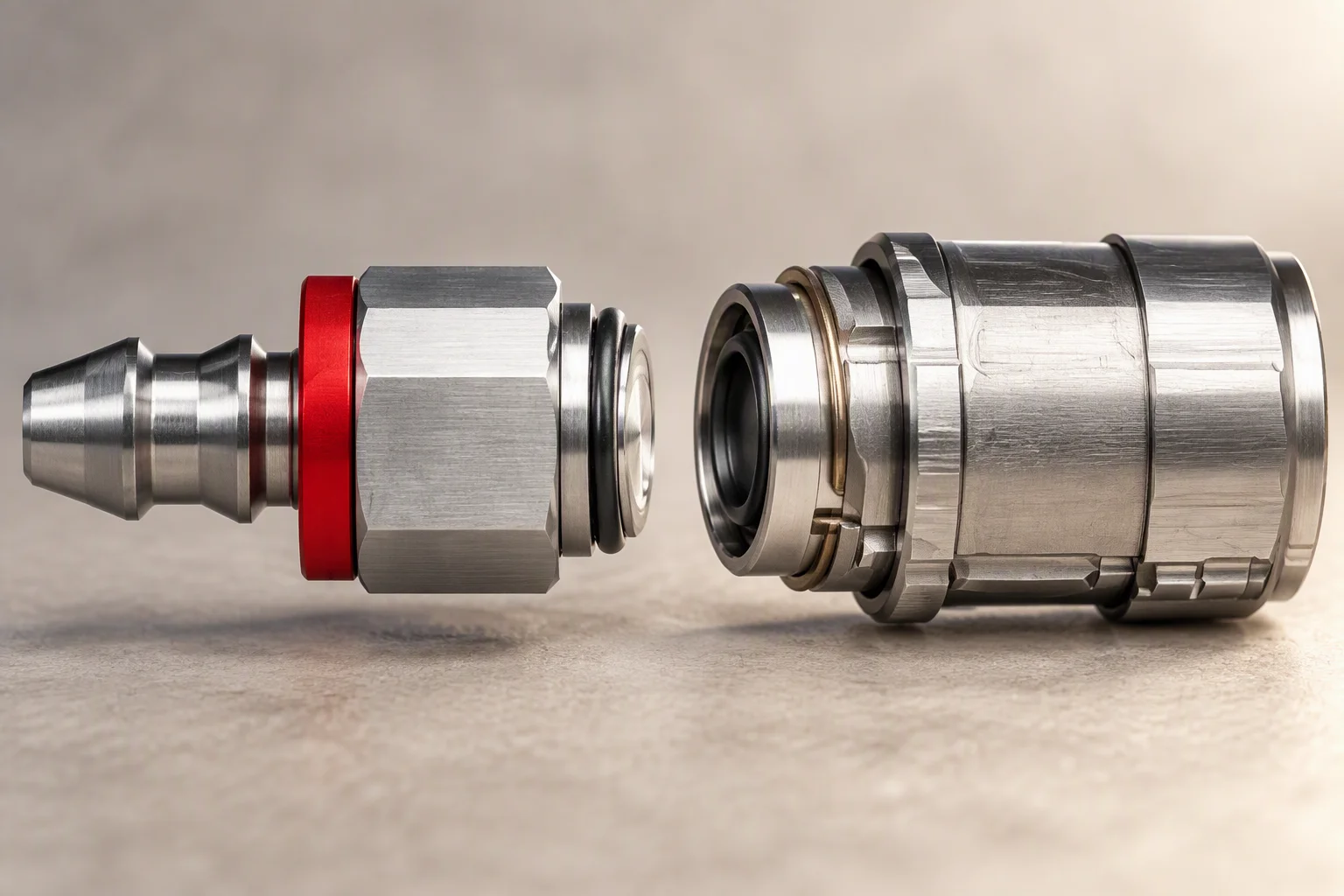
Half open is where the wear happens. The halves move at whatever angle the hand holding them allows.

One coupling per rack position, and the count of positions is what turns a cycle figure into an annual budget.
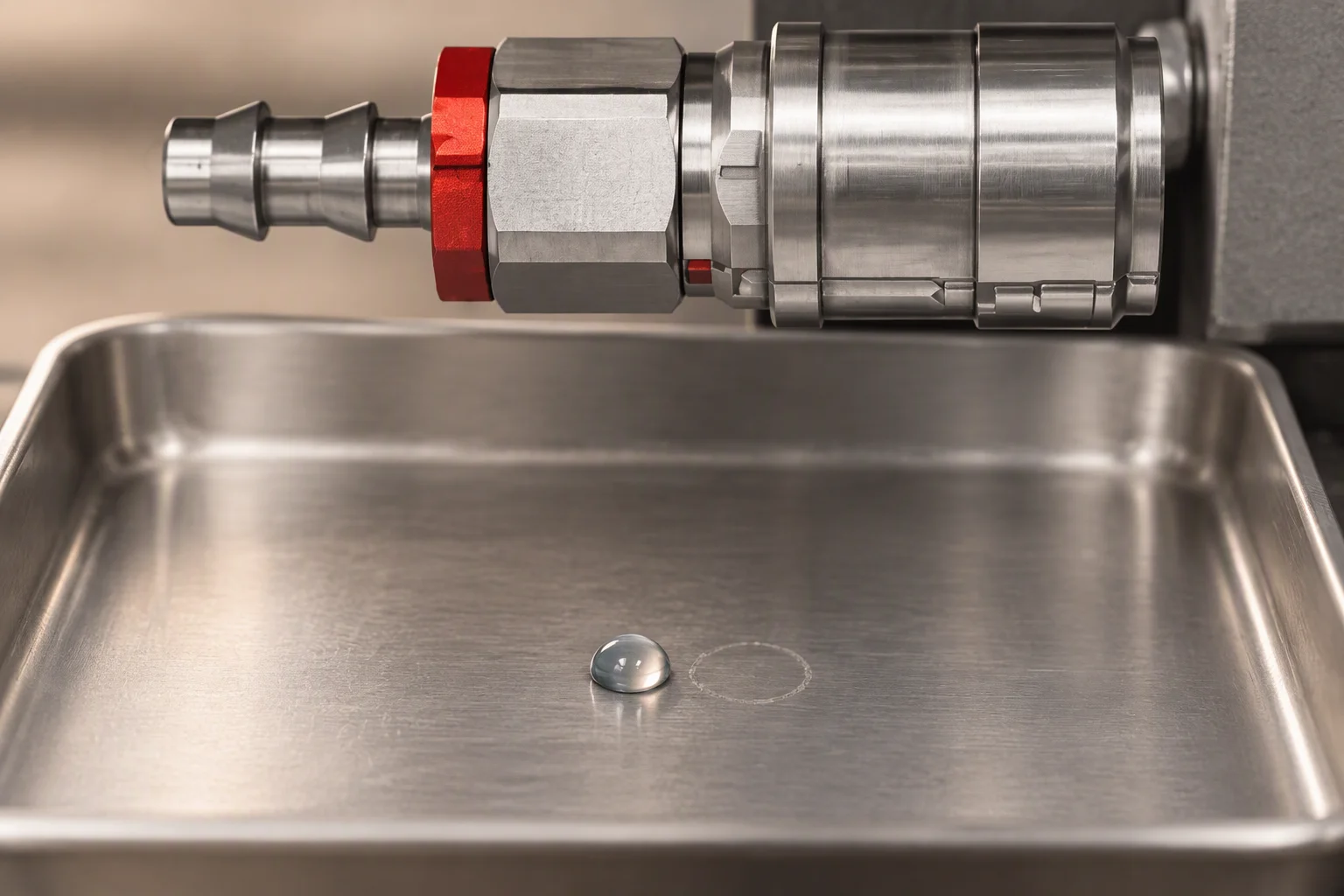
The first drop is not the failure. It is the seat reporting that the budget has been spent.
What moves on every connect
Key
- 1 ·The seal and its groove. Wiped across the seat on every connect, and the part that decides when the joint leaves a drop.
- 2 ·The retaining ring. It flexes open as the plug passes and closes behind it, so its preload is what holds the joint together.
- 3 ·The sleeve. Its travel is the connect motion, and a sleeve pushed at an angle loads one side of the ring only.
- 4 ·The guide chamfer at the socket entry. It takes the alignment load, which is why a blind mate scores it first.
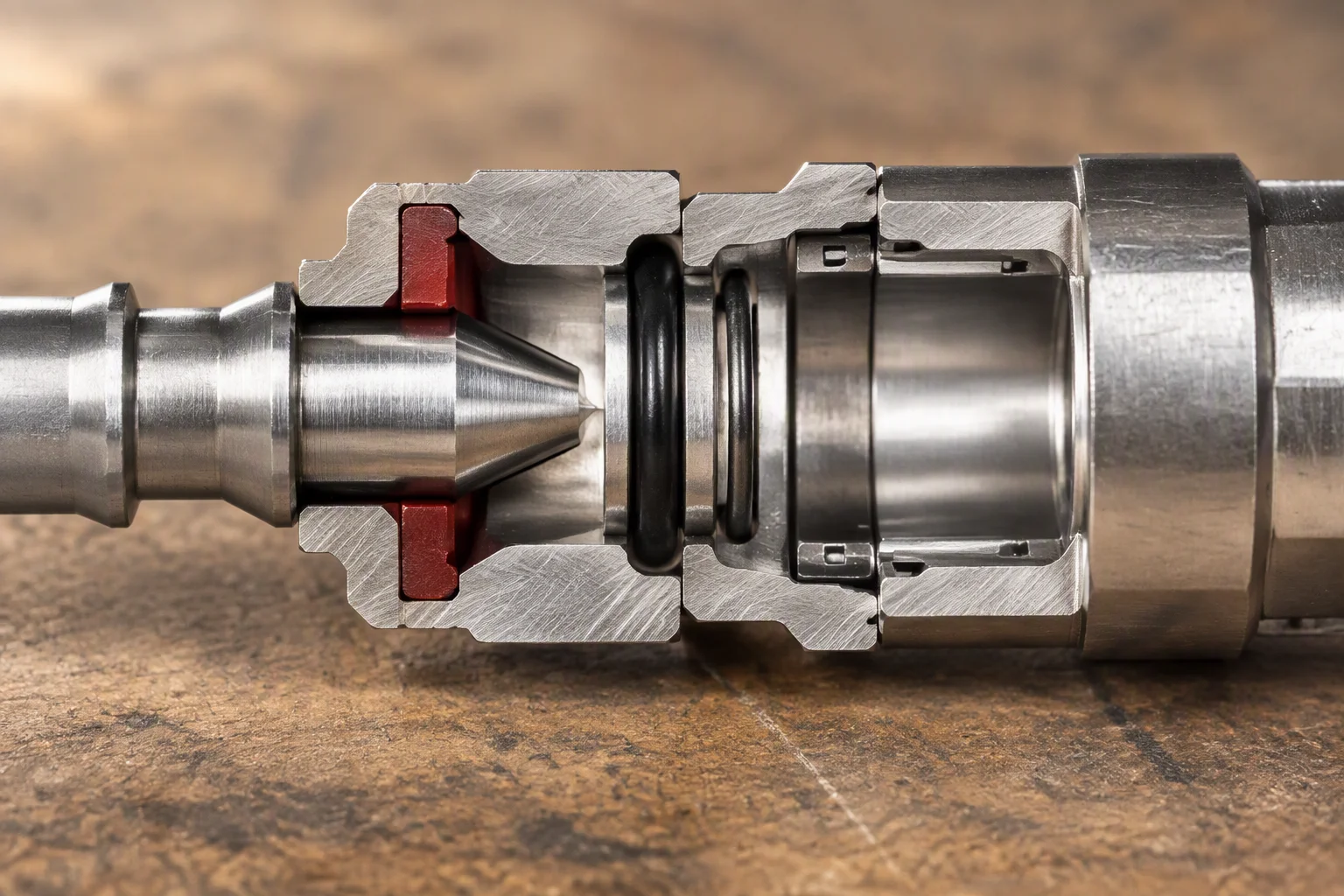
The drawing above and this cut are the same joint. One is a diagram, the other is what actually came off the rack.
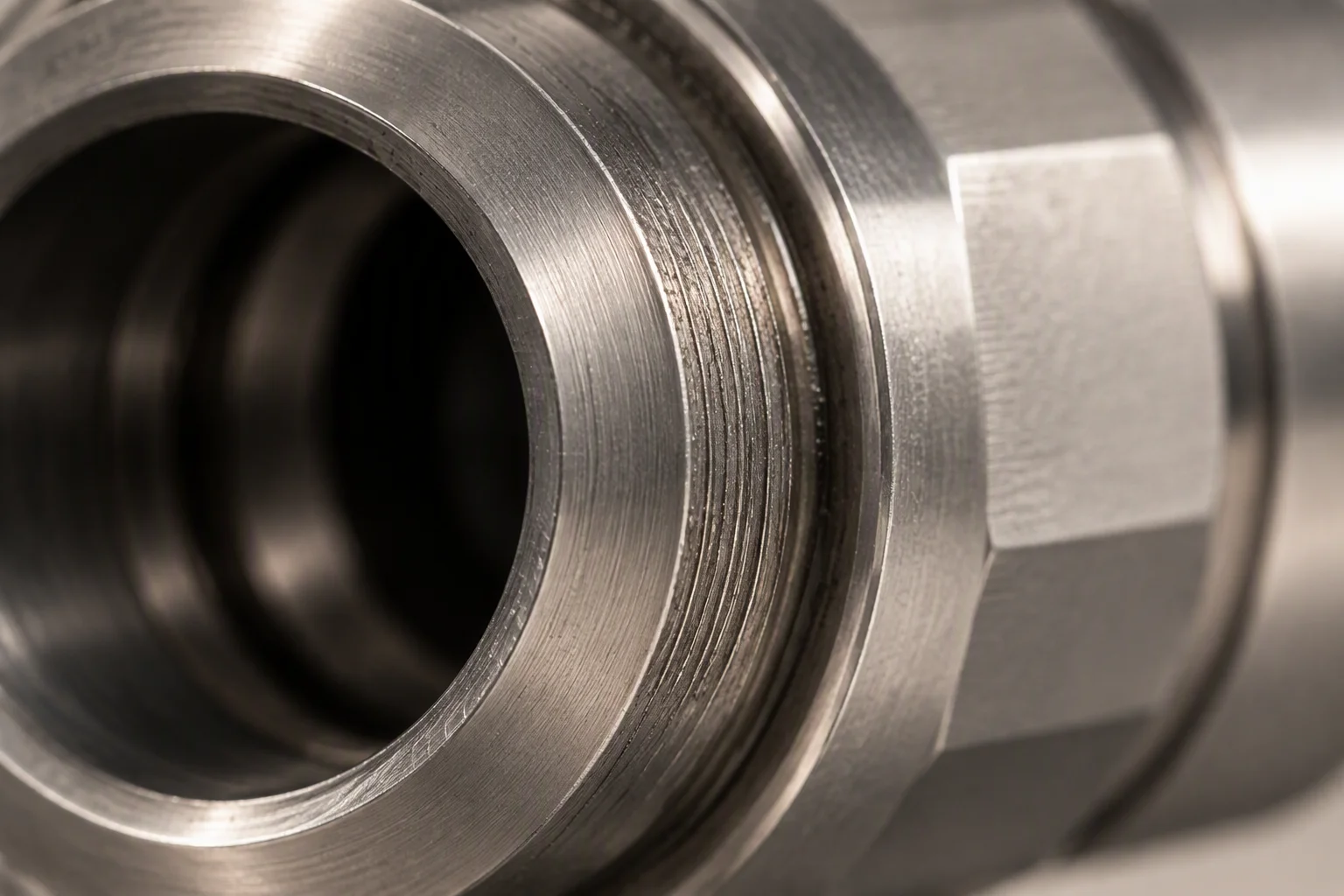
Scores round one side only mean the mate has been going in at an angle. The chamfer is the cheapest part to inspect and the first to say so.
The section is a diagram, not a scale drawing: proportions are set so the four interfaces read together at page width. Dimensions are in the coupling's own outline drawing, which is one of the documents held against a request.
Five things wear, and how each one shows
The seal and the seat under it
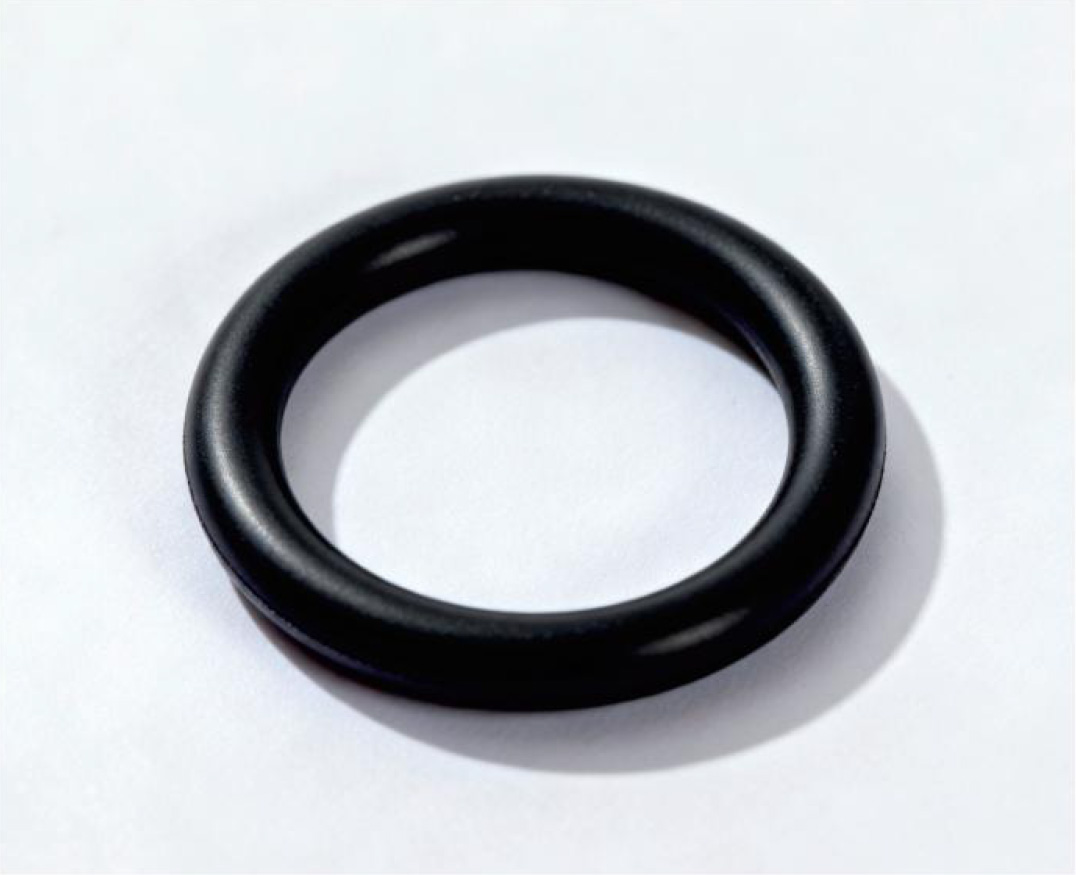
Every connect wipes the elastomer across the same metal track. The band widens, goes matt and picks up the first scratches, and it is the point at which the joint starts leaving a drop on the tray.
Found as a drop
The retaining ring
It opens and closes on every mate, so the wear is in its preload rather than in its shape. A ring that no longer snaps shut lets the halves move under pressure, and the movement is what damages the seat next.
Found as a loose joint
The thread and the knurl
The metal that gets gripped is the metal that shows the handling. Rounded knurls and a burred hex are the record of how many times somebody has made this joint up in a hurry.
Found by hand
The hose at the crimp
A coupling that is pulled sideways to make it up loads the hose where it is crimped. The braid is what carries it, and a loosened braid is invisible until the hose is bent against its natural line.
Found as a bulge
The alignment chamfer
The chamfer is what takes the misalignment of a blind mate. Once it is scored, every later connect is guided slightly off centre, so it wears faster than it did before.
Found at disassembly
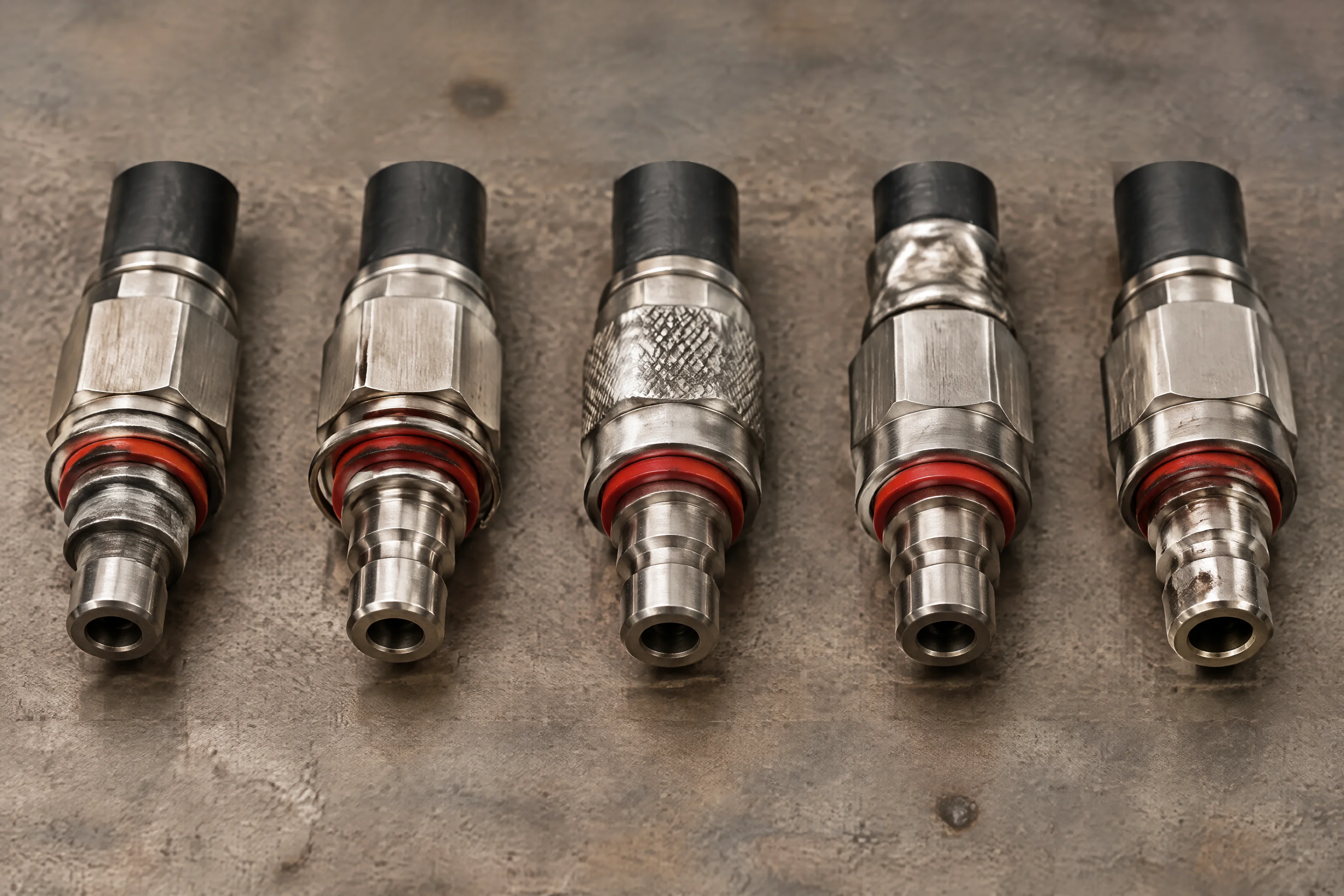
Five joints, five records. Sorted this way, the row tells you which handling habit to change rather than which coupling to buy.
The drawings this note is written against
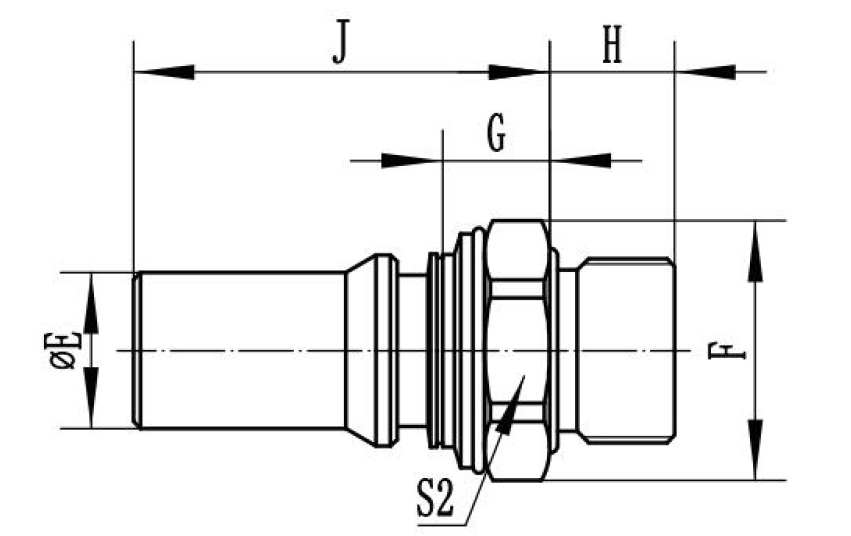
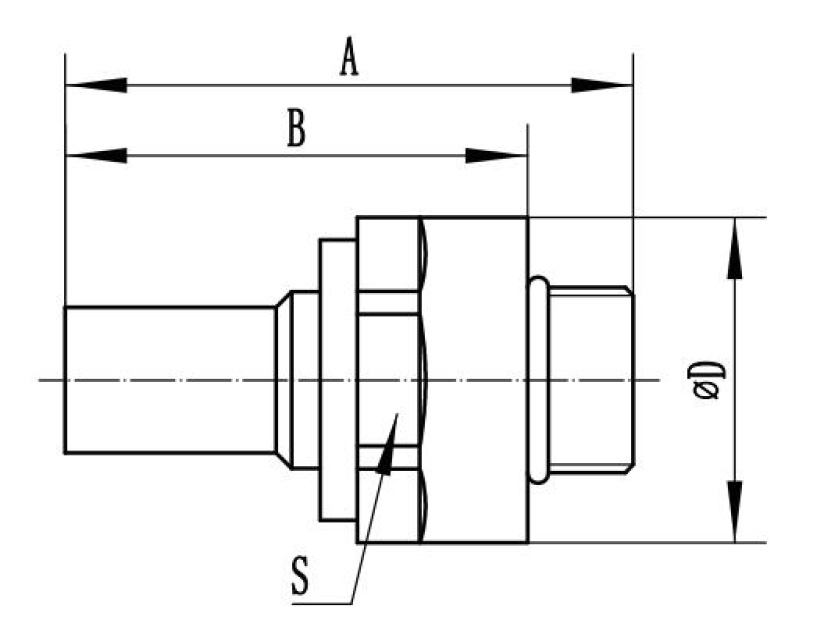
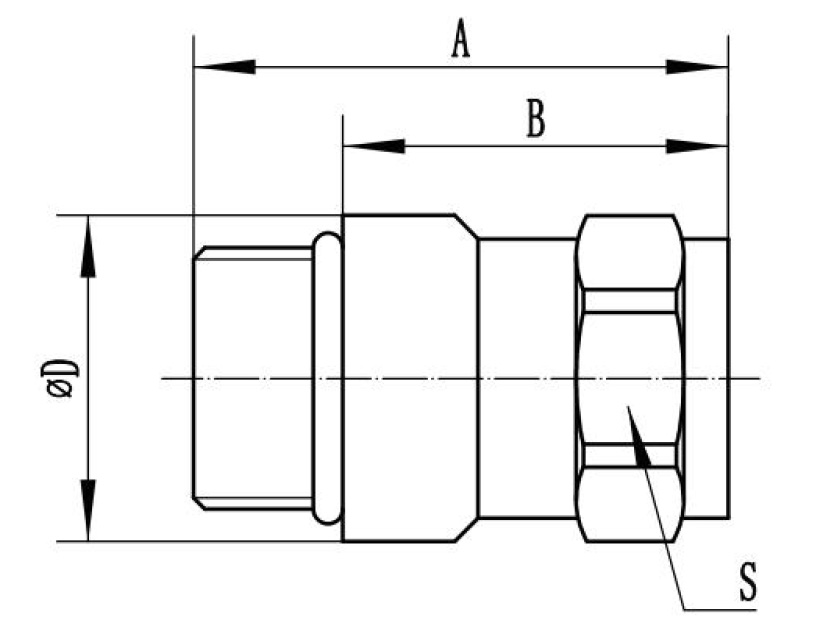
Ordered from the drawing, never from the picture
A photograph cannot carry a seat callout. The three dimensions above, plus the letter for the seat, are the whole order; everything else about the part is a preference until the joint is closed and holding.
A replacement coupling is ordered by these three dimensions plus the seat callout, which is why the drawings are held against a request rather than handed over as pictures.
The figures that decide it
| Item | Figure | Value | Unit | Condition it holds under |
|---|---|---|---|---|
| 01 | Working pressureAt the coupling | 1.38 | MPa | About 200 psi, held while the loop is running. The figure the seat is asked to seal at, connect after connect. |
| 02 | Burst, minimumAssembly | ≥ 5.5 | MPa | Tested as crimped. It is a ceiling, not a working figure, and no duty cycle changes it. |
| 03 | Service temperatureJoint | −40 ~ +99 | °C | The loop figure rather than the supplier's wider one. The elastomer in the seat is judged against this. |
| 04 | Seat geometryInterface | UQD | standard | A dry-break seat standard across the industry, which is what makes a coupling replaceable from a second source. |
| 05 | Cleanliness at the jointLoop target | ISO 4406 | 17/15/12 | Solids at the seat are the third body in the wear, so the count is part of the duty cycle whether or not it is written down. |
| 06 | Flame rating of the coverHose | UL 94 | V-0 | On the hose the coupling is crimped to, which is the part a tray above a rack sees. |
| 07 | Material certificateMetal parts | EN 10204 | 3.1 | Traceable to the heat the bar came from, on both halves of the joint. |
| 08 | System certificateAcross the lines | ISO 9001 | certified | Held across the supply network rather than by any one line, and verified before a line is scheduled. |
Eight figures. The one that is missing from a datasheet is the one this note is about: how often the joint will be opened, which nobody but the operator knows.
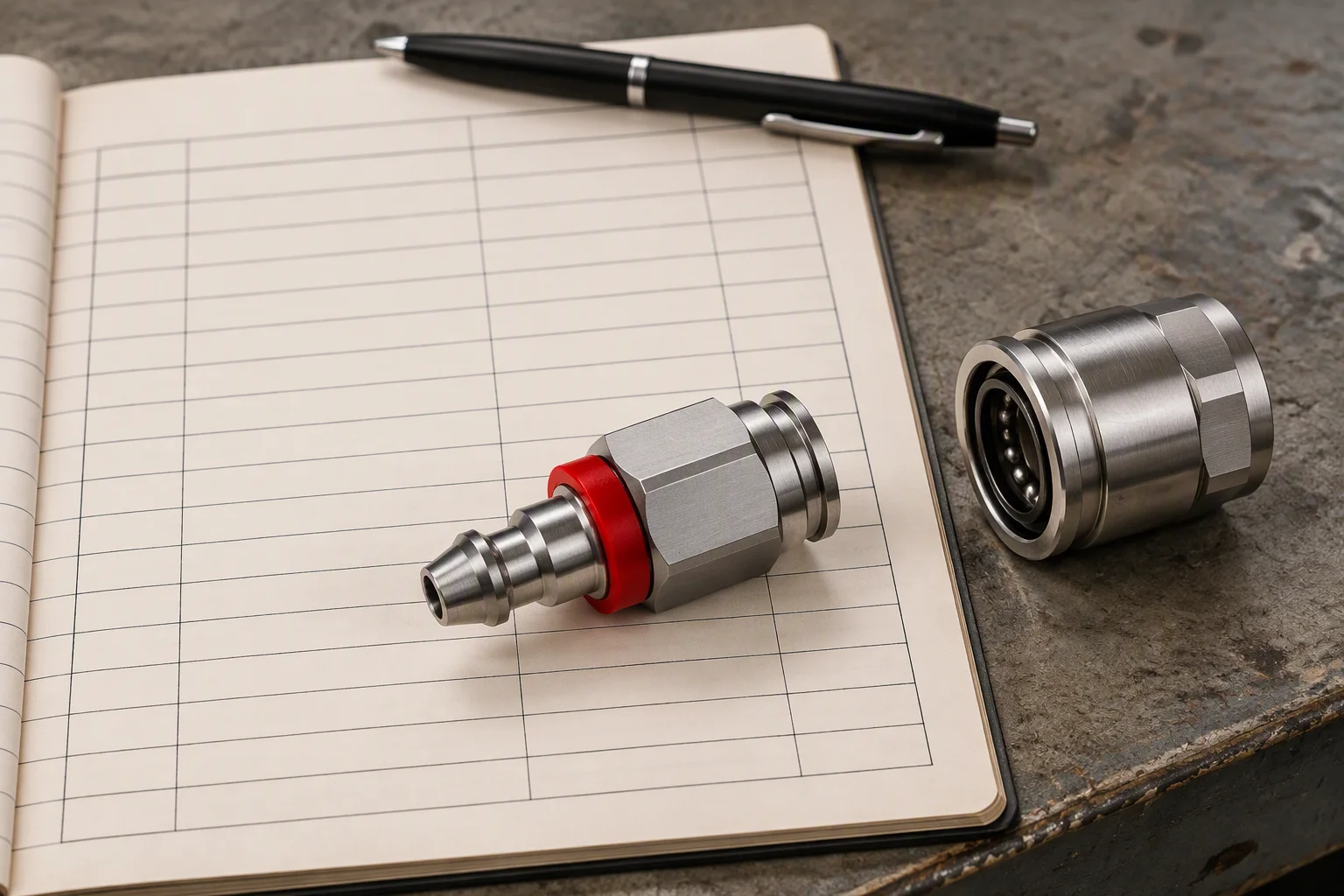
One line per open: date, position, who did it, and whether the seat was wiped. That log is the duty cycle.
What to do at the rack
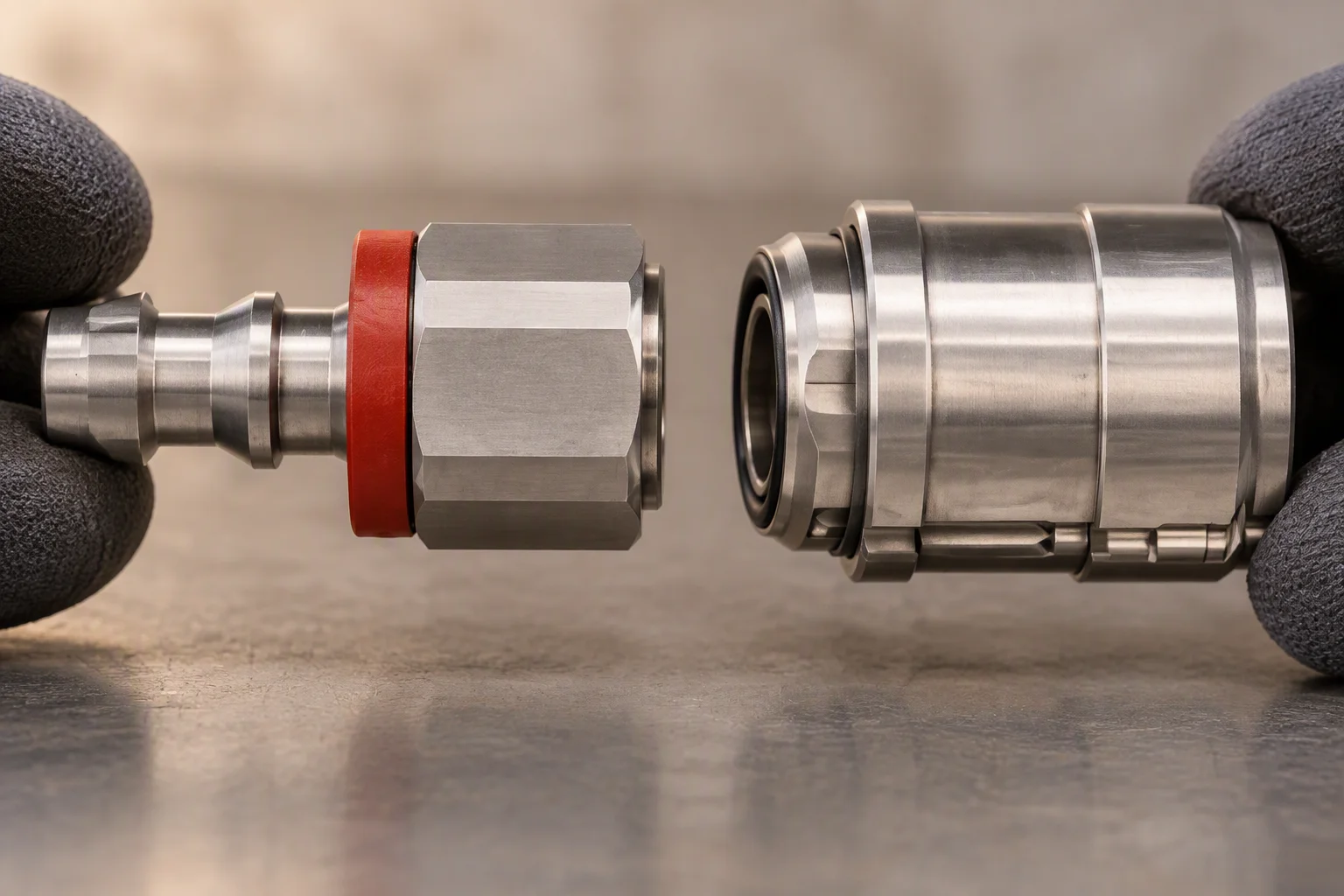
Square and level. Everything the alignment chamfer does not have to absorb is something the seat does not have to survive.
One log per manifold, not per site
A duty cycle belongs to a joint. A site-wide count averages a coupling that is opened twice a year with one that is opened every time a node is serviced.
Keep the outline drawing with the log
When the joint is replaced, the replacement is ordered from the drawing. A drawing that has drifted away from the log is how a coupling arrives that does not seat.
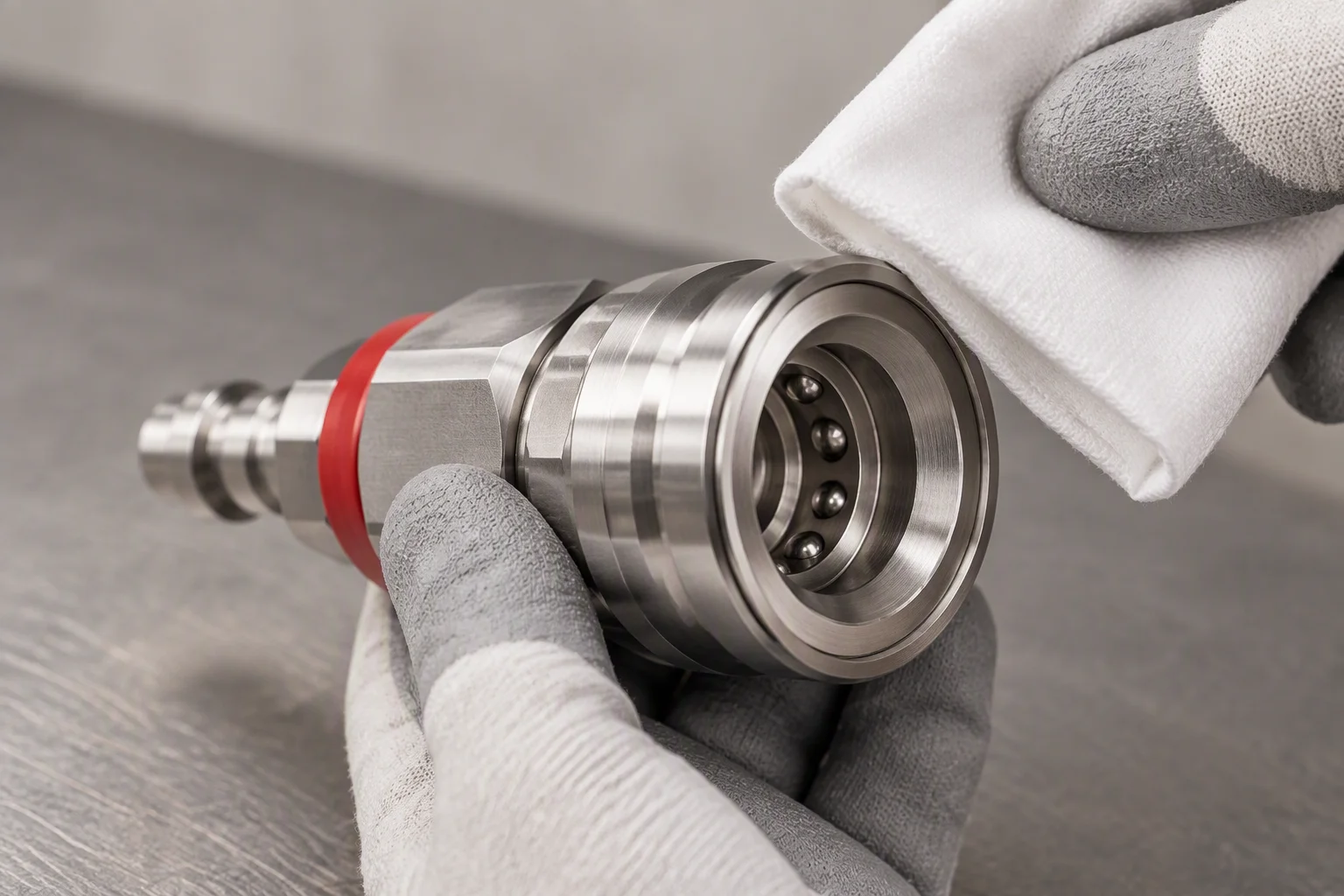
The wipe takes seconds and removes the third body from the wear equation.
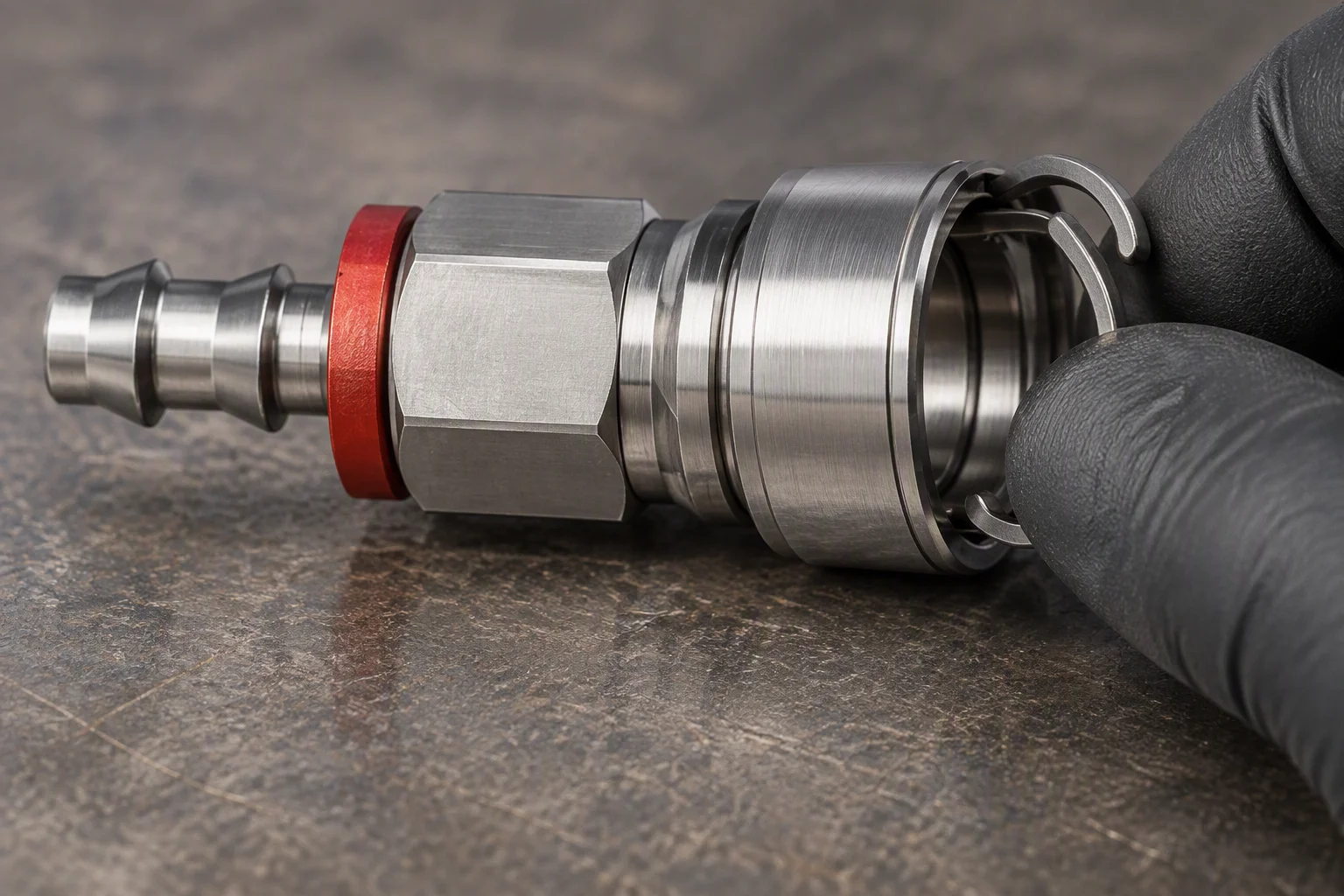
The ring should snap shut with the same effort every time. When it stops doing that, it has been counted.
What this note does not cover
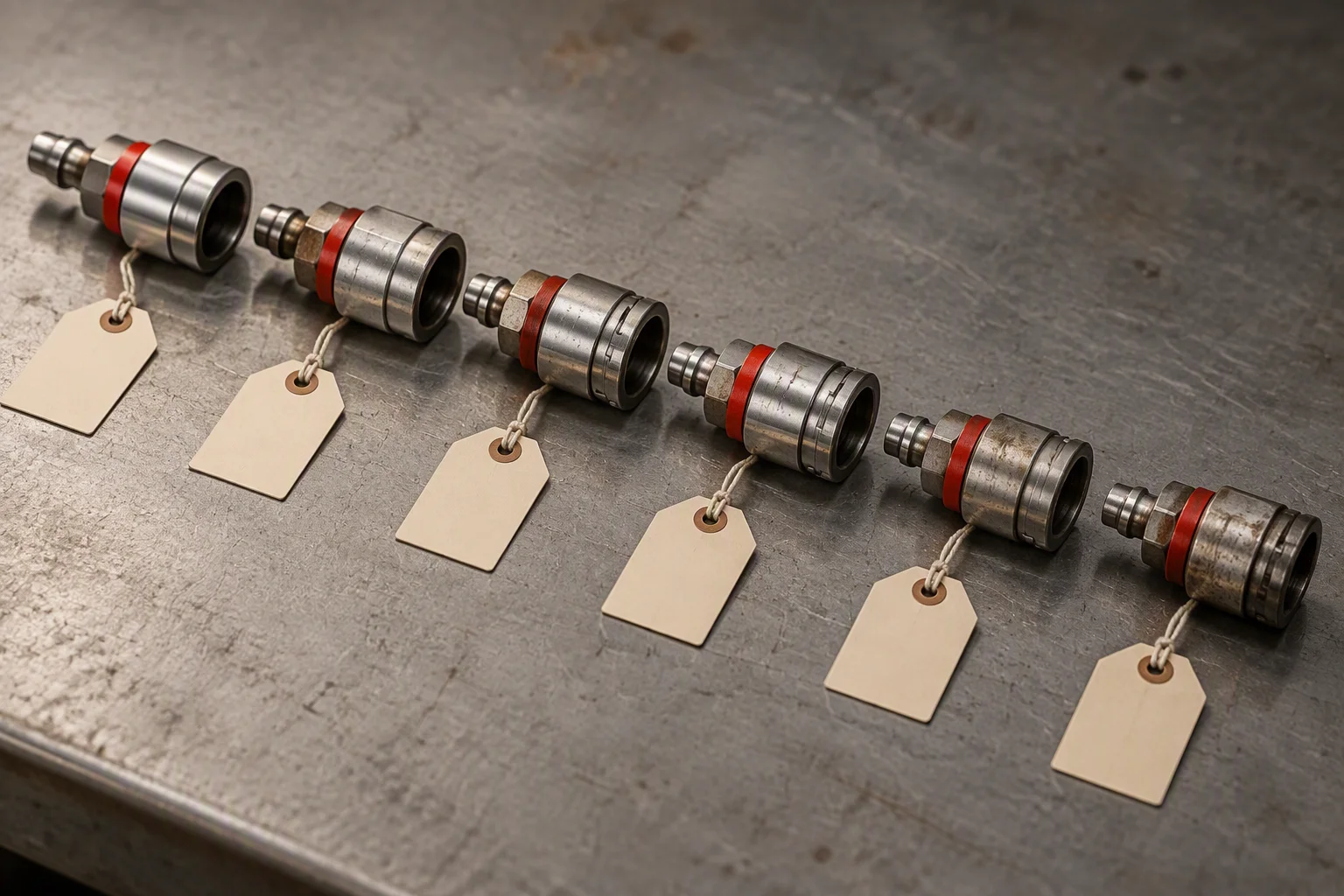
Laid out in the order they came off the row, the couplings become a timeline. That, rather than any single part, is what a duty cycle looks like.
Request this note as a sheet
The five wear points, the coupling section drawing, the three outline drawings a replacement is ordered from and the eight-figure schedule.
One business day, with the file attached.
Nothing else on this sheet is promised. The count of opens is the one figure nobody can quote for you, so the schedule above is written to be completed with your own numbers.
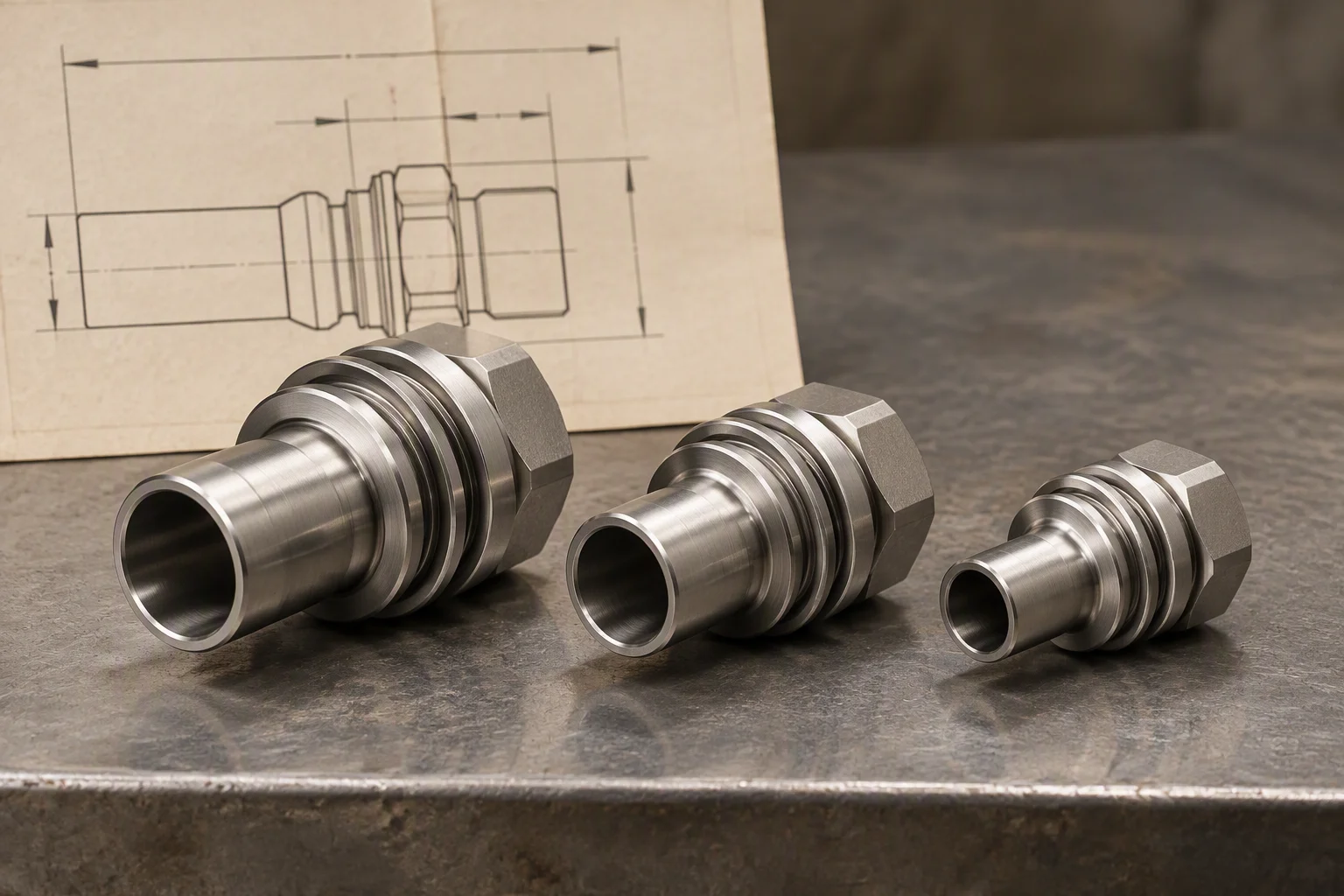
Ordered by the drawing, not by the picture. The seat callout is what makes the second half fit the first.
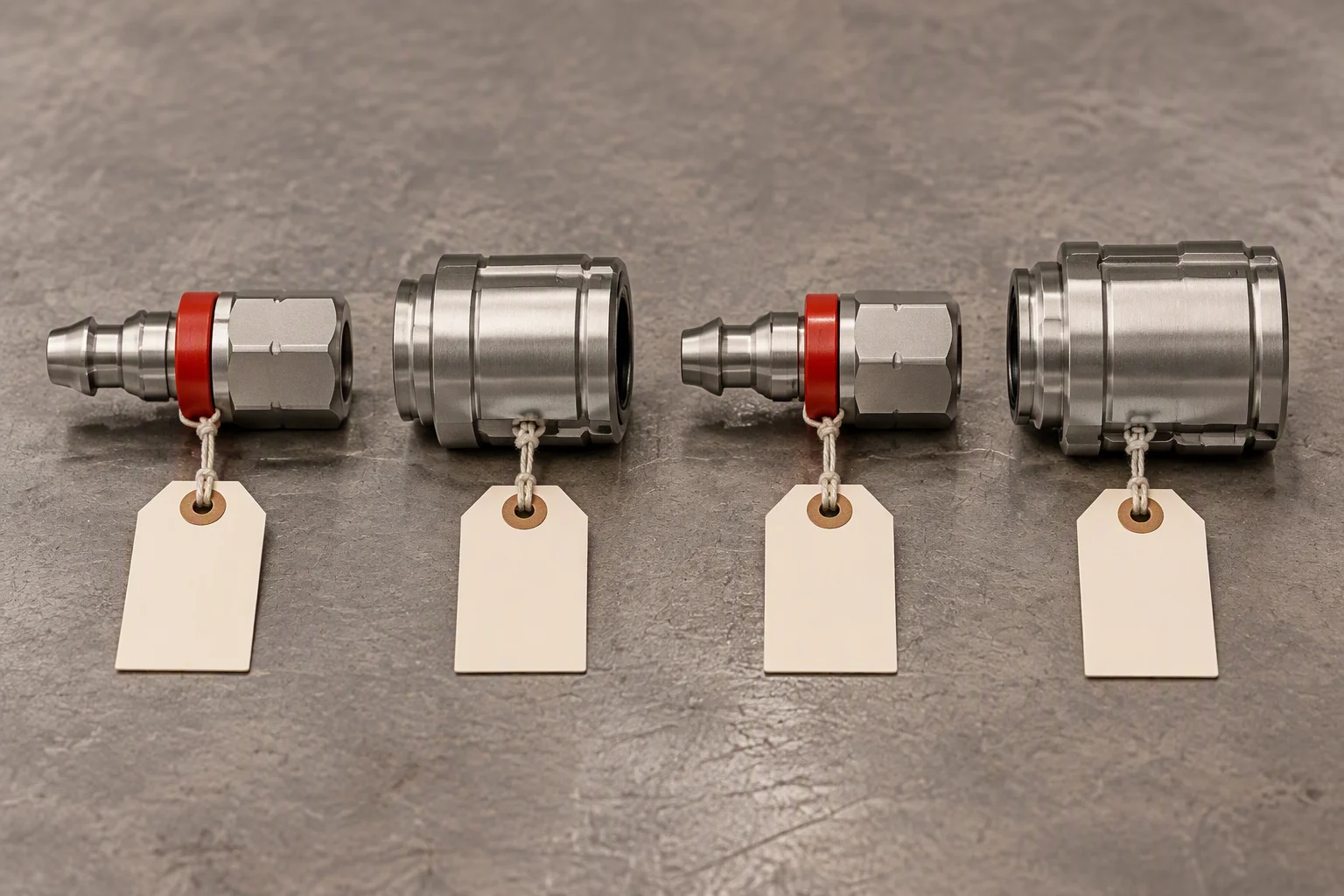
Blank tags are the point. A coupling's history is written where it was opened, not where it was bought.