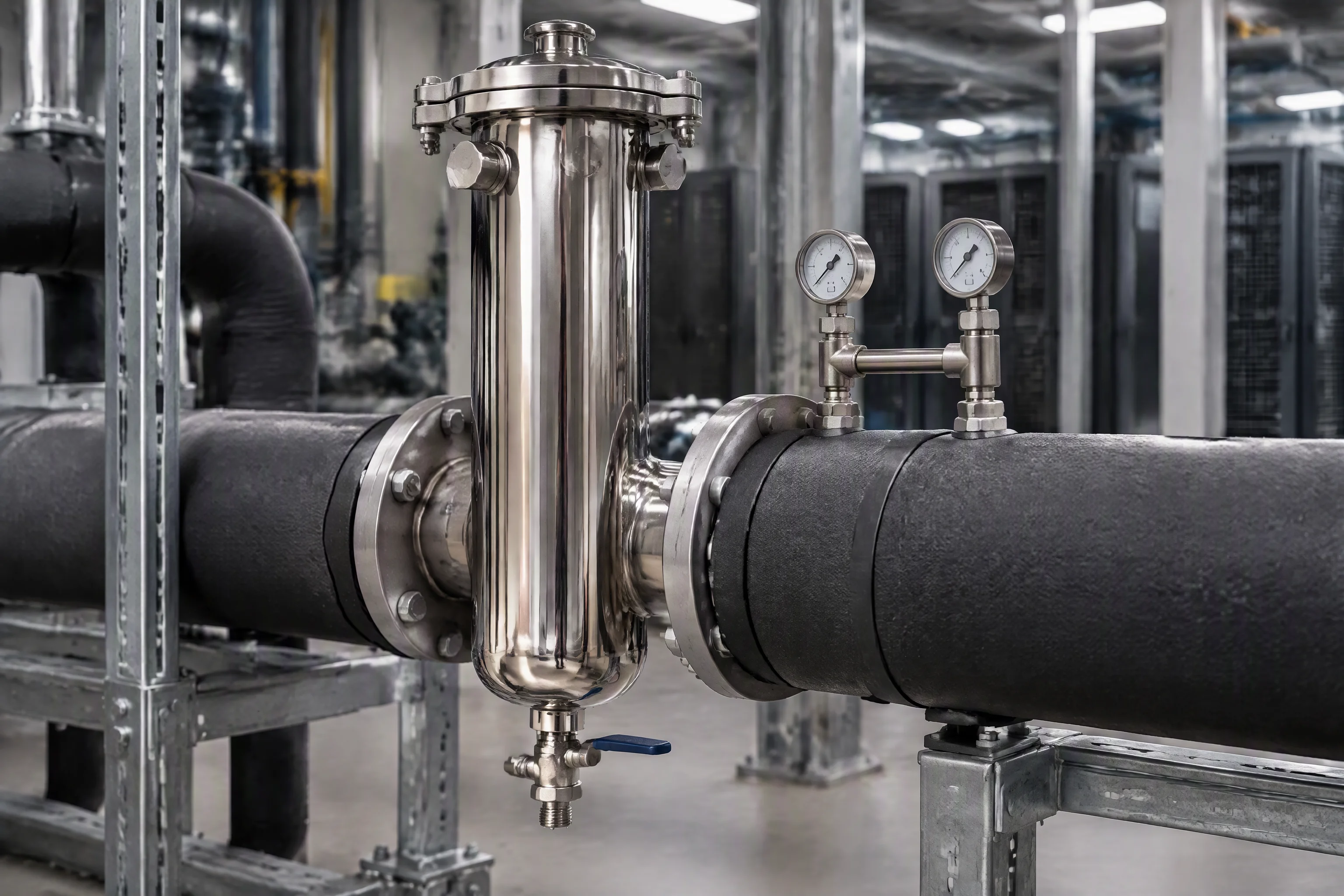
EPDM hose, quoted from the tube outwards
Choose the grade on the bore you need and the pressure you run. Everything below that is a boundary worth knowing before the order goes out.
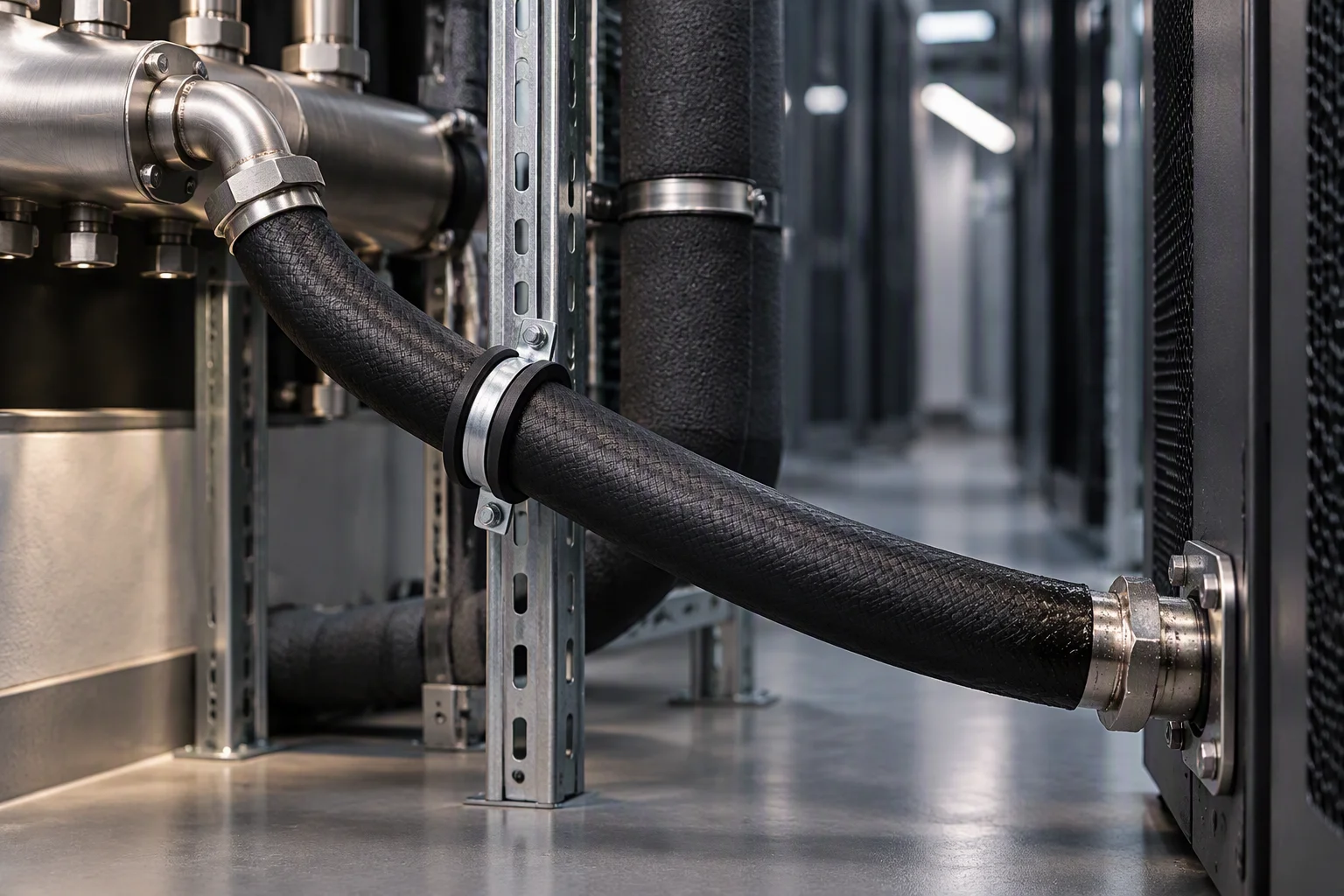
One run, two clamps, no joint in between: the bend radius decides where the clamps go.
The envelope, and what sits past each edge
| No | Boundary | Value | Unit | Past the edge |
|---|---|---|---|---|
| 01 | Working pressure W.P | 1.38 | MPa | About 200 psi on DASH −4 to −6. Past it the braid takes the load alone |
| 02 | Minimum burst B.P | 5.5 | MPa | Where the finished assembly is proof tested |
| 03 | Coolant temperature data centre duty | −40 ~ +99 | °C | The cover hardens first, then cracks at the next bend |
| 04 | Minimum bend radius B.R | 24.5 – 69 | mm | Below it the bore flattens and the flow drops without a leak |
| 05 | Weight per metre | 0.13 – 0.25 | kg/m | Sizes the tray and the clamp spacing |
| 06 | Reinforcement braid | 1 – 2 | layers | One braid holds the working pressure, the second raises the burst figure |
Read the table downwards, not across. A grade is chosen on the bore and the pressure, and the other four rows are what the choice costs you afterwards: a tighter bend, a heavier run, a cover that ages sooner.
A grade data sheet repeats these six rows for the single DASH size on the order, with the drawing for each end.
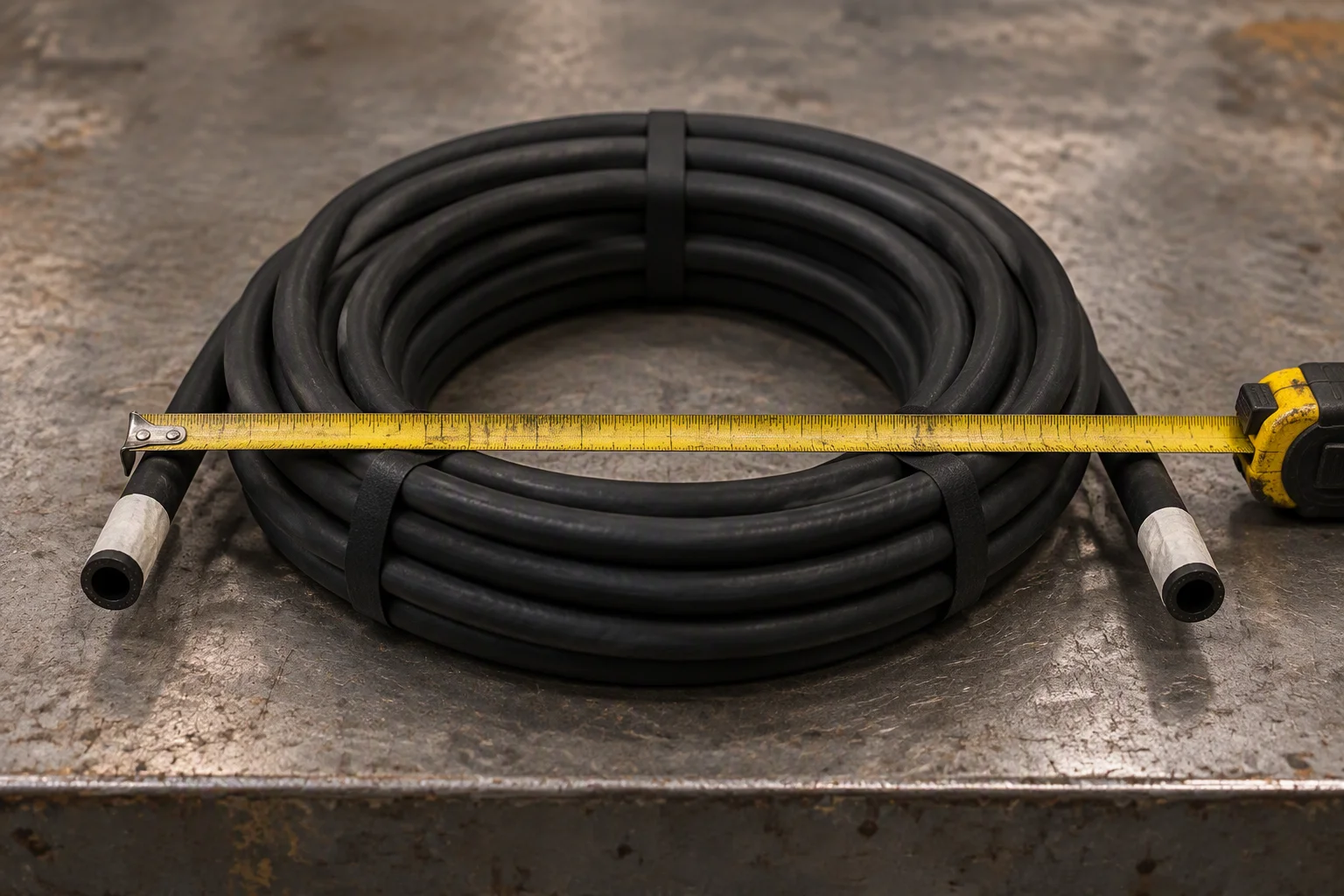
The bore sets the coil: a −10 run does not bend as tightly as a −4.
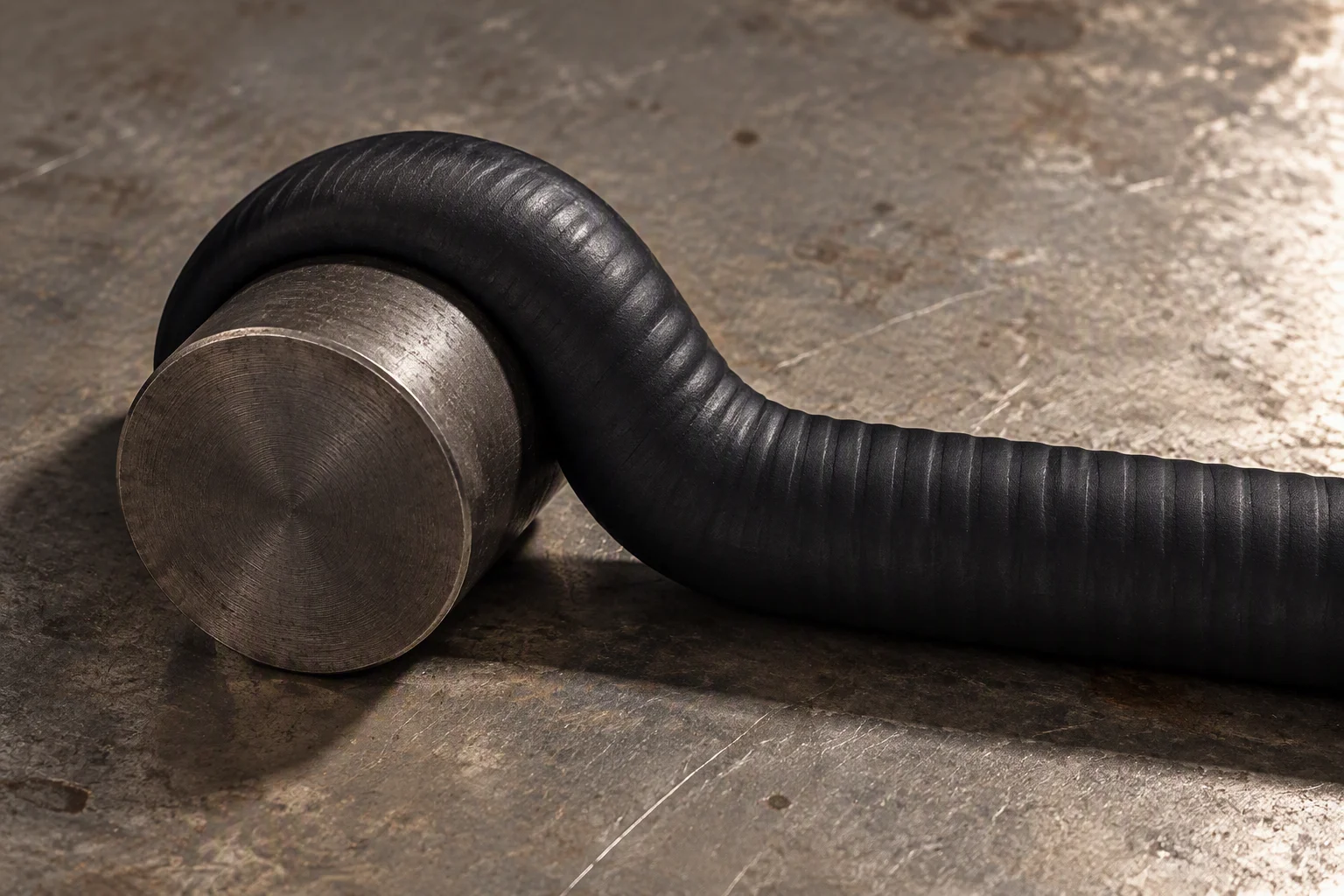
Bent to the figure, not past it. A flattened bore is a flow problem before it is a leak.
The three ways an EPDM hose fails
Almost nothing on this line fails in the middle of a straight run. It fails where the hose was worked: at a clamp, at a bend, or at the end of the fitting.
All three of the parts below were cut off a loop, not staged. Each one was found by a pressure drop or a wet tray, never by a walk-round.
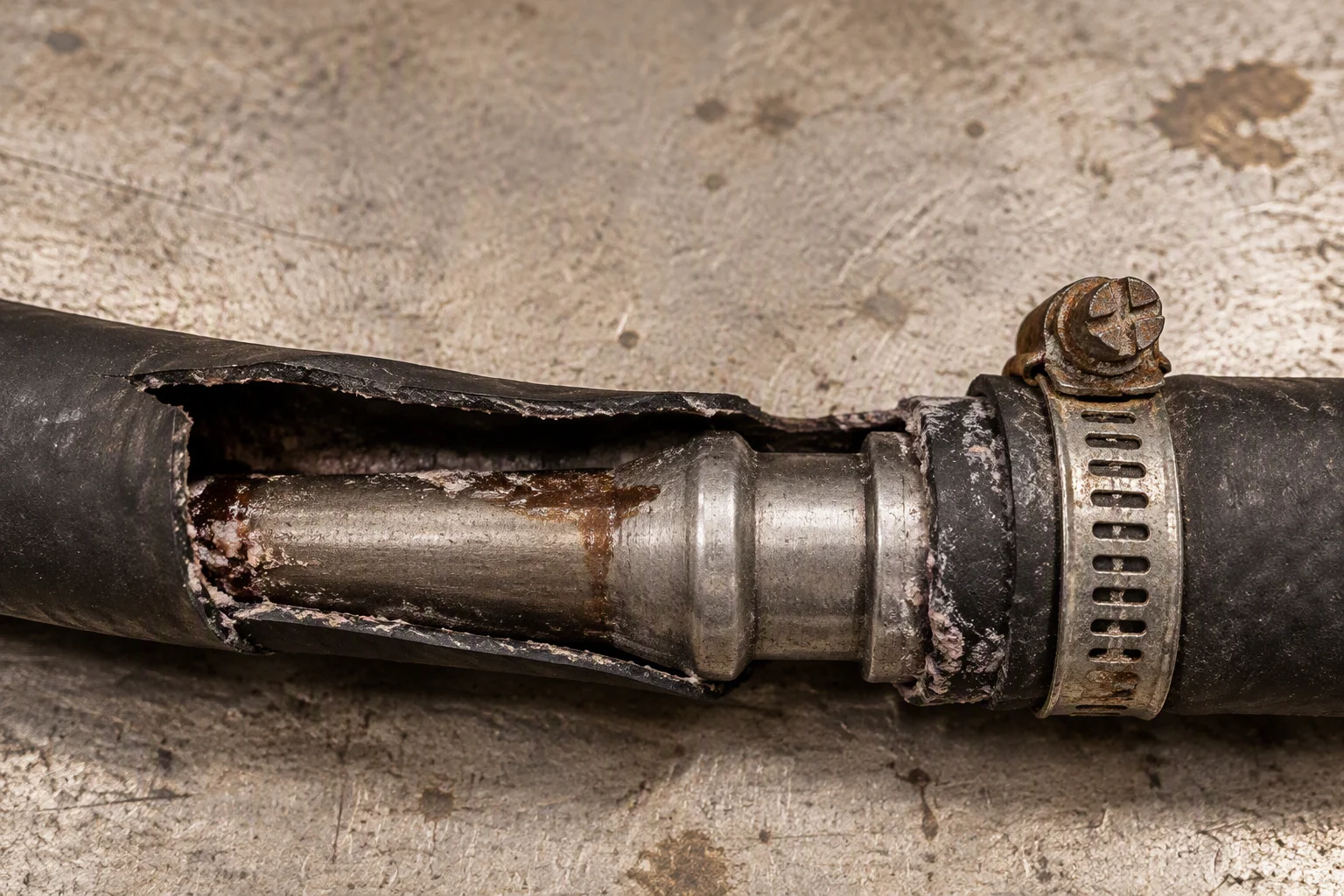
Tracking at the tail. The clip was tight; the tube under it was not round.
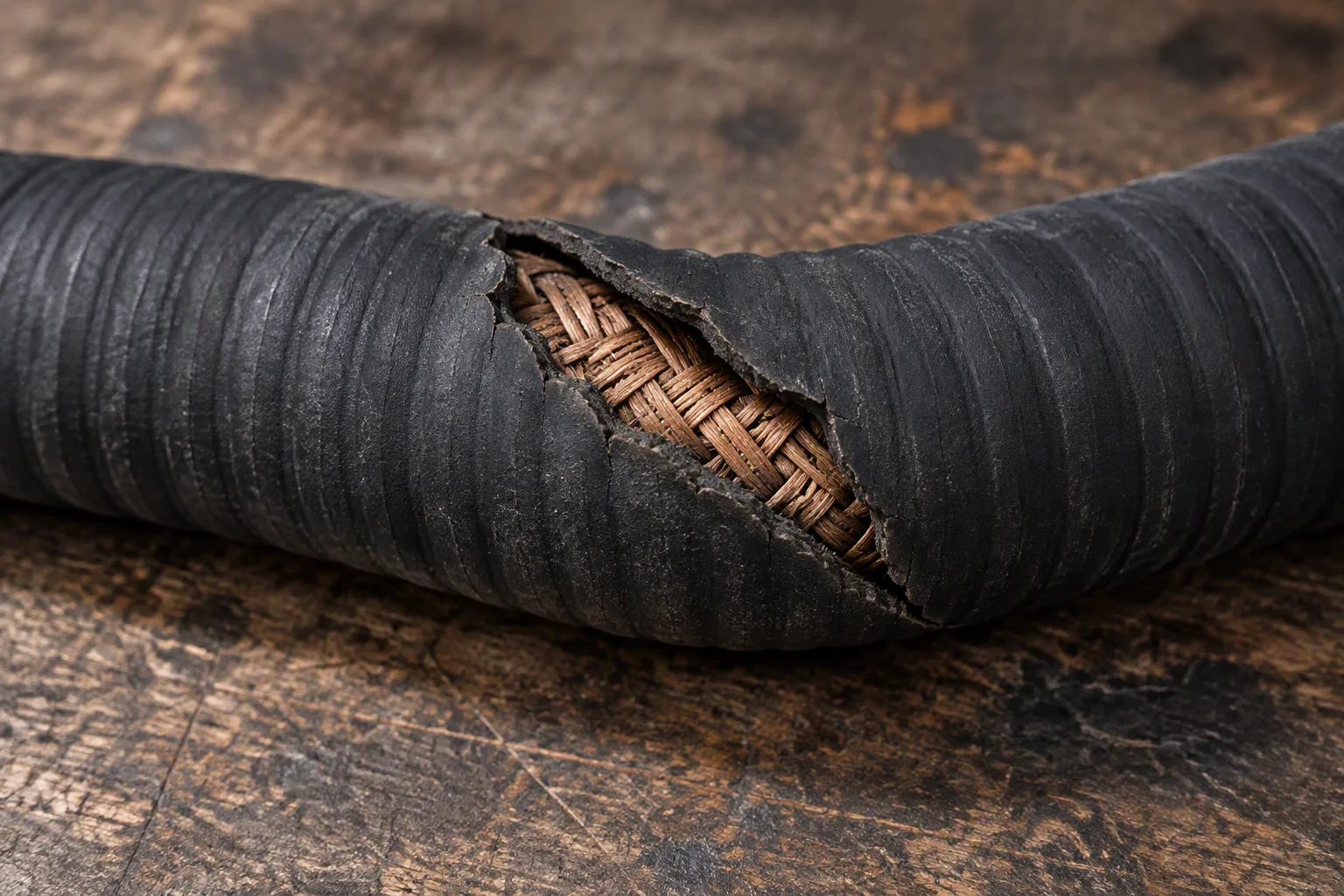
A cracked cover. Ozone and UV reach the braid and the pressure figure stops meaning anything.
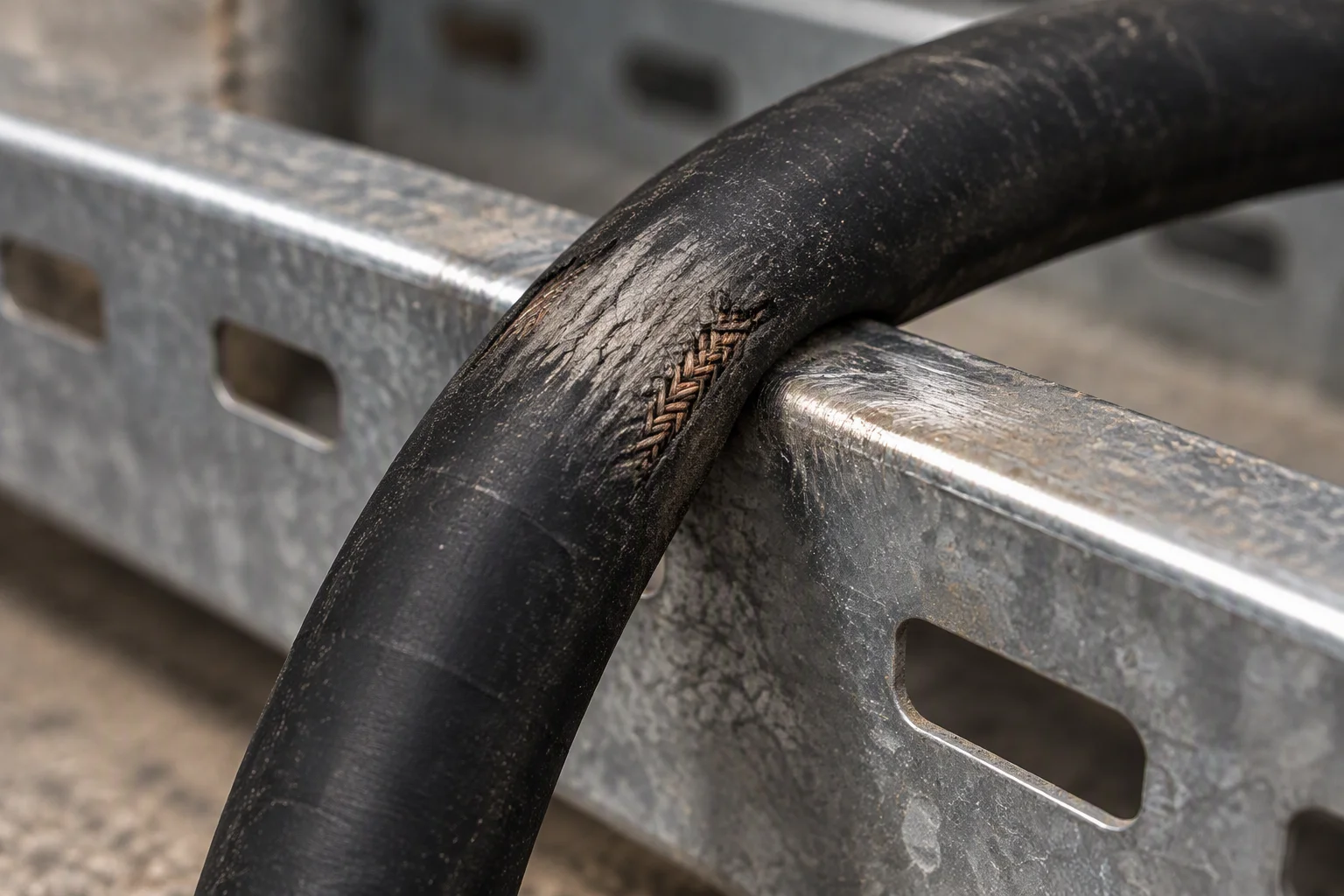
Chafe. Every metre that moves against steel wears the same place, year after year.
Mechanisms behind the three · compression set at the clip · ozone attack on the cover · UV ageing · abrasion · glycol mix outside the quoted range · a bend past the figure · coolant above +99 °C
What each layer of the wall tolerates
The wall is one tube, one braid and one cover, and the fittings at each end. A medium that is fine for the rubber is not automatically fine for the brass, and the other way round.
| Medium | EPDM tube | EPDM cover | Fibre braid | Brass fitting | Stainless fitting |
|---|---|---|---|---|---|
| Water-based coolant | |||||
| Glycol mix, up to 20% | |||||
| Deionised water, flush | |||||
| Flush fluid residue | |||||
| Ozone and UV, air side | |||||
| Coolant above +99 °C |
Compatible within the quoted envelopeLine needs the inhibitor checked firstCross outside the envelope
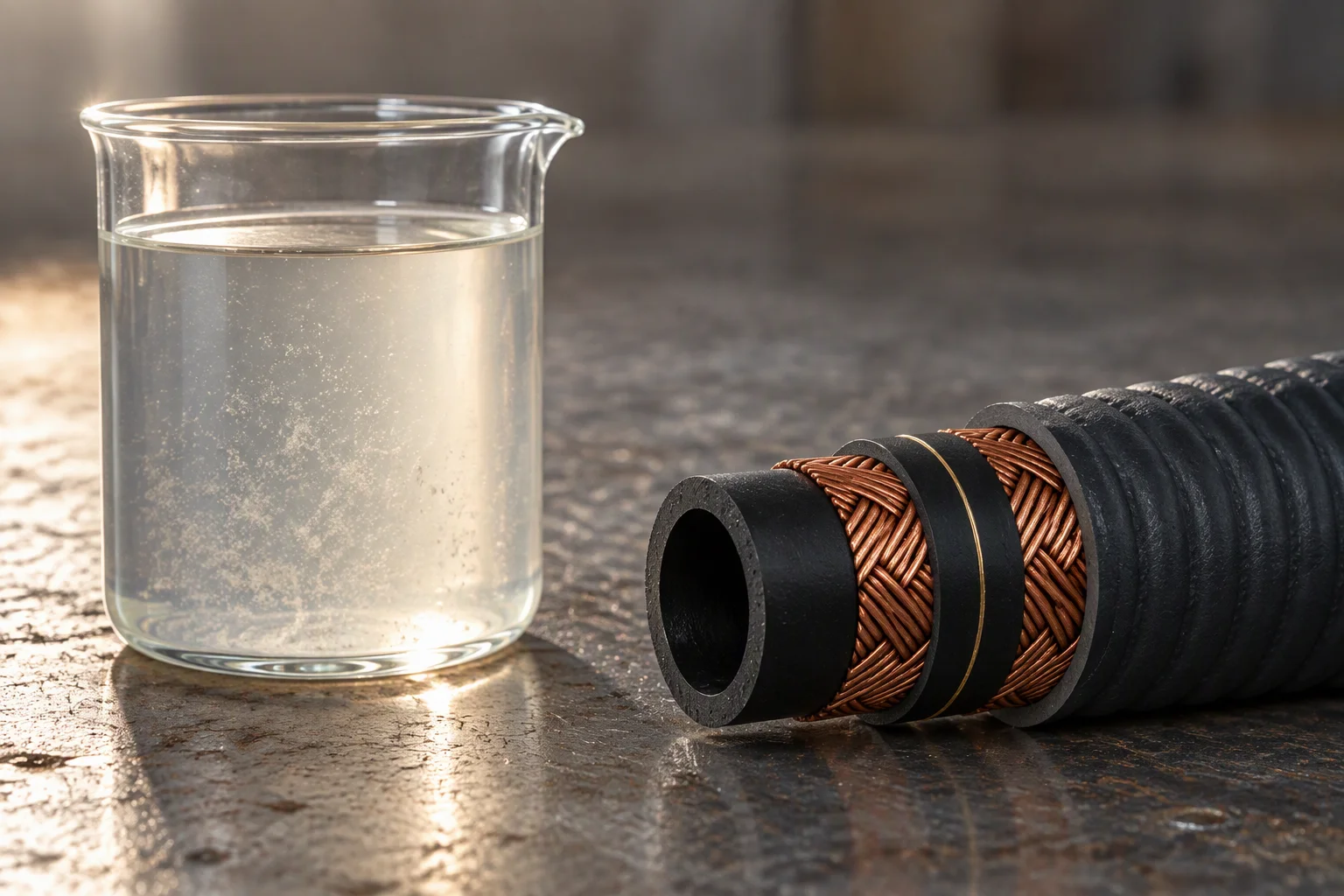
Flush fluid. What is left in the bore after flushing changes the coolant.
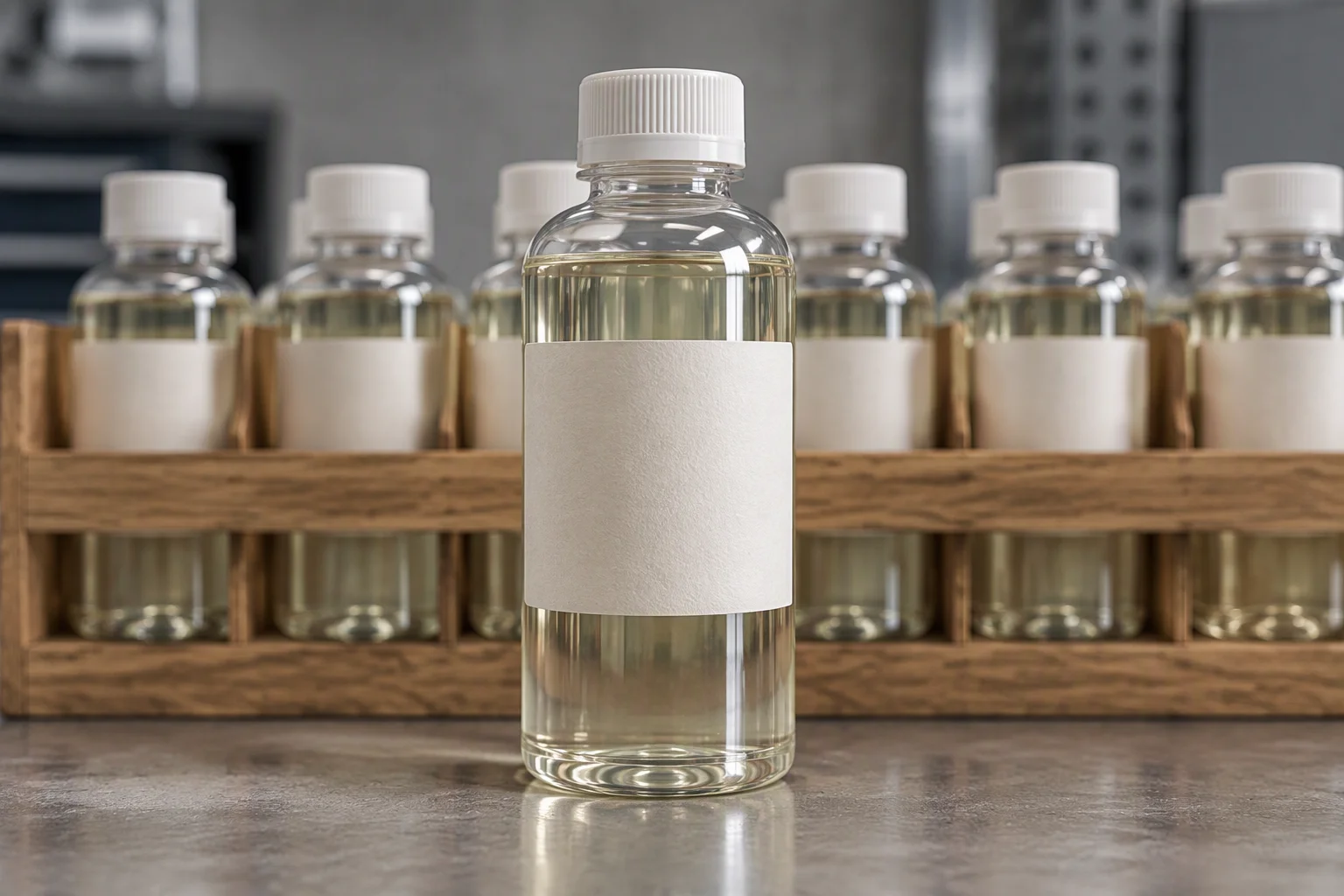
Glycol mix. The concentration, not the glycol, is what the elastomer reads.
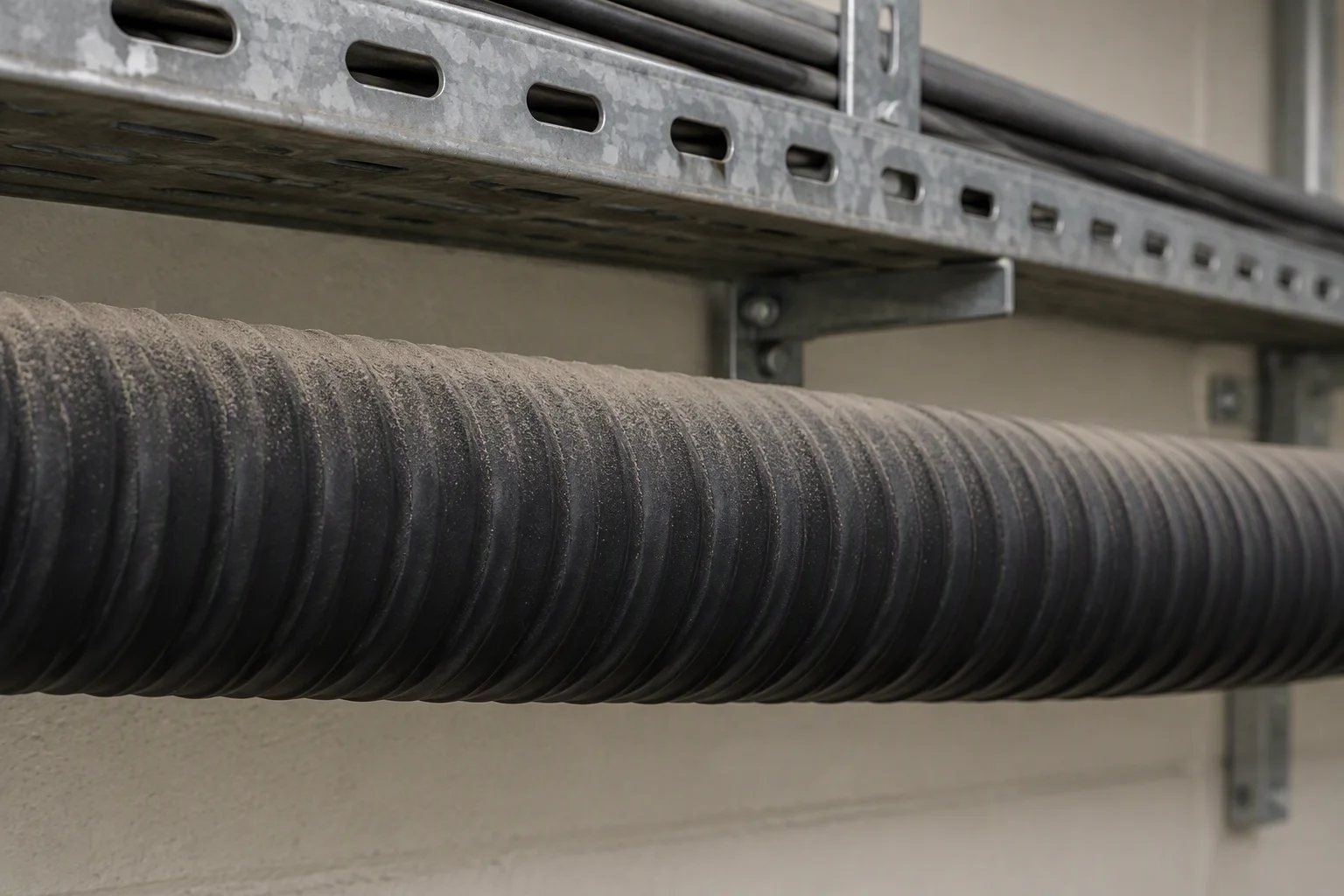
Air side. The cover when it is working is bare paper, and the cover is what measures. When it goes, the braid gets it.
How the run sits once it is in
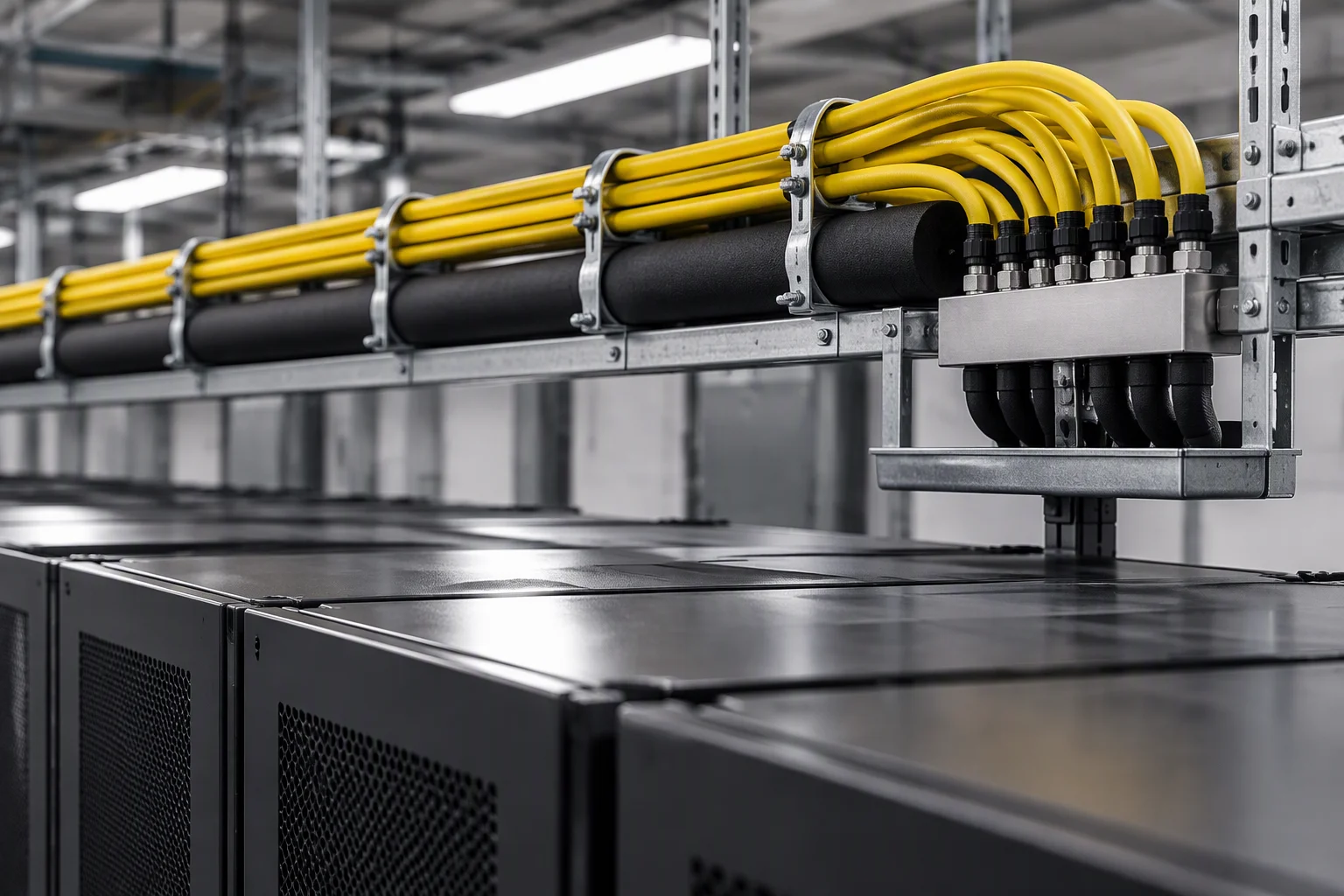
Clamped at the pitch the weight per metre allows, with the tray where the run turns down.
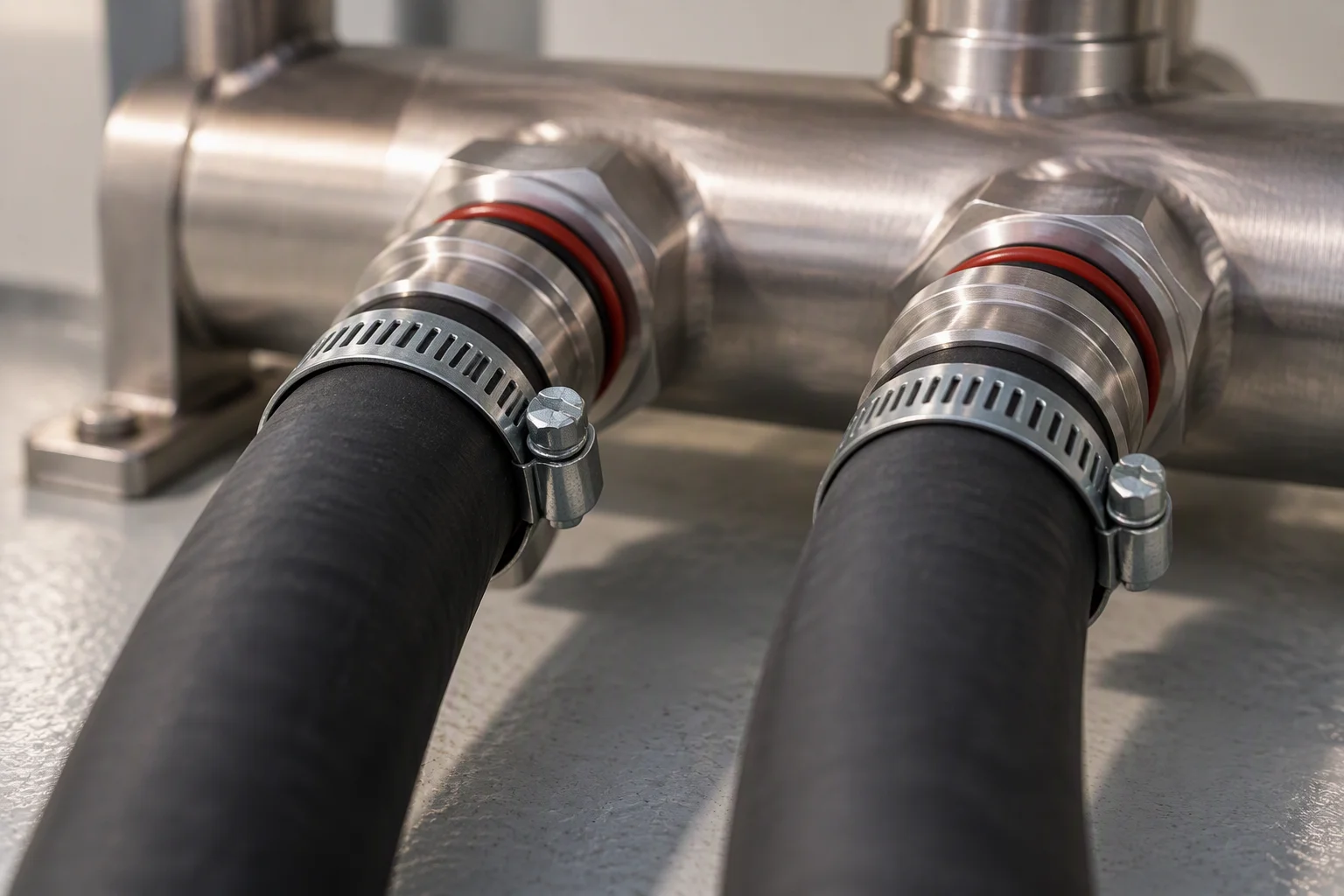
Manifold end. Ports are numbered; the hoses are cut to reach them without a fight.
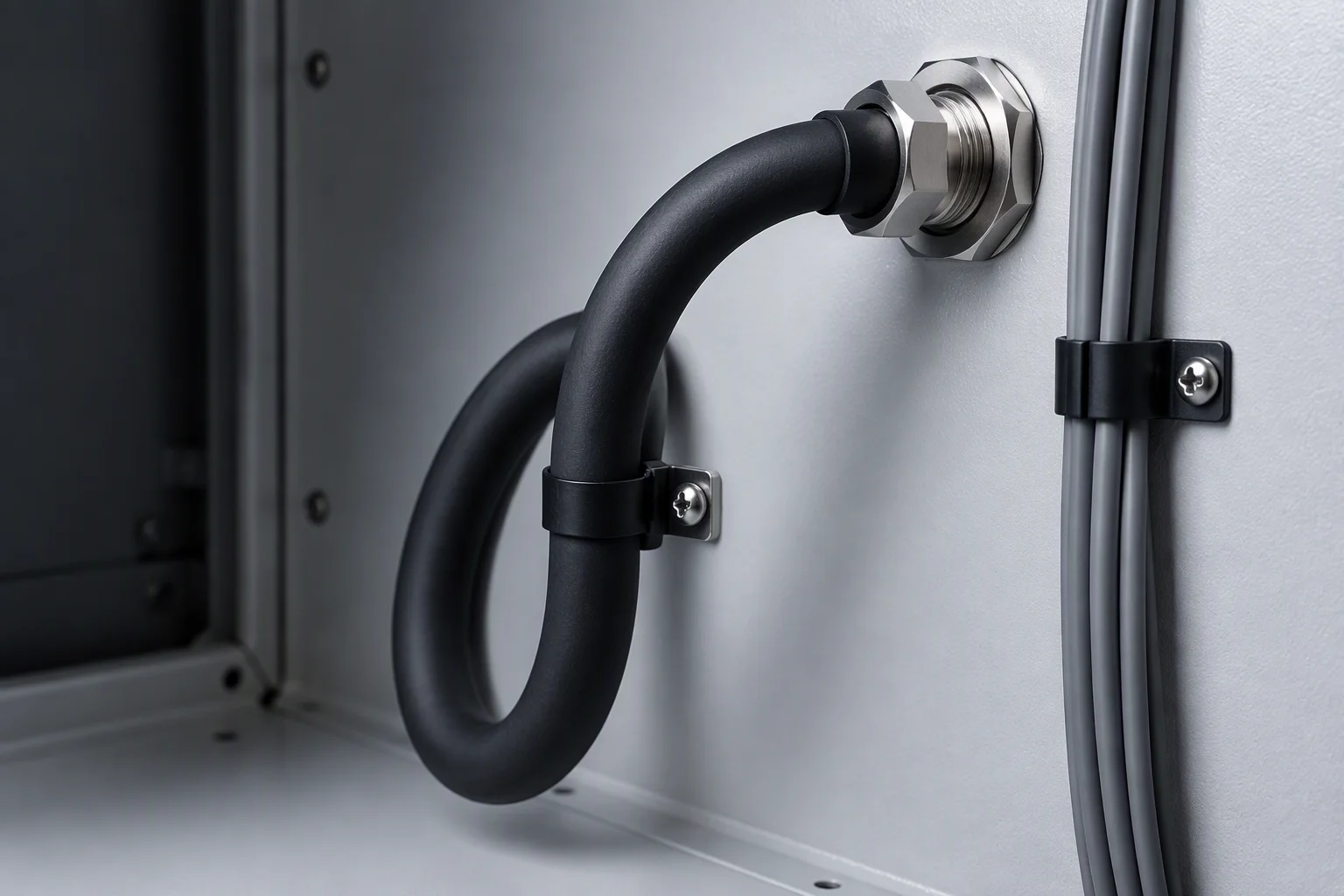
Rack end. A service loop is the difference between a rack swap and a re-cut.
What ships with the hose
Four documents leave with every batch, not on request.
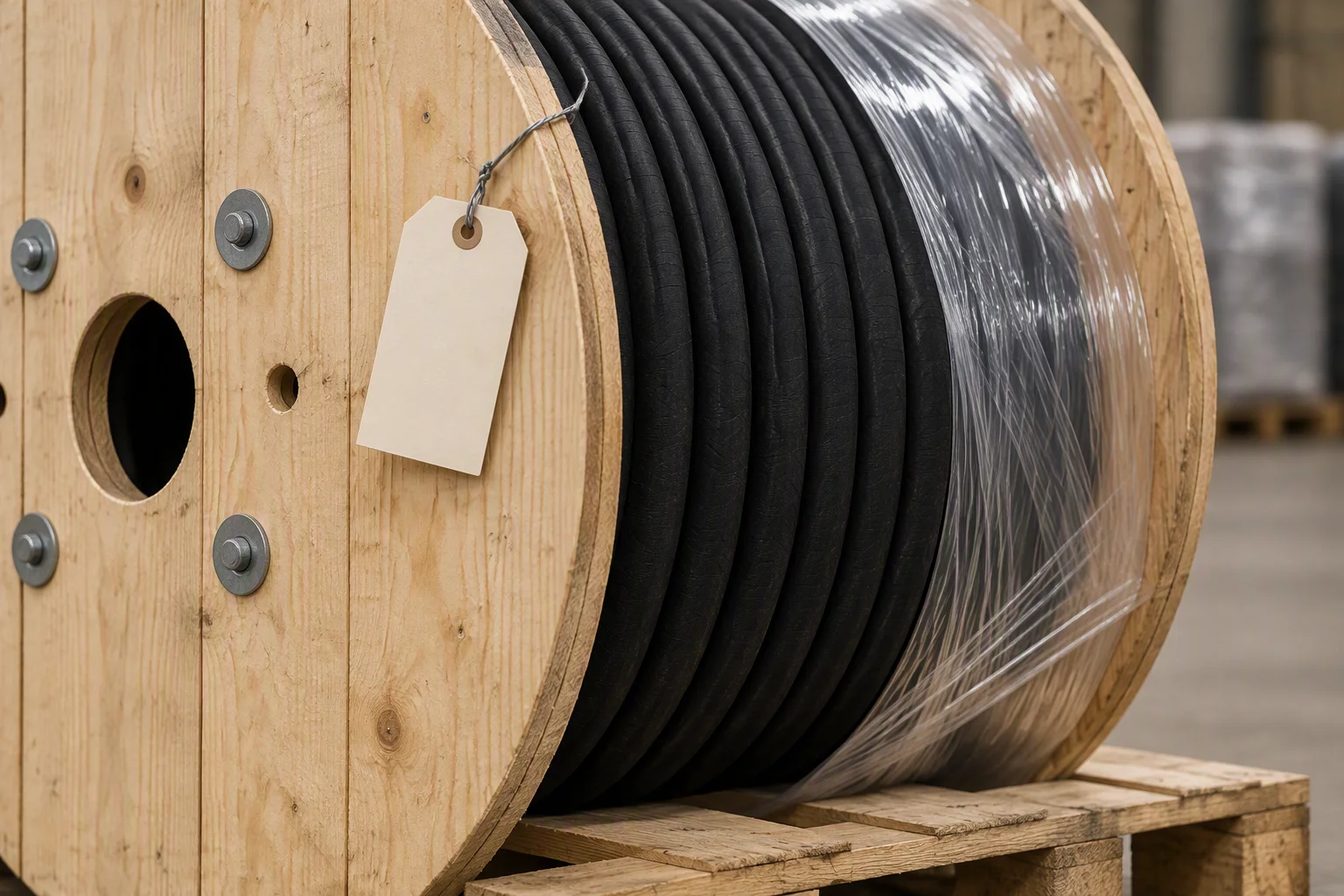
Reel marking. The batch and the length on the label, the coil under film.
Read next · Hose & piping · Fittings and seals · Quick disconnects
Request the specification file
The grade data sheet, the certificate, the test report and the drawings. Tick what you need.
One business day, with the file attached.
Nothing else on this sheet is promised. Price, stock and lead time are quoted against a request.
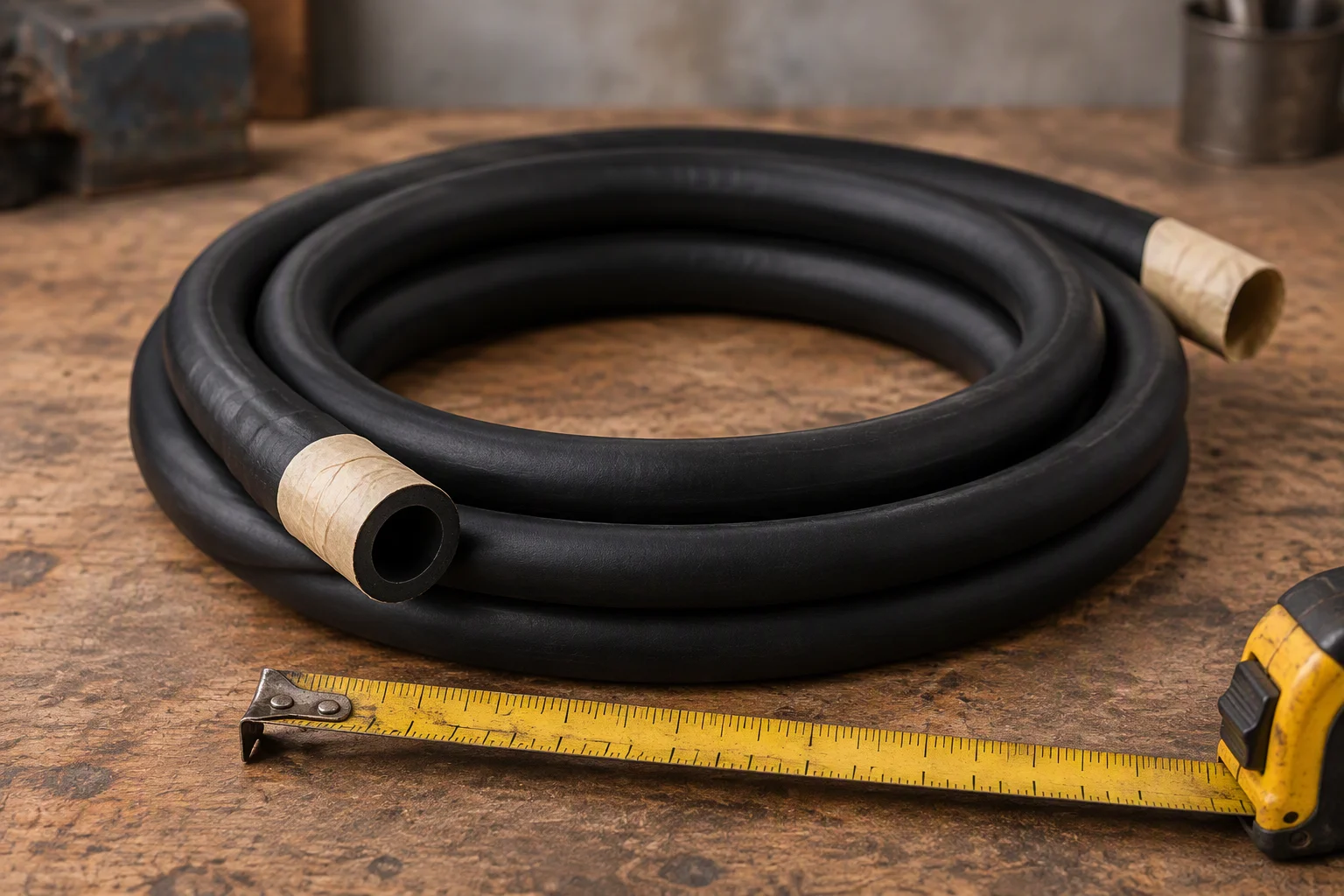
Cut to the drawing, ends taped until the fitting goes on.
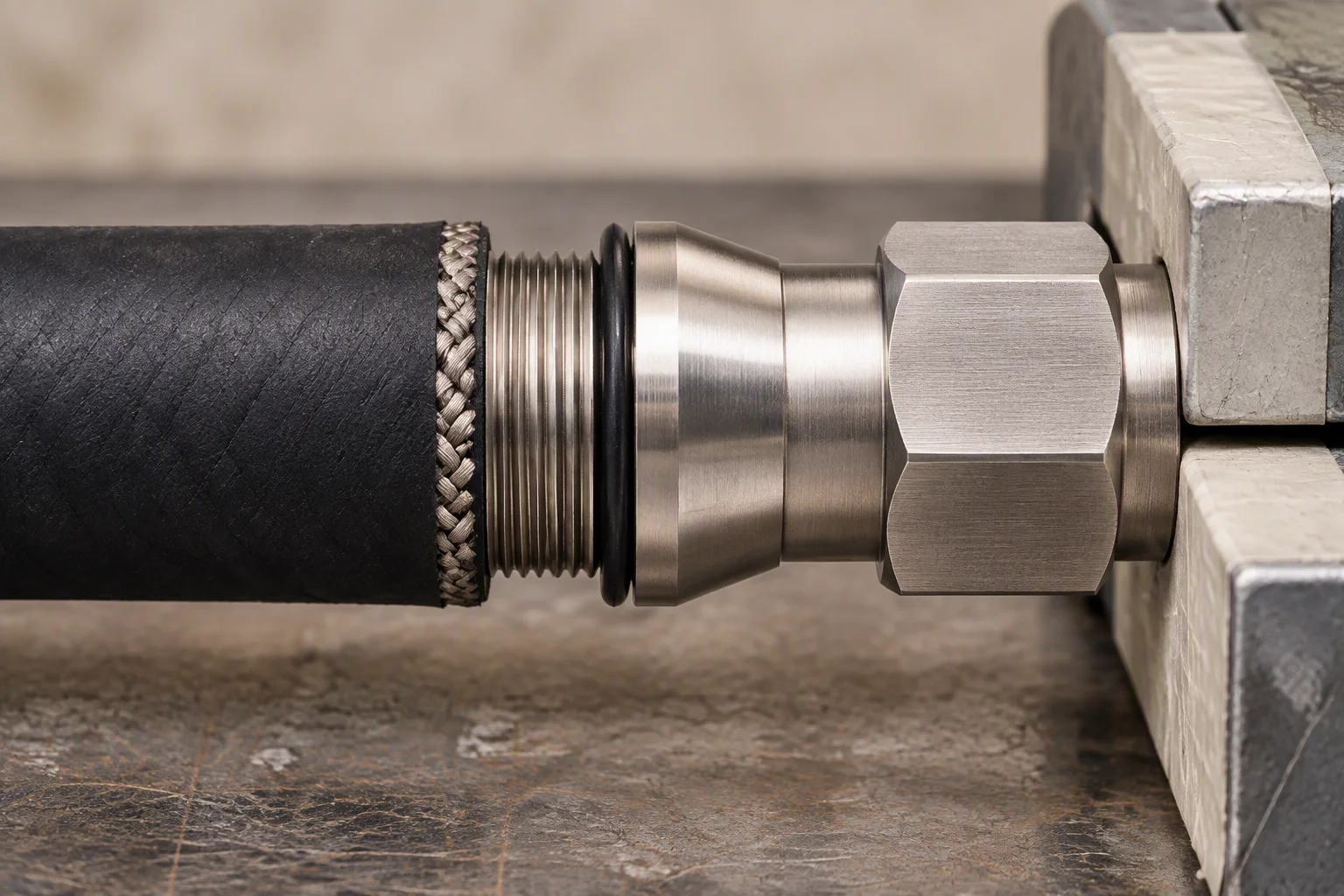
Square cut, braid clean. The fitting is made up before the run leaves the bench.