EMS-Trade
Cooling
Loop consumables

Document ECT-01 · REV C · ISSUED 2026-09 Six lines · 48 sheets

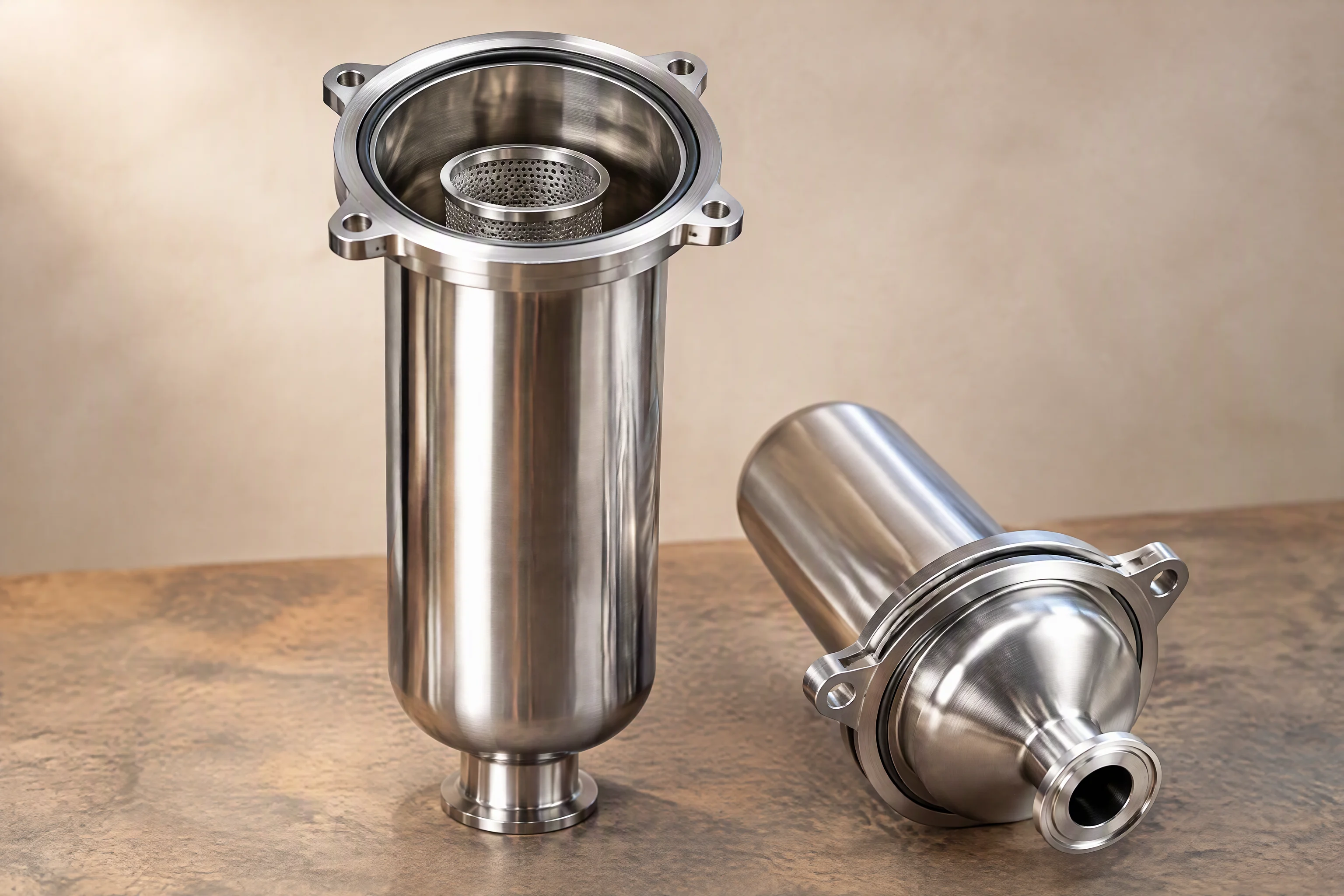
A stainless cartridge housing standing on a bench with the lid lifted clear, the bolt holes empty and the machined seal seat in the rim catching the light
Plate 24 · Filter housings · line 03 of six

What the housing fixes before the loop is filled

Material, design pressure, connection and element size. Four decisions that outlive every element change after them.

Request the specification file One business day, with the file attached

Body 304 · 316LDesign pressure 1.0 MPaElements 20 in · 40 in · 10 inCertificates EN 10204 3.1

01

Material, pressure, connection, element: one matrix

Section 01 · the matrix

Two of these four decisions are made once and never revisited. The body material decides whether chlorides are a problem for the life of the loop, and the design pressure decides the flange class you will be bolting to. The other two are read off the branch you are filtering.

Ask for the matrix cell that matches your branch, and the outline drawing follows with it.
The housing matrix: two body materials by three element sizes 304 bodies are quoted on 10 in, 20 in and 40 in. 316L bodies are quoted on 20 in and 40 in. The 10 in branch is a 304 body because the wetted chloride load is the same as the main run, so 316L there would not change the service life. 10 in 20 in 40 in 304 316L 1.0 MPa DN25 branch 1.0 MPa flanged or threaded 1.0 MPa flanged or threaded not quoted 1.0 MPa flanged or threaded 1.0 MPa flanged or threaded Element size runs across, body material down. One cell is empty on purpose. Every cell carries the same design pressure: 1.0 MPa and above, tested per batch.
Empty cell 316L on a 10 in branch Why the wetted chloride load on that branch is the same as the main run Ask instead a 20 in body on the same branch, or a 304 body on the branch as drawn
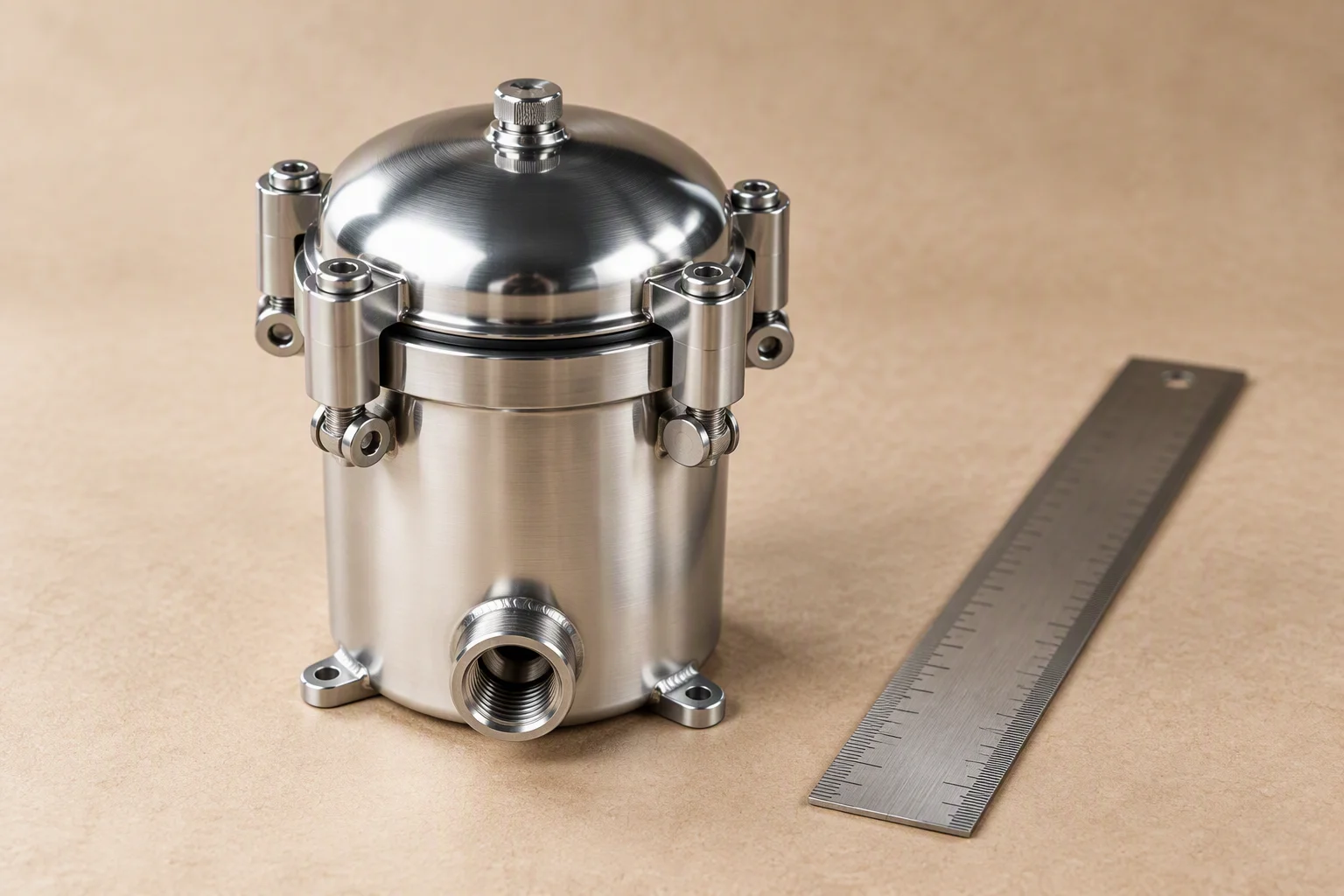
A short single cartridge housing on a bench beside a tape measure, its threaded base connection facing the camera and its lid bolts still in place
FIG 01

10 in on a low flow branch: the smallest body in the matrix, and the one with a threaded base.
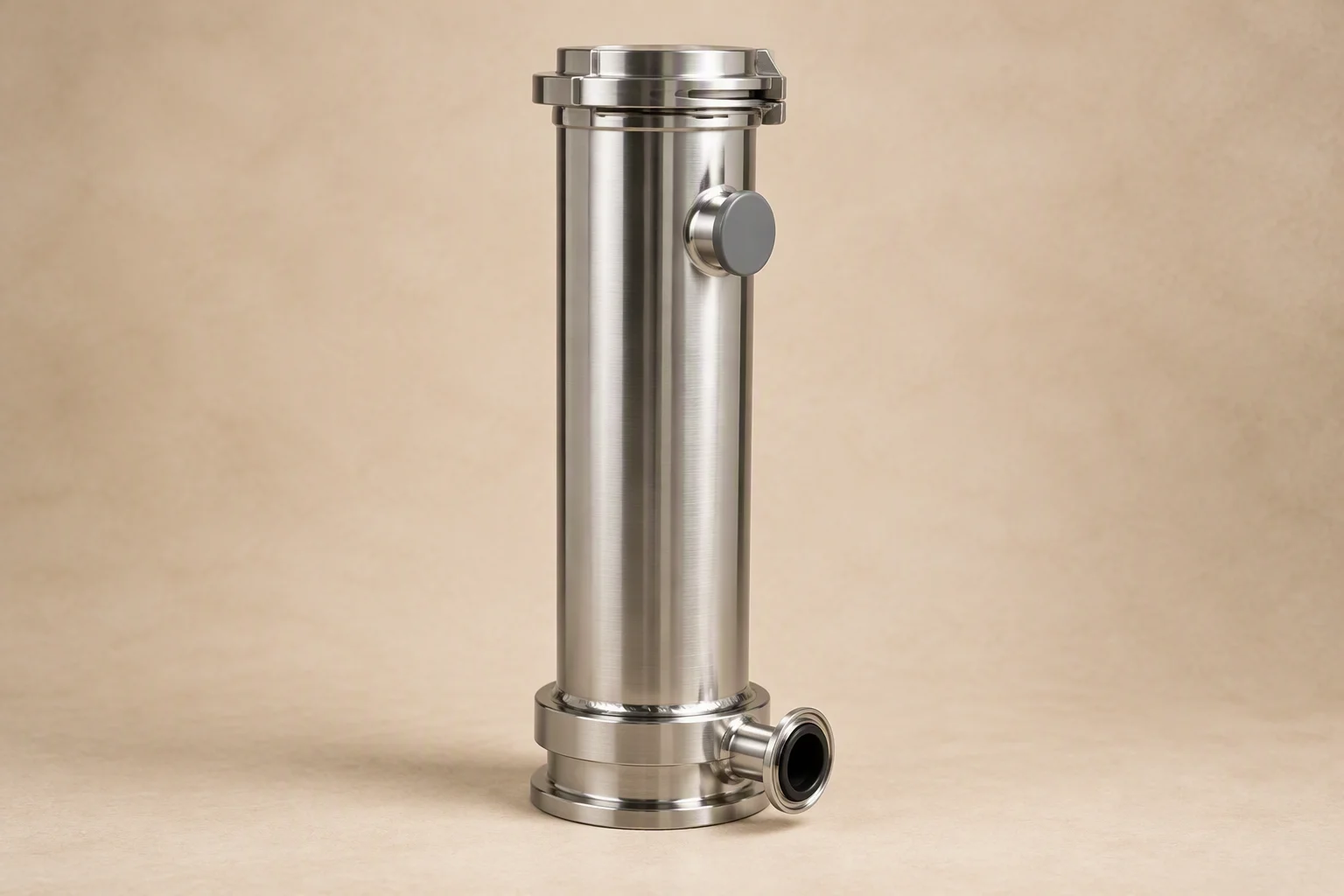
A 20 in cartridge housing standing upright, flanged connections at the base, a gauge port blanked on the side of the body and the lid rim machined flat
FIG 02

20 in, flanged: the body most loop branches are actually drawn with.
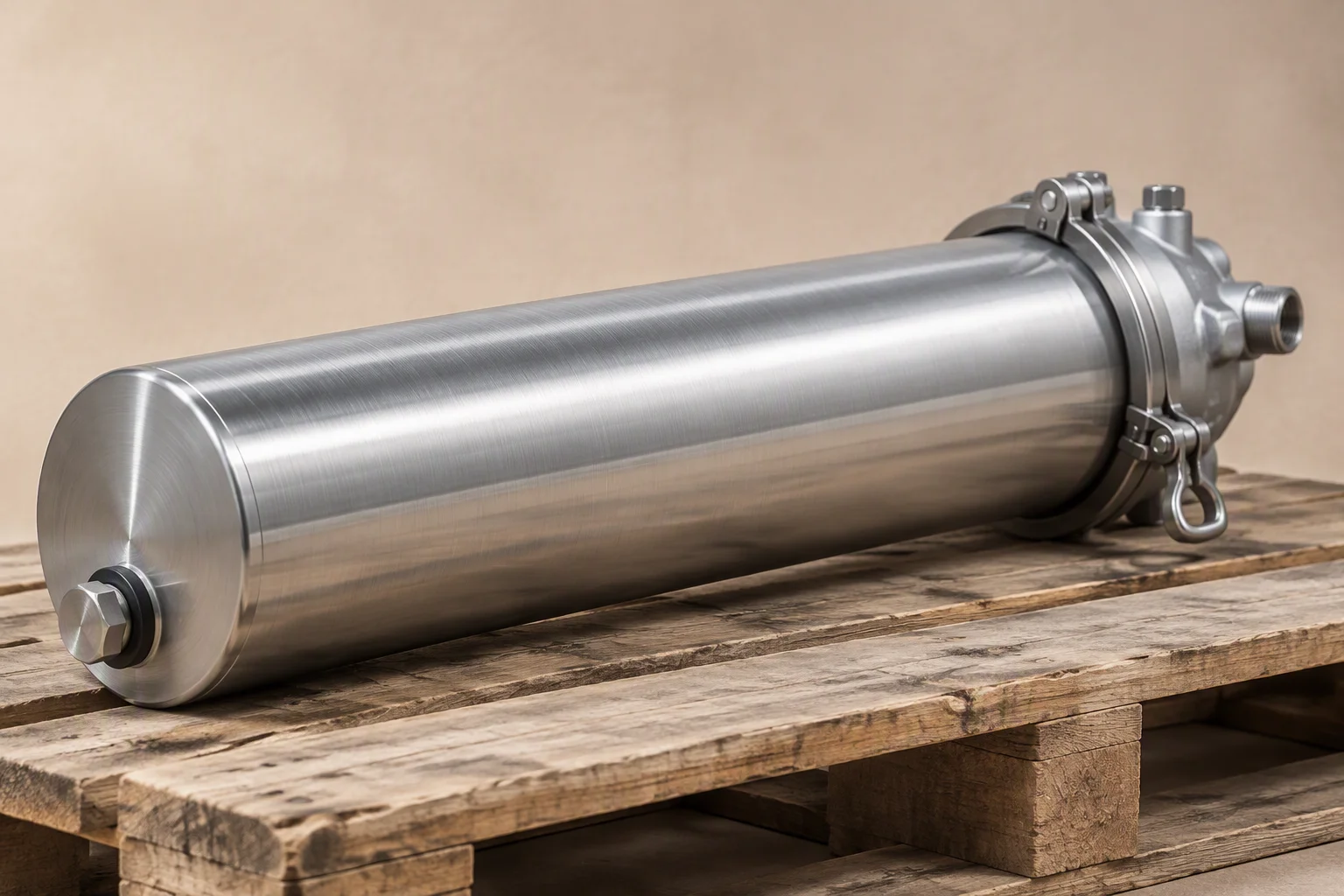
A 40 in cartridge housing laid on its side on a pallet, the lid at the far end, its length running the full width of the frame
FIG 03

40 in on the main run. Same seat, same seal, twice the media.

02

The four parts of the range, one cell each
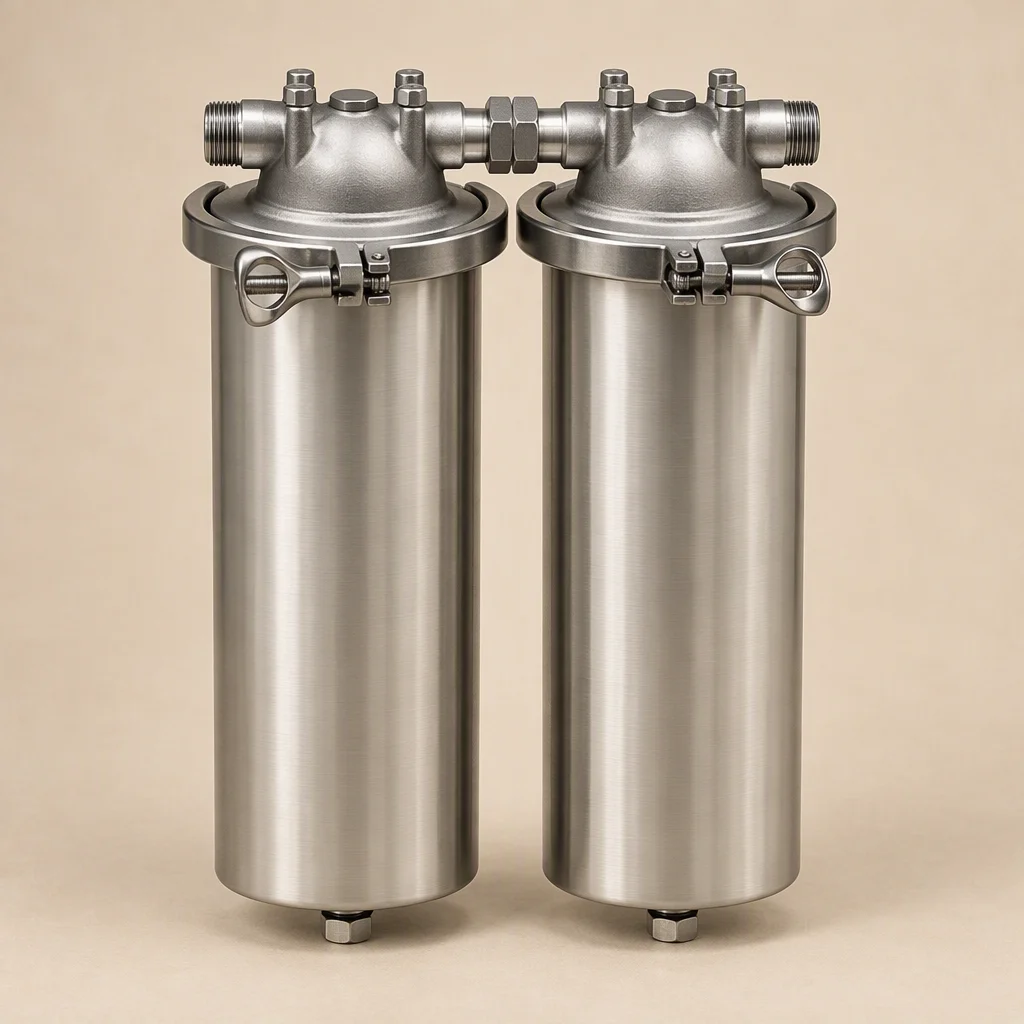
Section 02 · the range

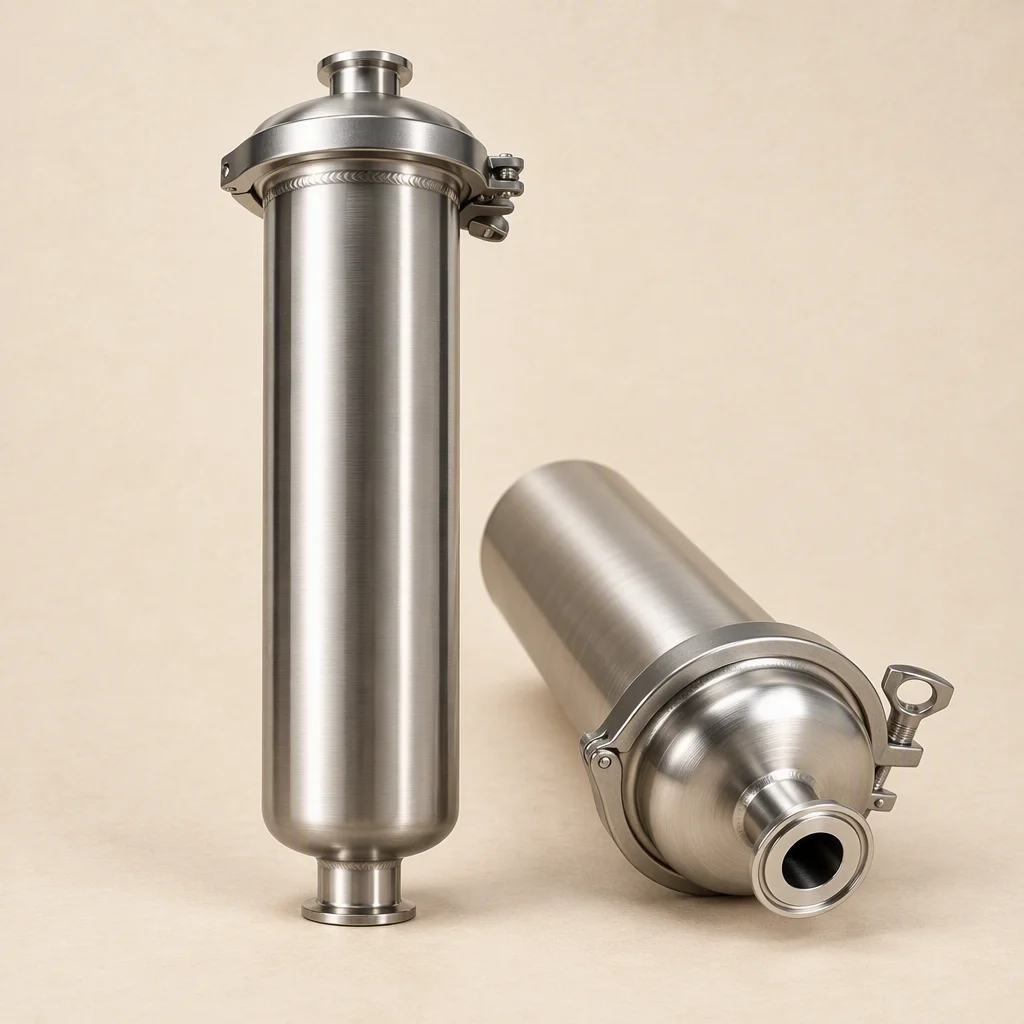
A 304 stainless cartridge housing photographed straight on against a plain ground, bolted lid at the top and a drain plug at the base
PL 04 304 body Closed treated water · 1.0 MPa
A 316L stainless cartridge housing photographed straight on against a plain ground, the weld bead along the body visible under the lid flange
PL 05 316L body Chloride or semiconductor duty · 1.0 MPa
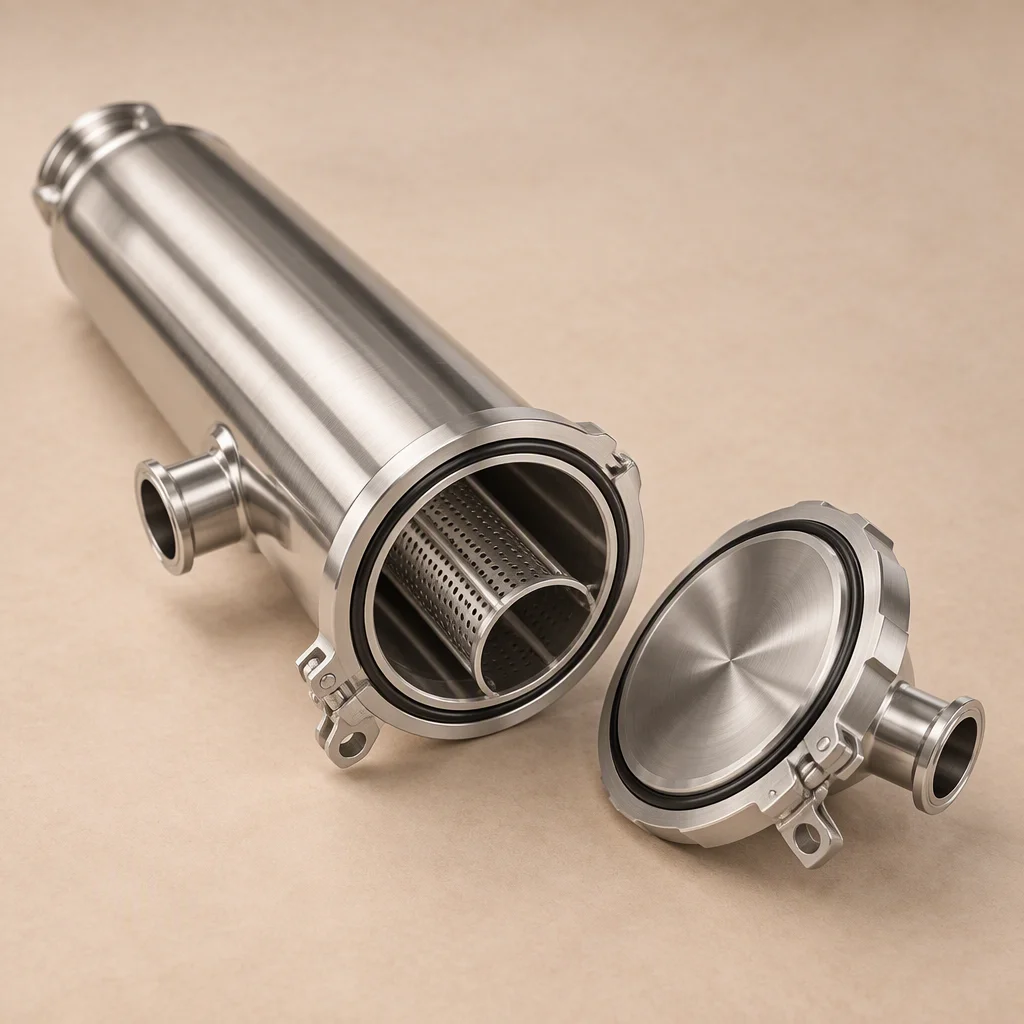
A 40 in housing body photographed against a plain ground with its lid removed and laid beside it, the basket visible inside the bore
PL 06 40 in body Main run · flanged base
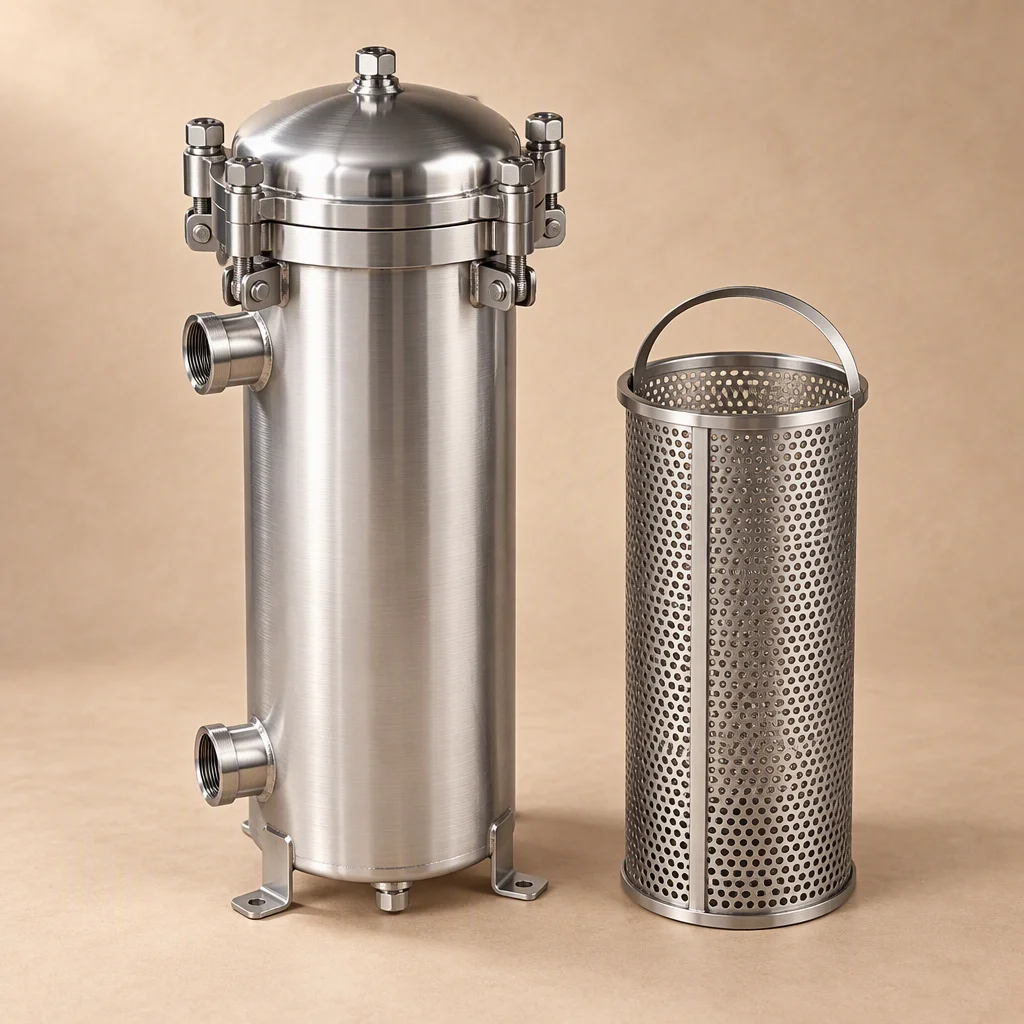
A bag filter housing photographed against a plain ground, a wide bolted lid at the top and a stainless basket standing beside it on the same mat
PL 07 Bag body High dirt load · coarser grade

The strip shows four bodies, not four options on one branch. A branch takes one cell of the matrix above.

03

Order quantity and lead time, in numbers
Section 03 · order and lead time

Minimum
1 carton on standard bodies, 500 m on custom lengths
Sample
7–10 days, with the first article inspection record
Production
25–35 days from the drawing being signed
Terms
FOB Shenzhen, CIF or DDP
Documents
commercial invoice, packing list, bill of lading, certificate of origin, EN 10204 3.1
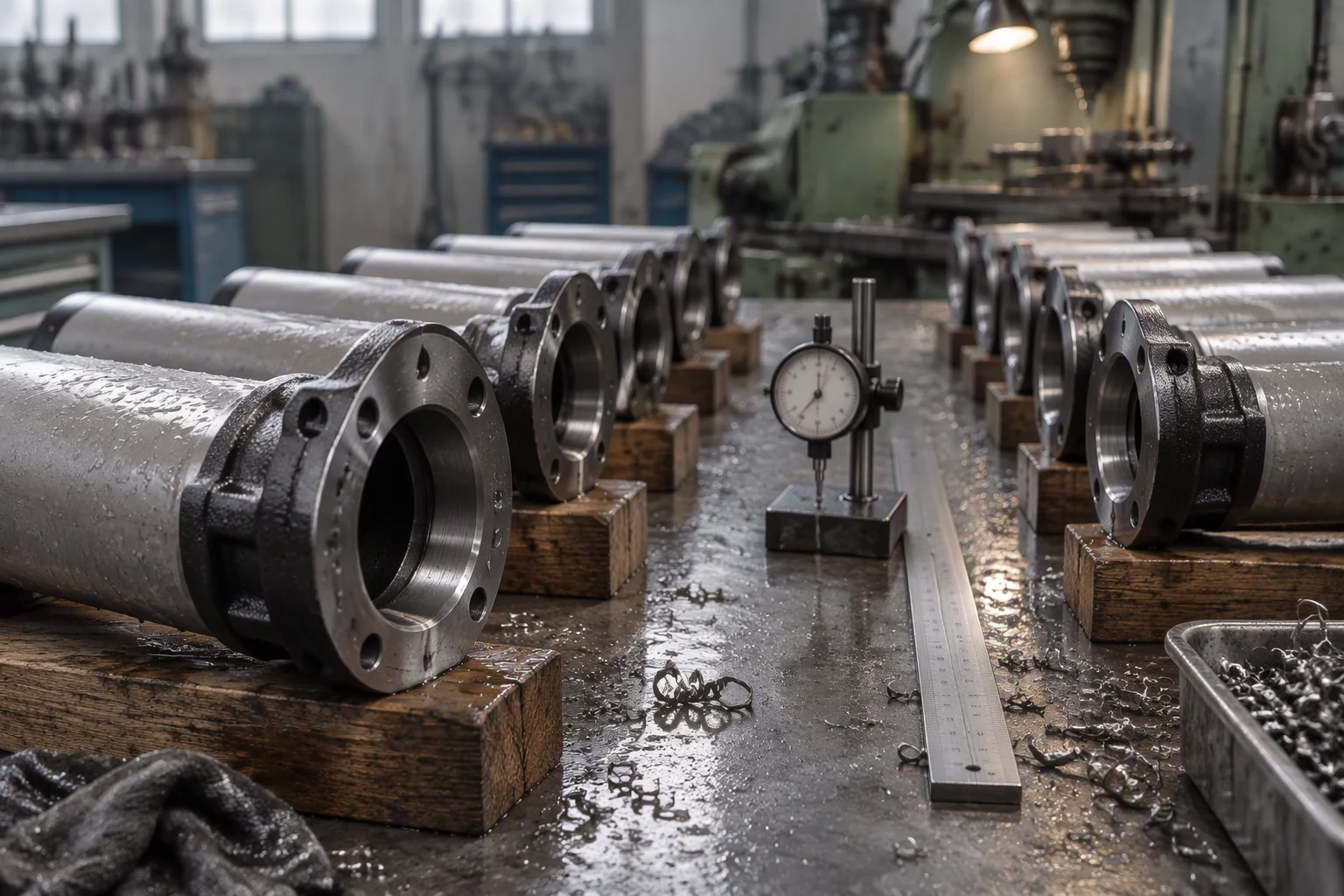
Housing bodies in a row on an inspection bench under a lamp, each one on a pair of wooden blocks with its rim facing the camera
FIG 04

A batch on the bench. Every body is looked at before it is boxed, not sampled from.
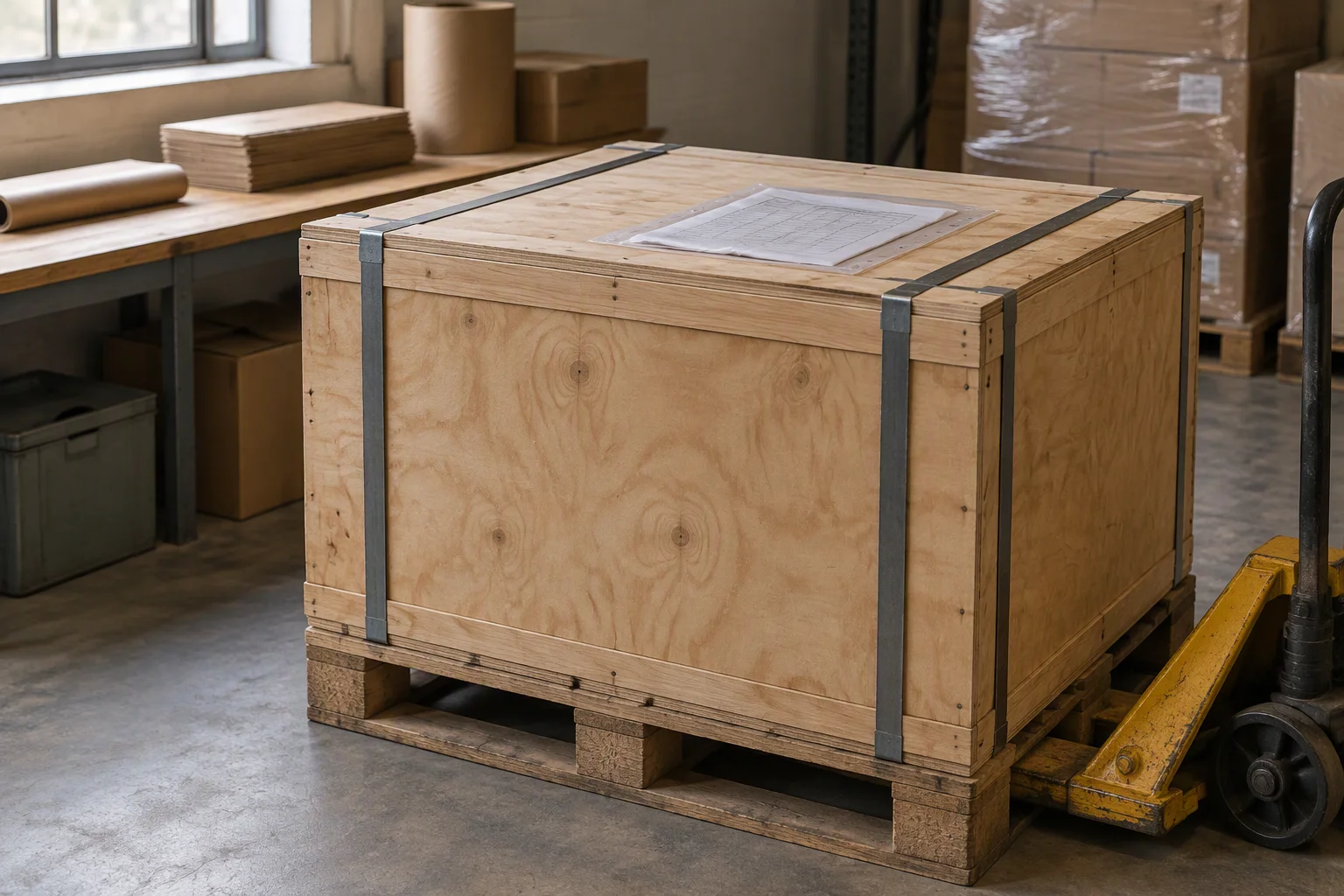
A closed plywood export crate on a pallet with steel banding over the corners and a folded sheet in a clear sleeve stapled to the lid
FIG 05

The crate that leaves. The list on the lid and the list inside are the same list.

04

Packing and the papers that travel with it

Section 04 · packing and documents

Packing per line item · what a shipment is made of
Item Packed as With it Note
Housing body plywood crate 1 set Export wood carries the ISPM 15 mark; crates are banded, not nailed shut
Cartridge elements carton per 10 pcs Sealed in their own wrap, so a part-used carton keeps the rest clean
Lid seals and rings bagged per body 2 sets One fitted, one spare, in the same bag as the body
Documents in the crate 1 set EN 10204 3.1 material certificates, pressure test report, outline drawings

Documents stay pinned to the batch. A certificate issued for one batch is not reissued for the next one.
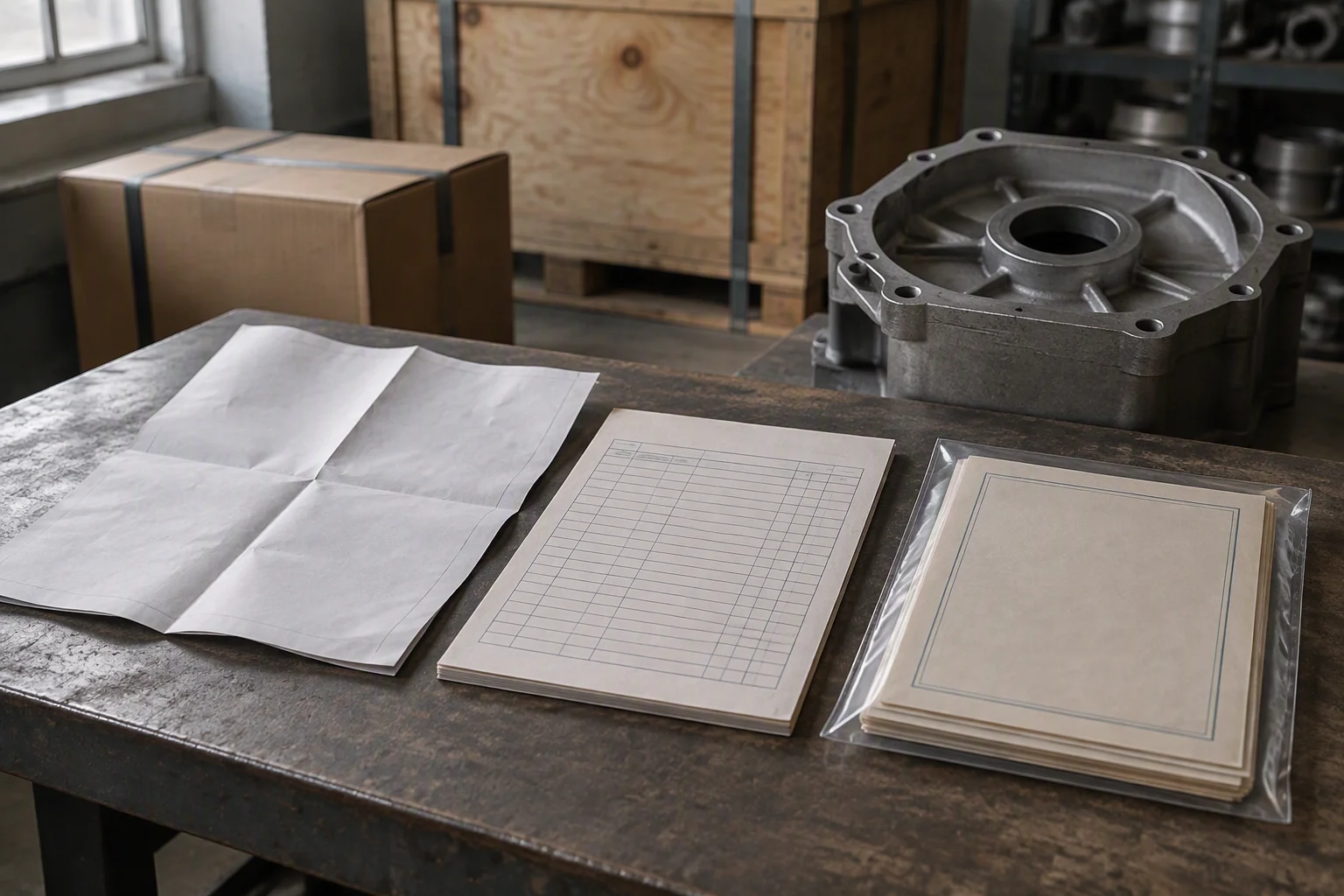
Three sheets laid out on a bench beside a housing lid: a folded outline drawing, a ruled test record and a certificate bundle in a clear sleeve
FIG 06

Drawing, test record, certificates. Three sheets per batch, not one per order.
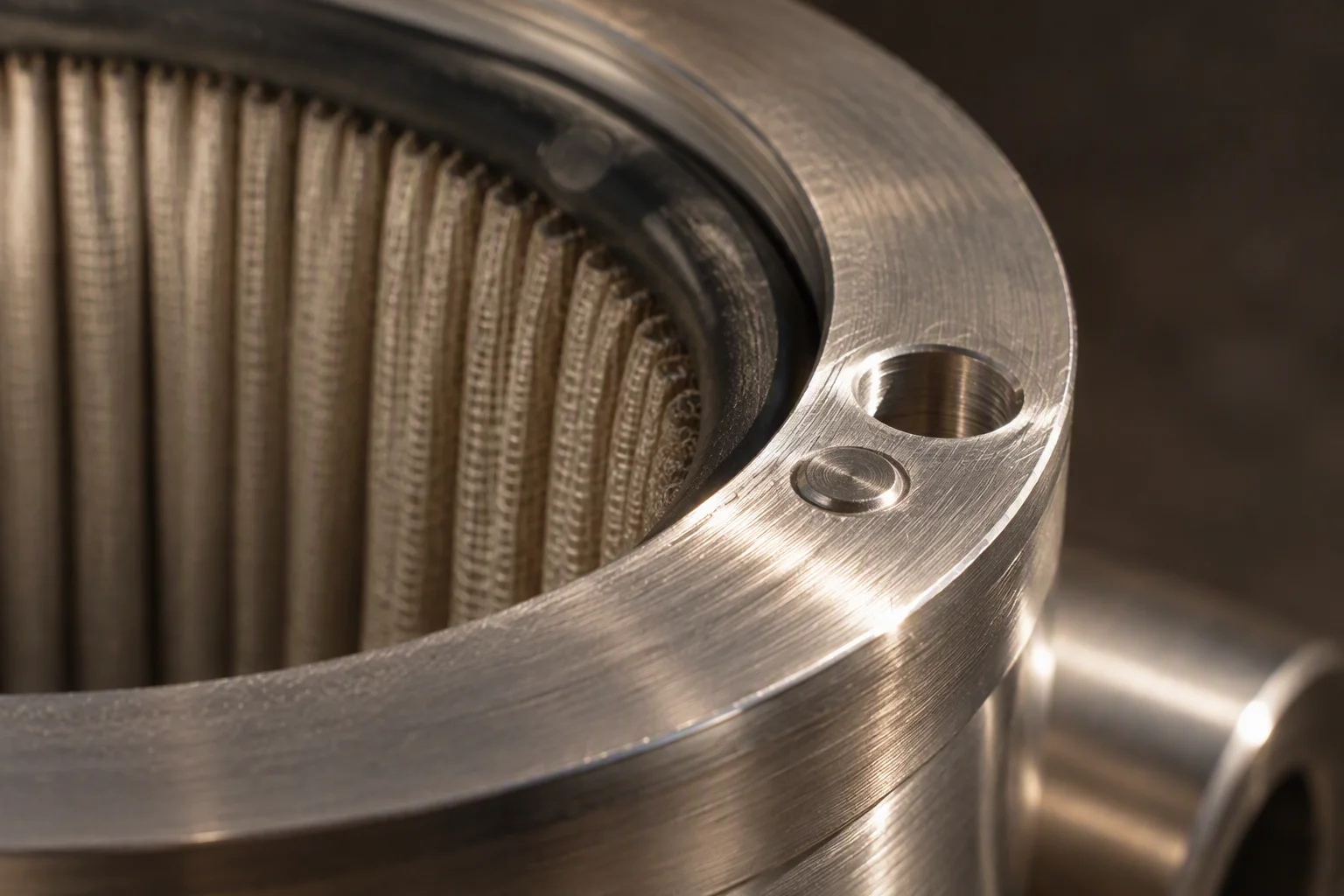
A body rim in close view where a stamp mark has been struck into the metal beside the lid bolt hole, the impression standing proud of the machined face
FIG 07

The batch number is struck into the body. The certificate names the batch, not the order.

05

Which line a body comes off, and where it is looked at

Section 05 · supply network

1 Cast or forged Body blanks and lid blanks, from works that pour to the grade, not to a family
2 Machined Seal seat and bolt face cut on the same setting, so the lid closes flat
3 Welded Body and base welded, then dressed before the pressure test, never after
4 Tested and boxed Pressure test per batch, then packing, in the same works
5 Packed for export ISPM 15 crates, documents pinned to the batch

No factory of ours appears in these photographs. They show lines our orders run through, and the incoming inspection every batch passes before it leaves Shenzhen.

The inspection record names what was measured and on which batch, up to and including the pressure test.
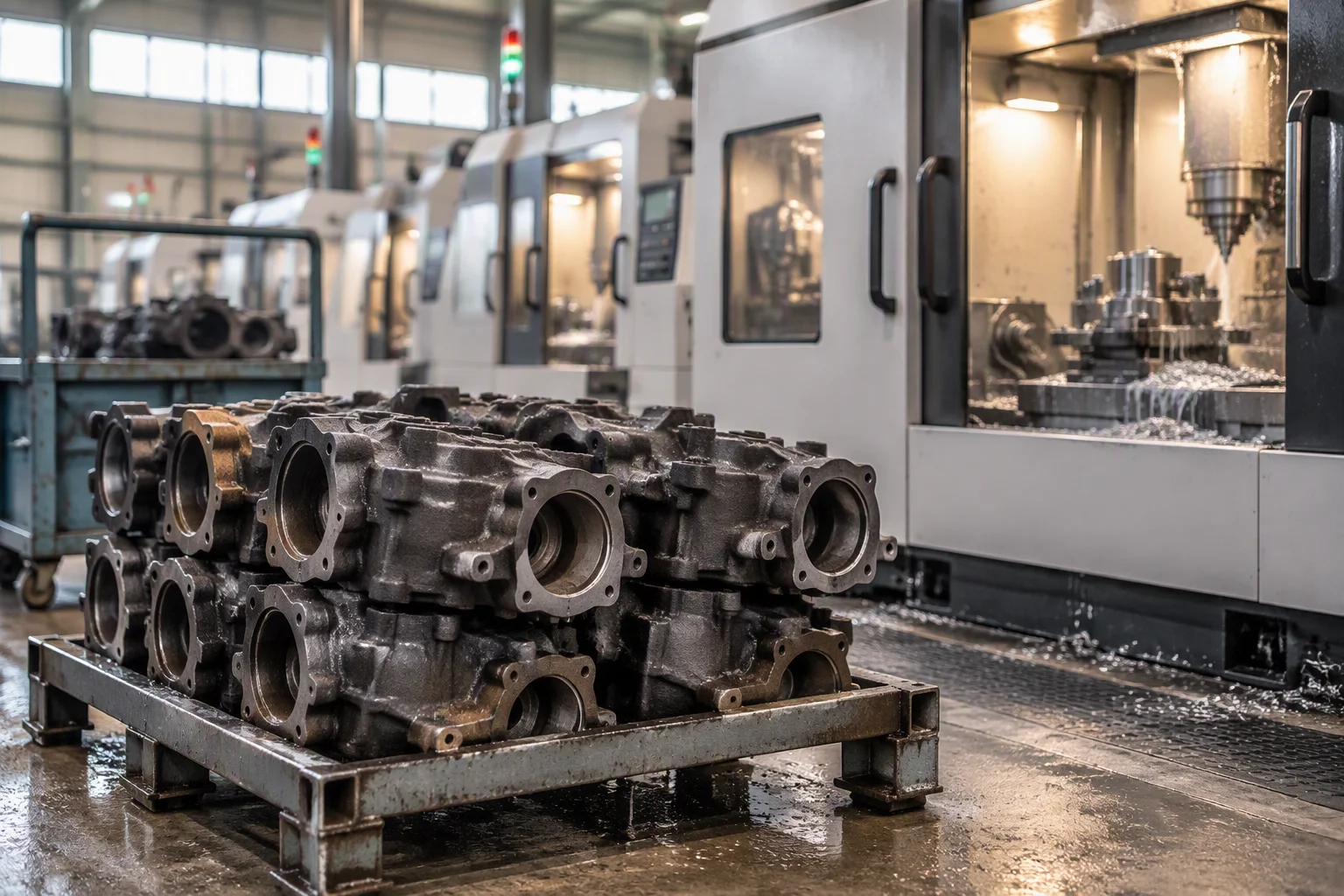
A foundry floor with cast blanks stacked on a steel pallet, still dark from the mould and waiting to go to the machining cell
FIG 08

Blanks arrive cast to the grade. The heat number travels with them.
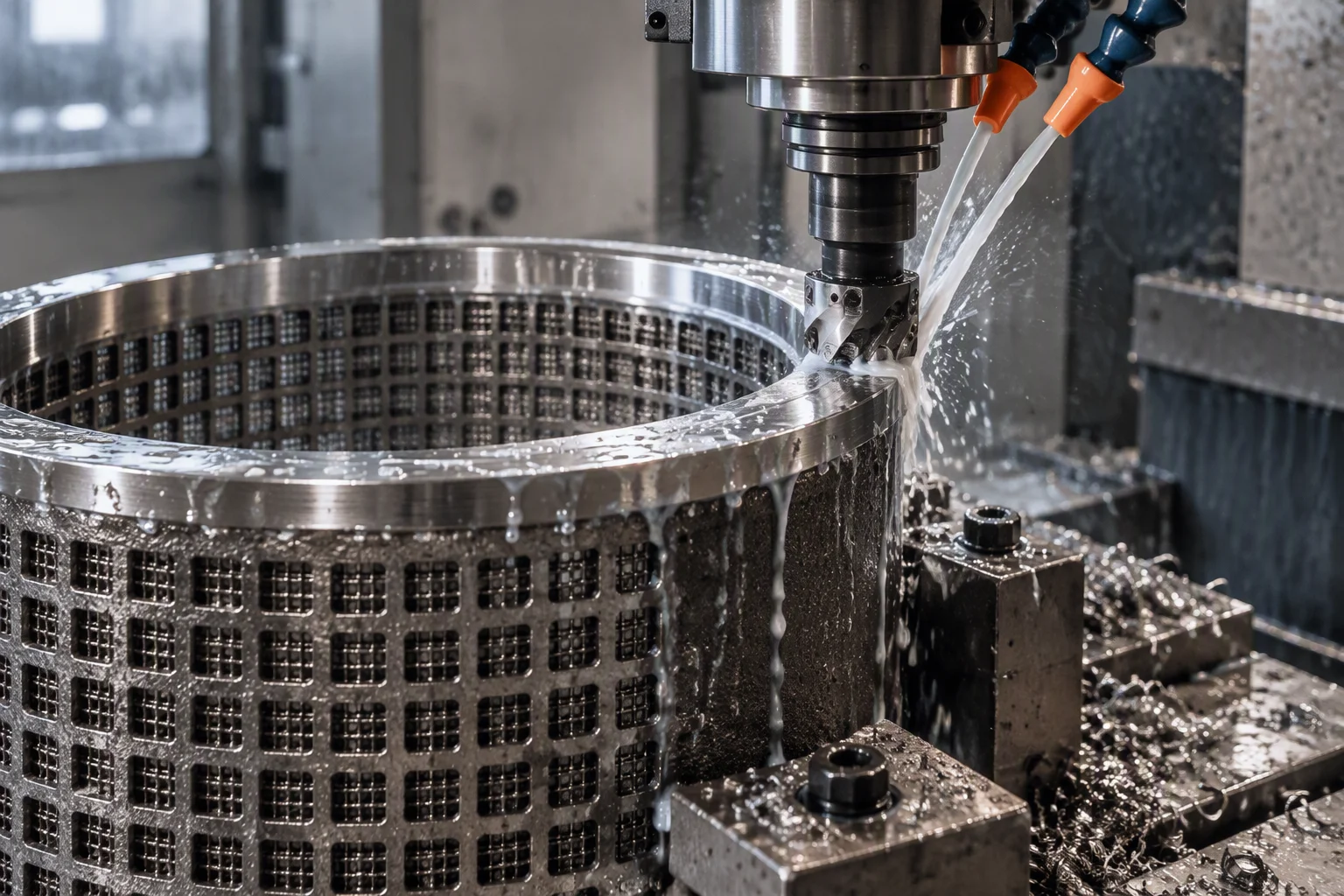
A machining cell cutting a housing rim, coolant running over the tool and the machined seal seat bright against the darker casting
FIG 09

Seat and bolt face in one setting. Two settings is how a lid ends up cocked.
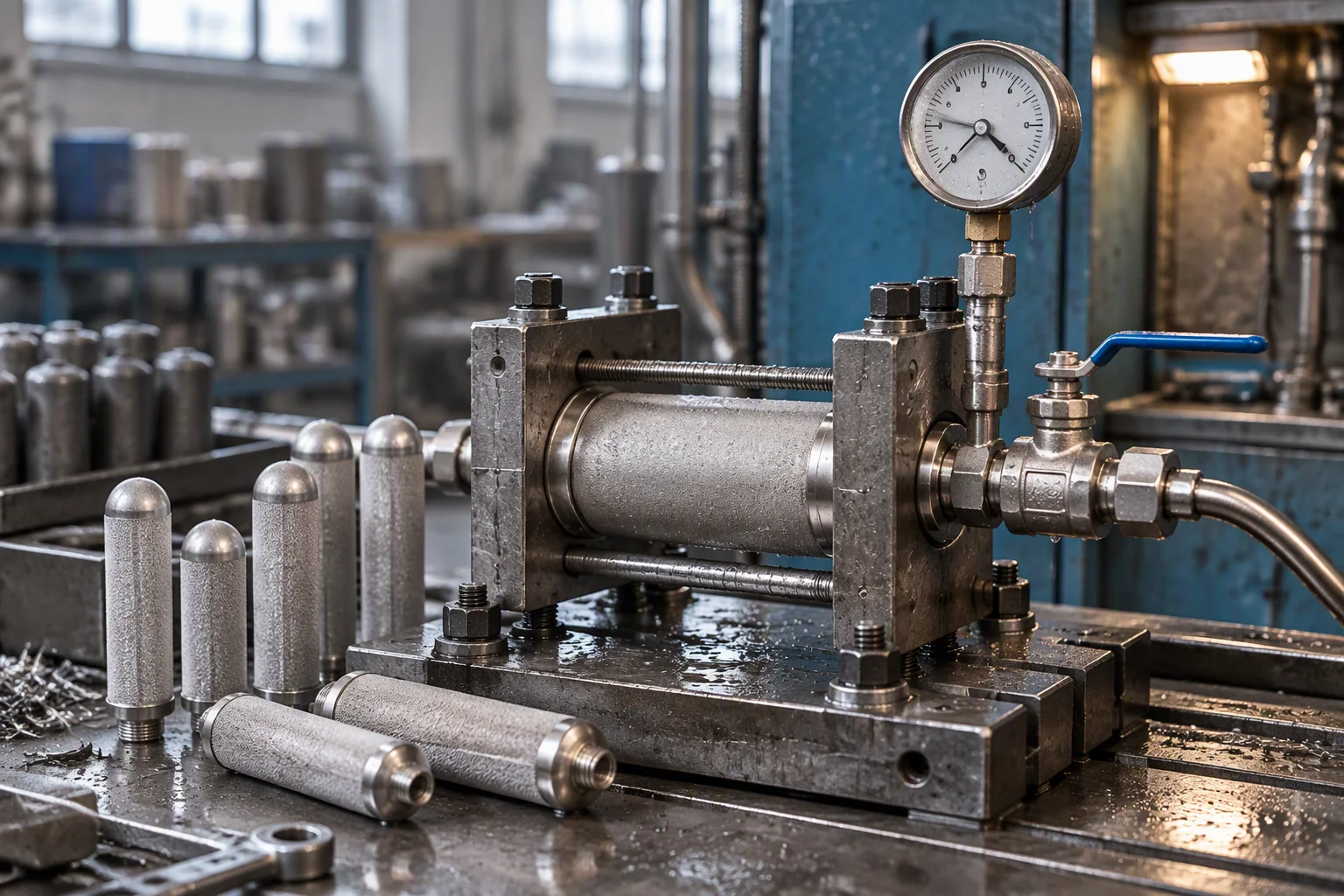
A pressure test rig with a housing clamped between blanking plates, a gauge above it reading and the valve handle standing open
FIG 10

Held at test pressure, read off a gauge, written into the batch record.

Read next · Coolant filtration · Filter cartridges · Quality & inspection

Document request

Four documents are held for this sheet. Tick the ones you need.

Tick a document, name the branch and the quantity, and the file comes back attached.

The only promise on this page

One business day, with the file attached.

No other commitment is made on this sheet. Price, stock and lead time are not promised here.
If the form cannot send, the address below takes it instead: sales@ems-cool.com. A request is never accepted and then dropped.
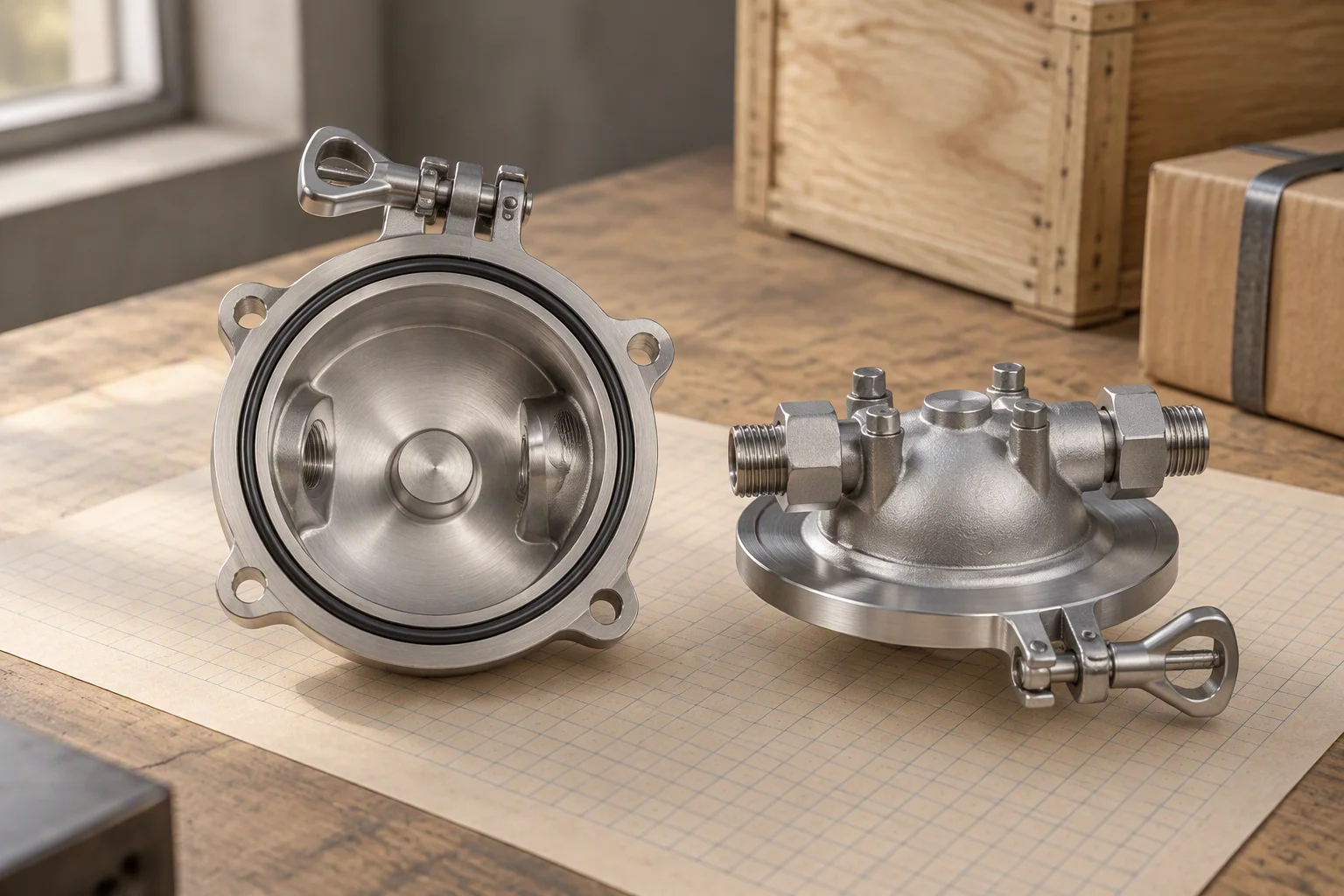
A housing lid turned over on a bench, its seal groove and bolt holes facing the camera and the same lid's machined face shown in a second position beside it
FIG 11

The lid and the rim it closes on. Both faces are dimensioned on the drawing you get.
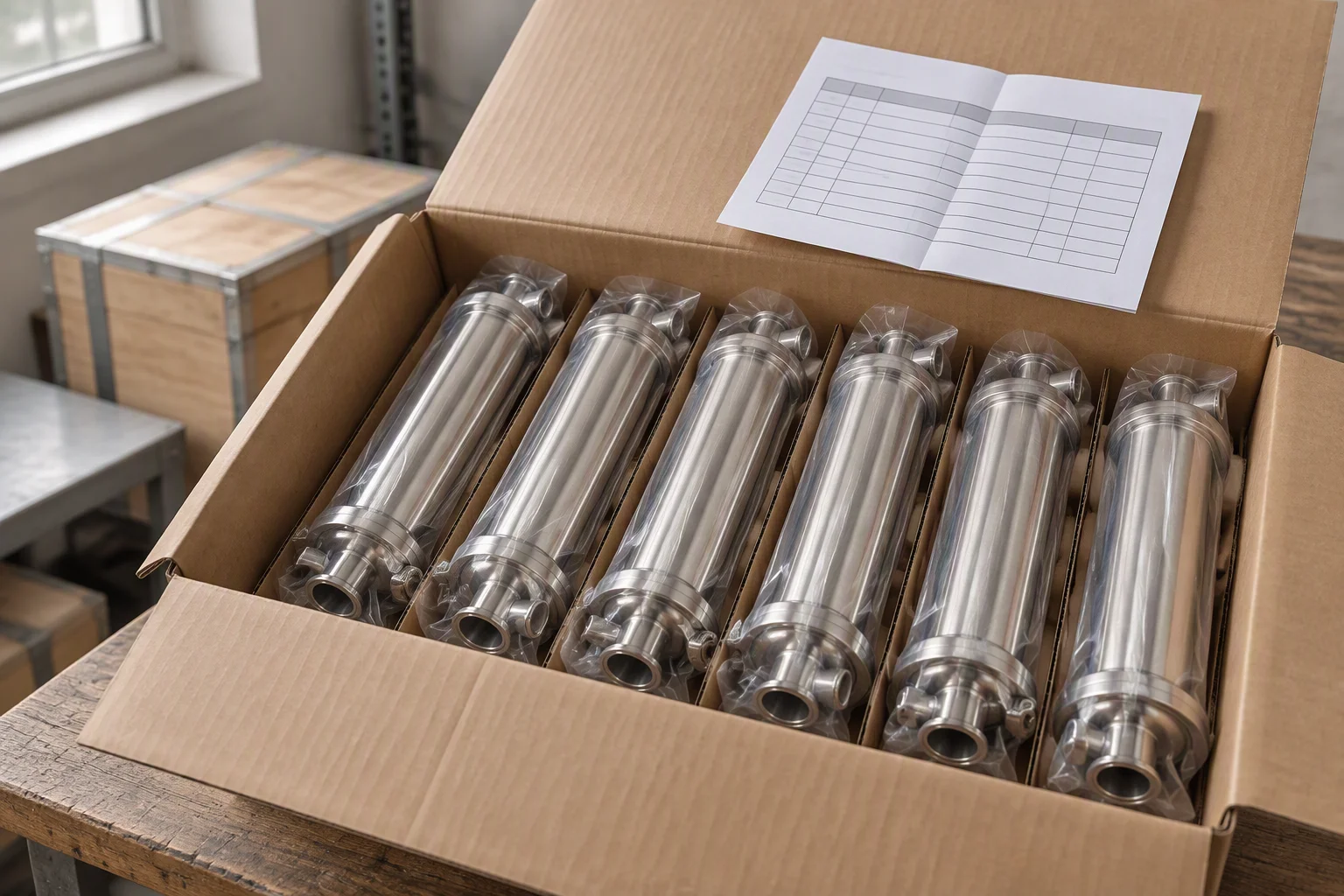
A carton of cartridge elements open on a bench with the elements standing in rows, their wrap still on and the packing list lying across the open lid
FIG 12

Elements boxed and listed. The list is the same one stapled to the crate.