Industrial PLC, 7-inch HMI
Fill and drain logic and the metering read-out.
A rack-level CDU secondary circuit holds as little as 5.7 L. A 200 L cart against it is roughly 22×, and that ratio decides the tank class.
Primary 3.4 L.
By fill points.
No coolant distribution units and no cold plates.
 200 L class cart, plantroom floor
| Reference | Figure |
|---|---|
| Rack CDU internal fill pump flow | about 1.0 L/min |
| Rack CDU fill pump cut-out · reference, not a cart rating | 15 psi (1.0 bar) inlet · about 10 m |
Cart-level filtration on the fill pump discharge is a design requirement, not an option.
| Category | Figure and owner |
|---|---|
| Protection rating | 25 µm per pump · the fill pump discharge element |
| Commissioning staging | 100 to 50 to 25 µm · a procedure on flush skids |
| Strainer rating | 500 µm class · unit-inlet guard, not a filtration stage |
| Cleanliness acceptance limit | 0 particles at or above 50 µm |
Over 60 L/min on the 200 L class, against a rack-class TCS flow of 10–100 L/min and up to 140 L/min facility side.
Pumps at 25–30 % for 30 minutes minimum, then +10 % every 15 minutes to 75 %. Minimum pump speed 15 %.
Viscosity runs 1.68 mPa·s at 15 % PG and 8.20 mPa·s at 55 % at 20 °C. Do not leave a loop in a no-flow condition.
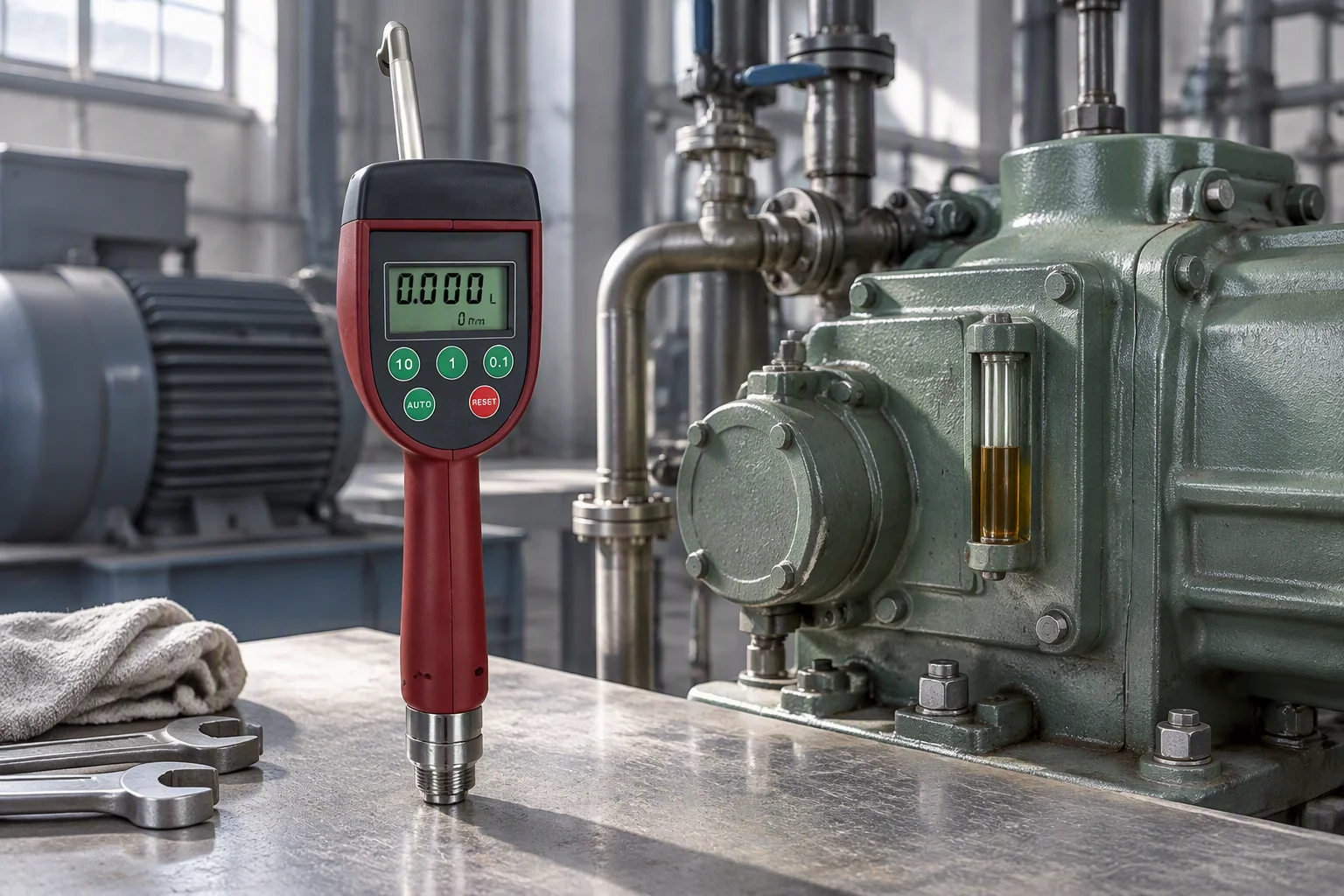
Fluid per fill point is small, so metering resolution matters more than tank size.
Fill and drain logic and the metering read-out.
Readings at the cart, with fluid-quality monitoring.
Overfill protection and level monitoring.
Wetted path of the cart and its hoses.
UQD04 and FD83 connectors
Preferred over sulfur-cured EPDM, which can add sulfate.
Technology cooling limit below 10 ppm sulfate
Brass above 15 % zinc: dezincification verification at 100 µm or less, with annual ICP zinc analysis.
Verification held to
One SKU ships without modification: the input is universal.
| Parameter | Value |
|---|---|
| Universal input | 90–267 V AC · 50/60 Hz single-phase |
| Reference build | 220 V / 1 PH / 50 Hz · 0.8 kW |
| Footprint | 1 120 × 920 × 1 350 mm |
| Operating and storage | 5–60 °C · −20 to 60 °C |
| Pressure row | 3.0 bar |
| Mobility | Portable cart on castors · 100–500 L class |
| Pump head | Not published · quoted on request |
The cart fills and drains a loop; it does not distribute coolant to a rack.
Leave your work email and the model code. Send the loop volume, the fill-point count and the fluid with the code where the sizing is the question.