ISO 4406 in practice: what 17/15/12 actually removes
The target is three code numbers read at one sampling, and it says nothing on its own about where the sample came from. Draw it from the tank and the loop reads clean while the element is still loading. Draw it on the return, upstream of the charge, and the same loop reads the number it is.
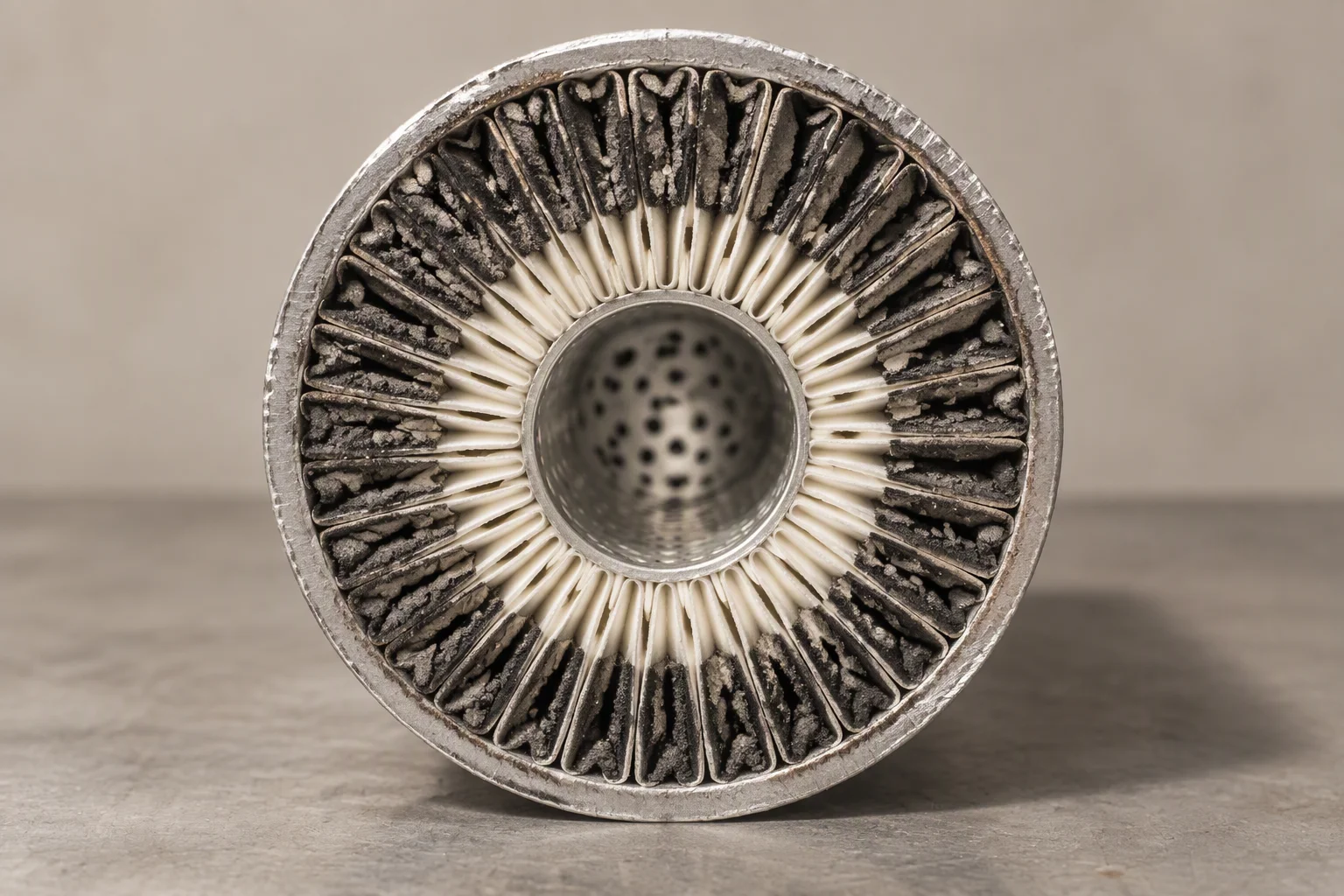
An element cut open is the only honest record of what a loop was carrying. The count is a photograph of one moment; the element is the roll of film.
The target is a snapshot, not an average
A cleanliness figure is a statement about fluid at one place at one moment. It is not a property of the loop and it does not average out. Two samples drawn an hour apart from the same loop, one at the tank and one on the return, can honestly differ by a wide margin.
The useful discipline is not to chase a lower number. It is to draw every sample from the same tapping, at a comparable point in the cycle, and write both down beside the figure. A number without its tapping is a claim that cannot be repeated.
What the target is for: ISO 4406 17/15/12 before the first charge. After that it is the reference the loop is held against, and the figure compared is the one drawn at the same tapping.
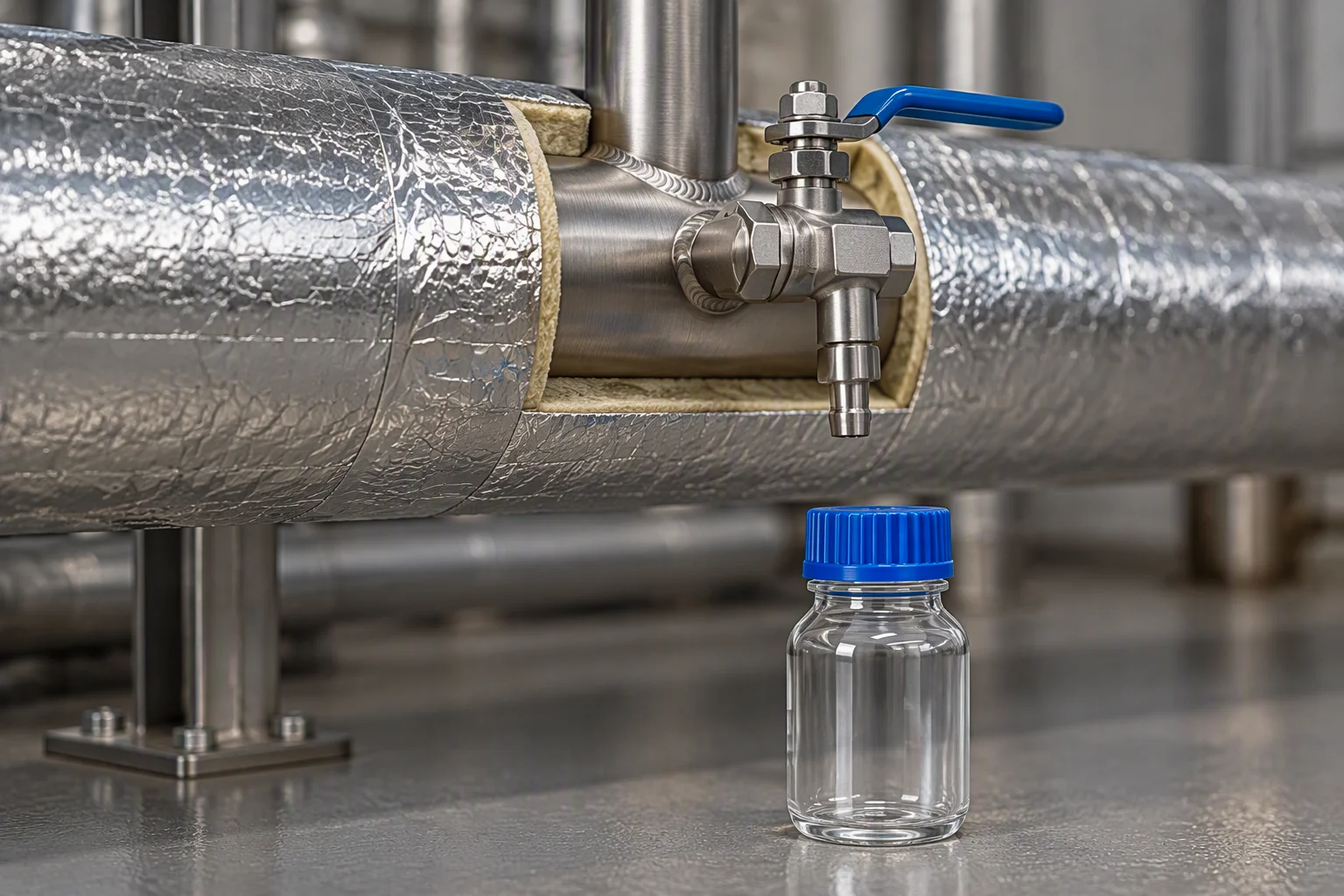
The tapping is part of the instrument. Move it and every earlier reading becomes incomparable.
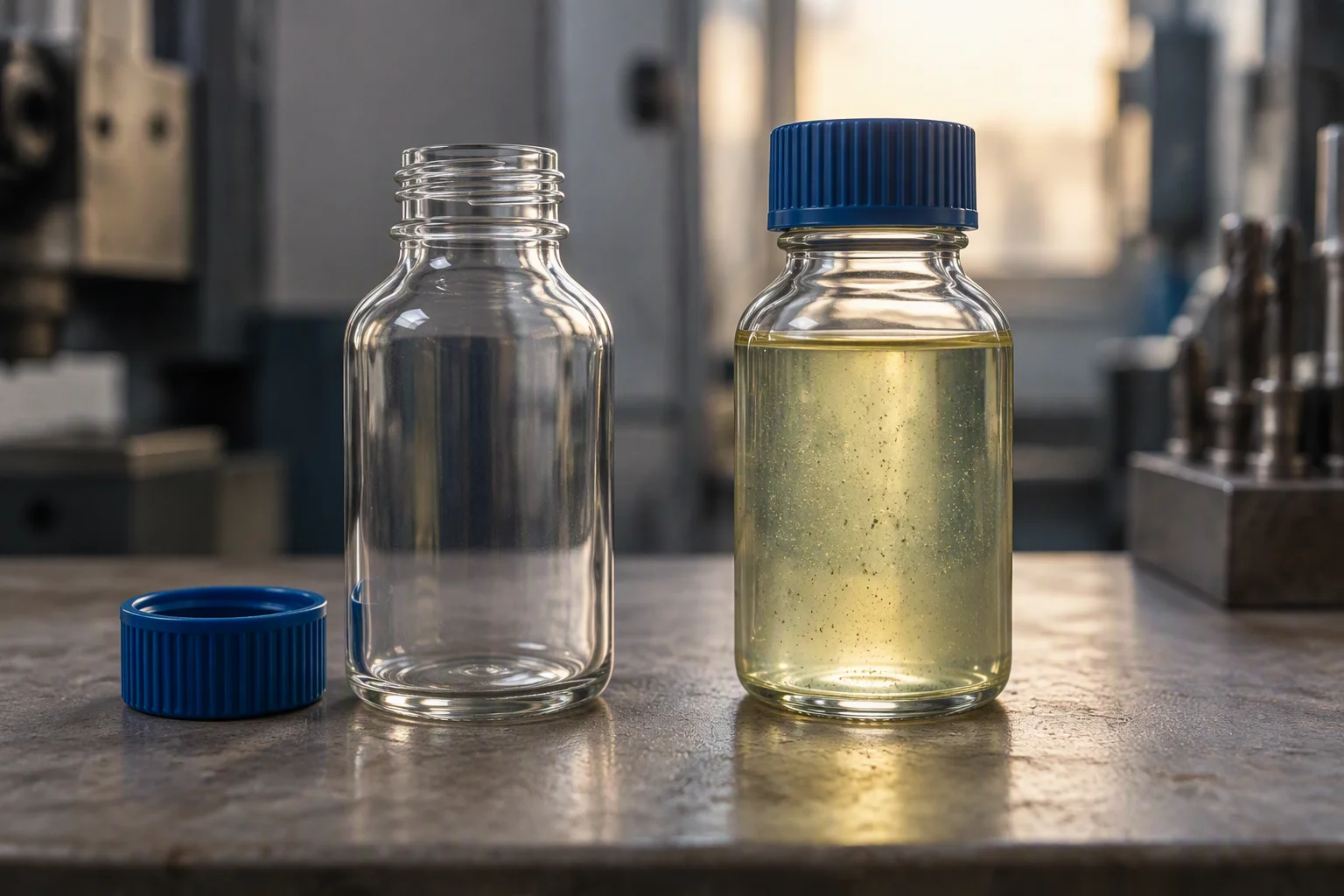
Two bottles from two tappings describe two different fluids. Both are true, and only one is comparable.
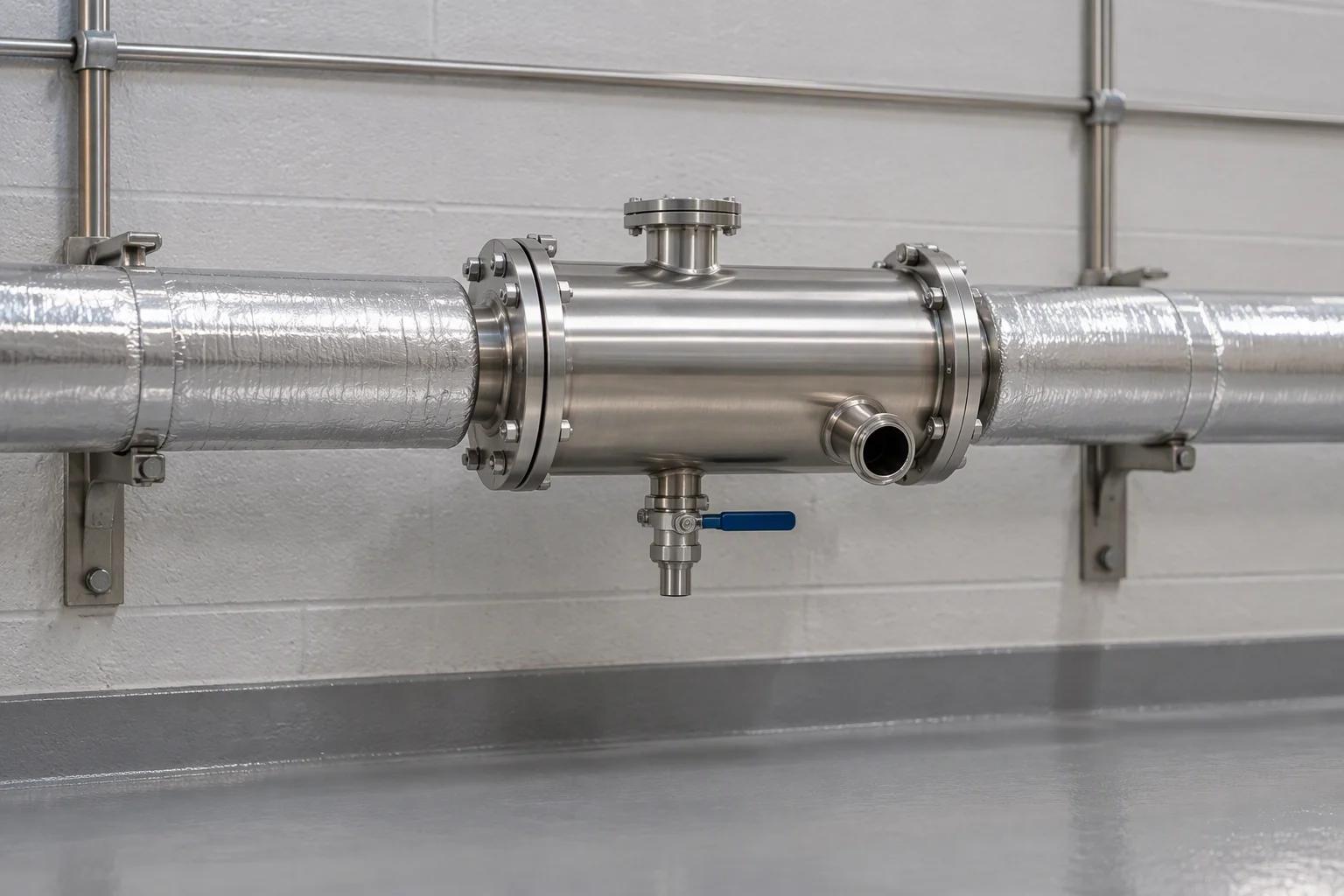
On the return, upstream of the charge connection, the sample has been through the loop rather than sitting in it.
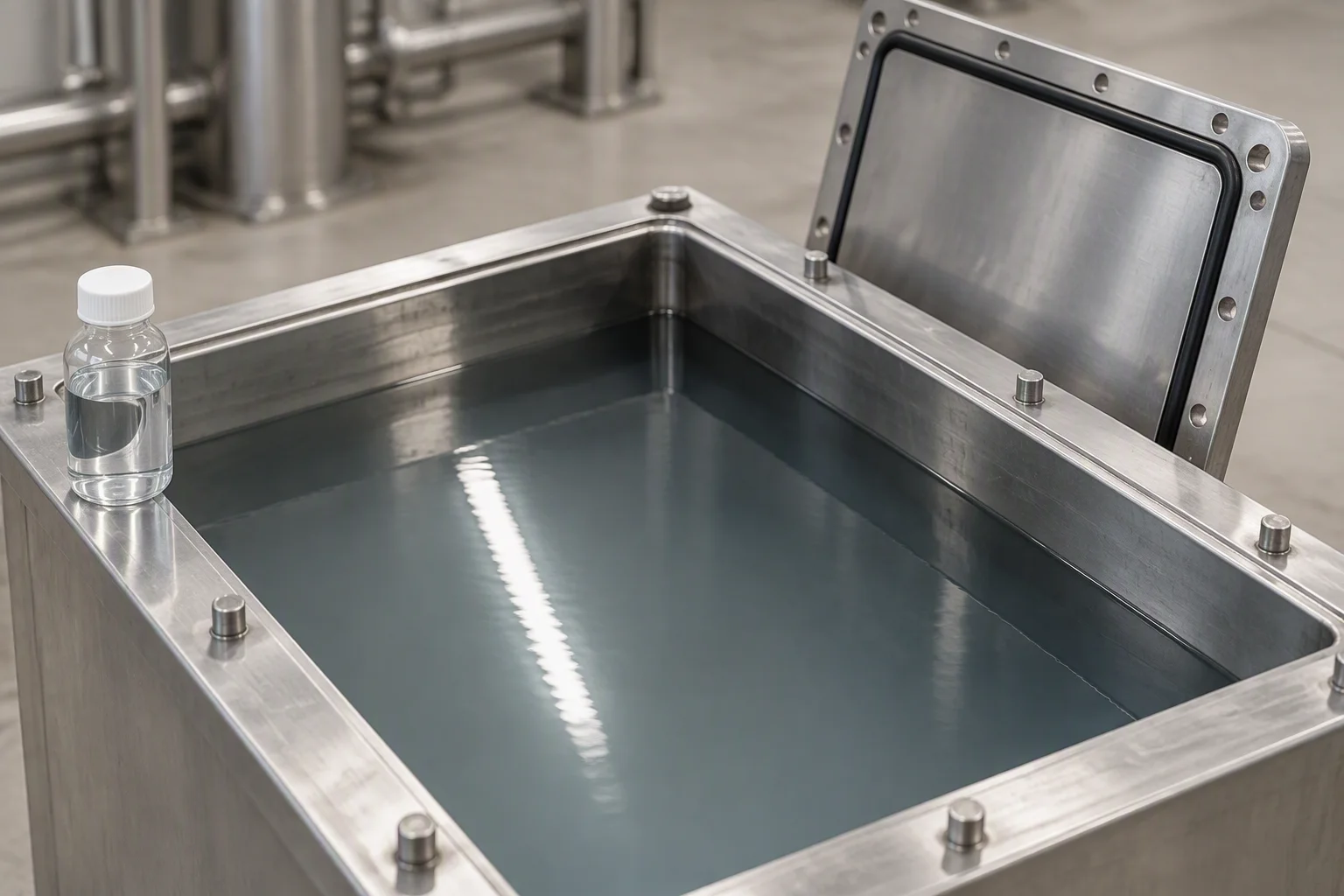
A still tank lets solids settle. A sample from the top of it describes the fluid that has already been cleaned.
What sets the number, and what only reports it
The rating removes
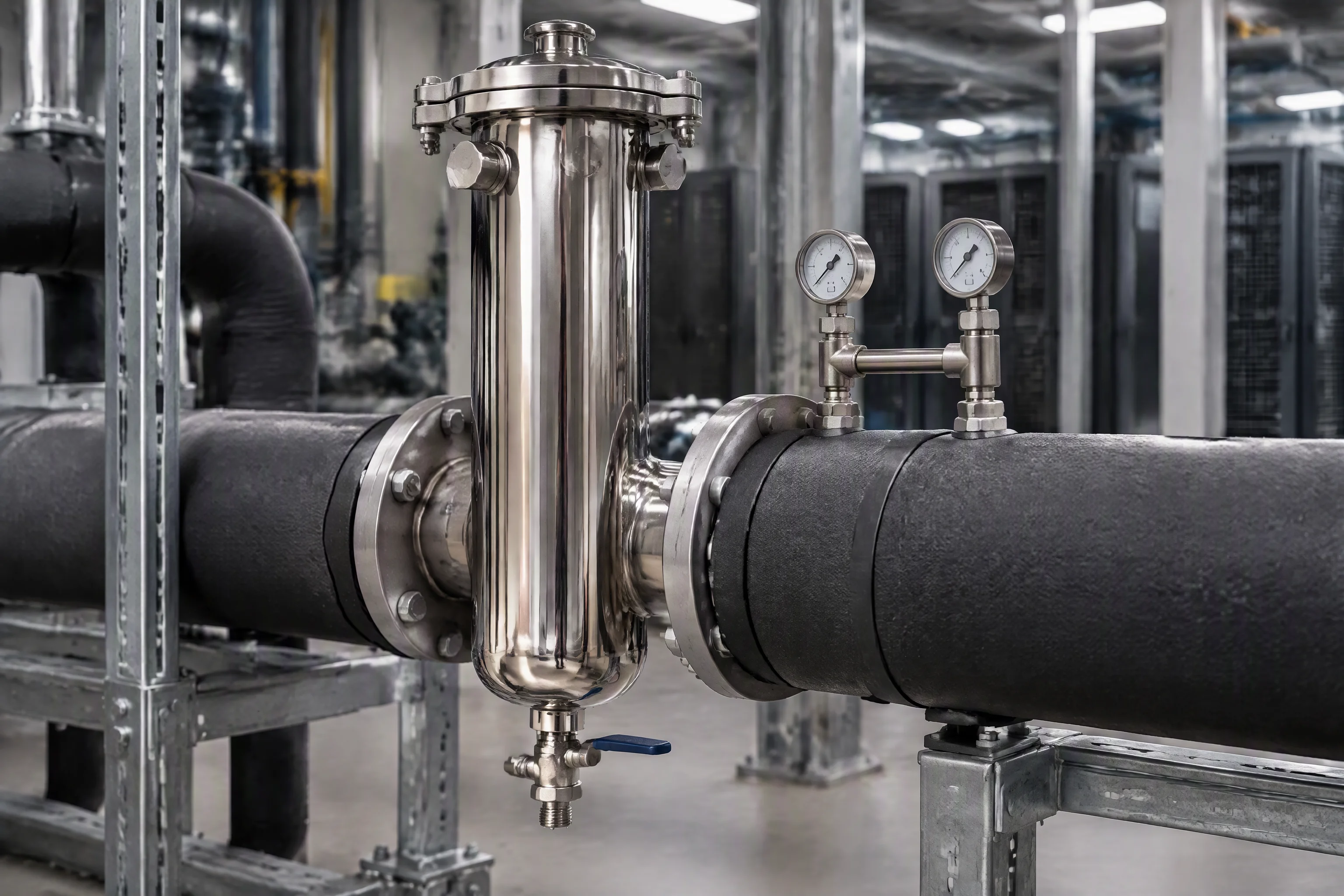
An absolute rating states the largest particle that passes. Nothing downstream can be cleaner than the finest stage the fluid has been through, which is why the figure is chosen once.
The pressure reports
Differential pressure across the housing rises as the element loads. Between 0.5 bar and 0.7 bar it says the element is done, and a count that keeps improving past that point is fluid bypassing rather than cleaning.
The water reports too
Conductivity and pH sit on the same schedule as the particle count: a fluid that has taken on top-up water reads differently on all three, and the particle number alone will not say which moved.
How one number is built
A code carries three numbers because the count is taken in three size bands at one sampling. One band can improve while another holds, so a single figure would hide the change that matters. Read as a set, they say whether the loop is getting cleaner or moving what it carries between bands.
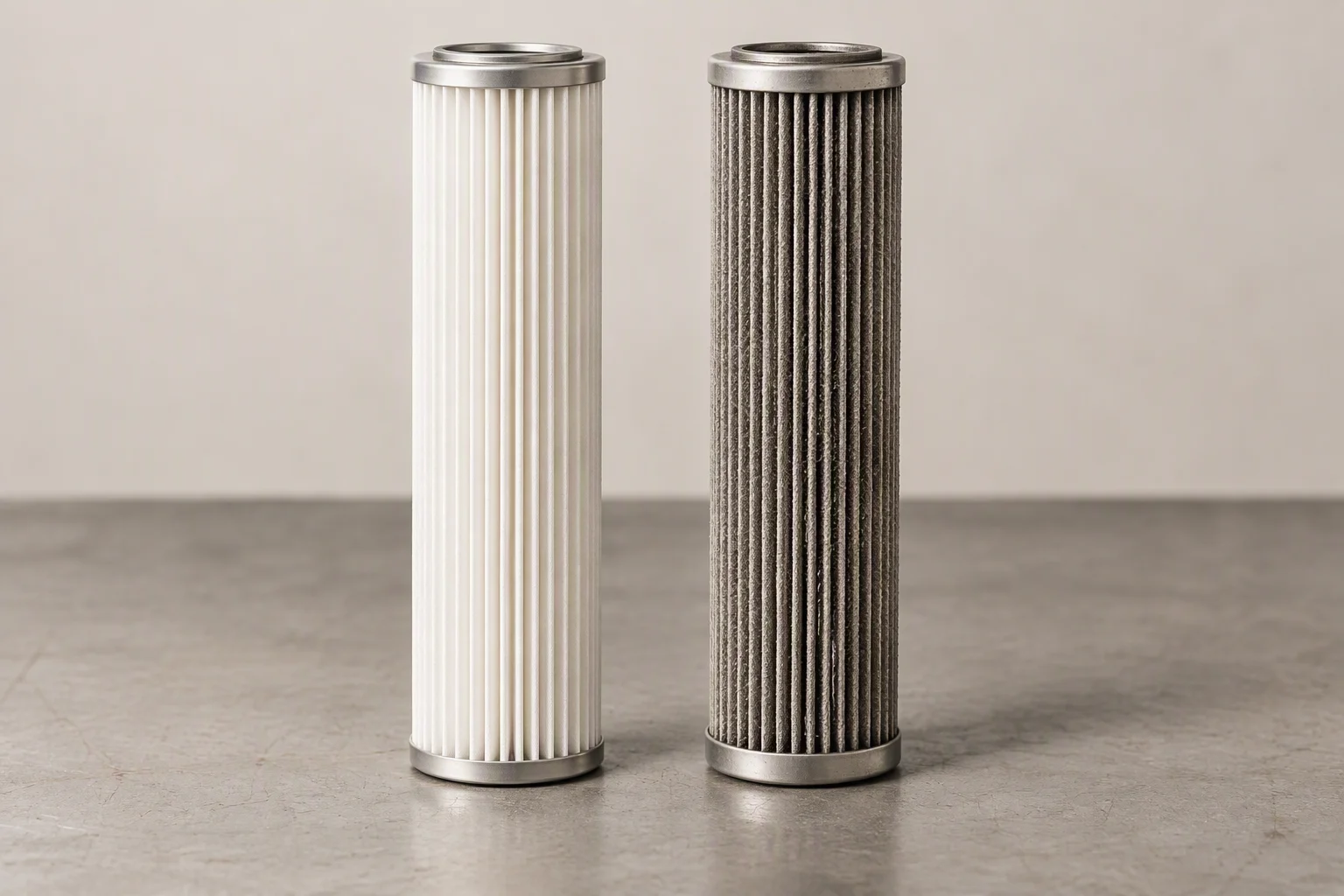
New and loaded, same element. The change in appearance is what the pressure across the housing is measuring.
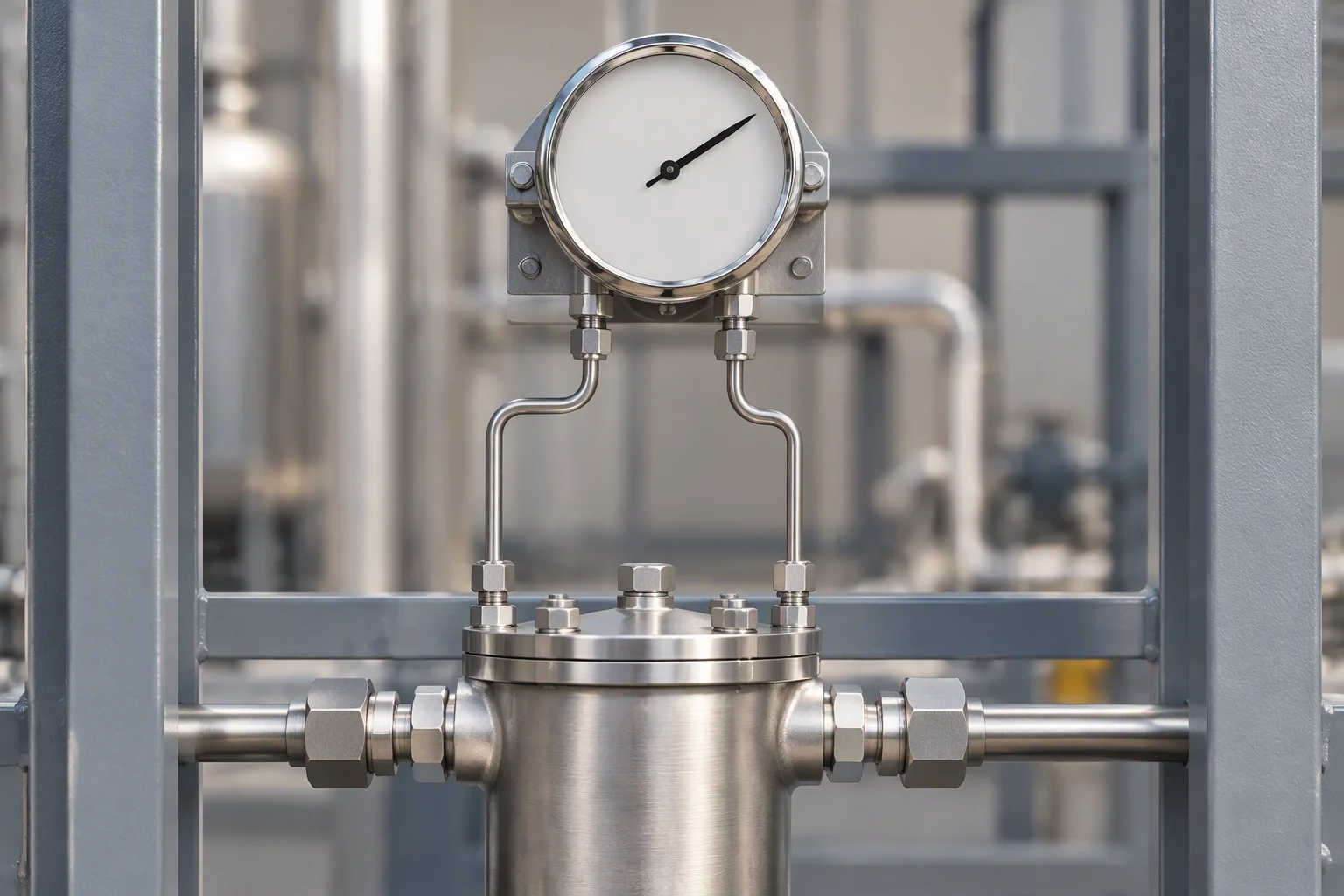
Two impulse tubes, one gauge, and a reading that is only meaningful against the clean zero the element started at.
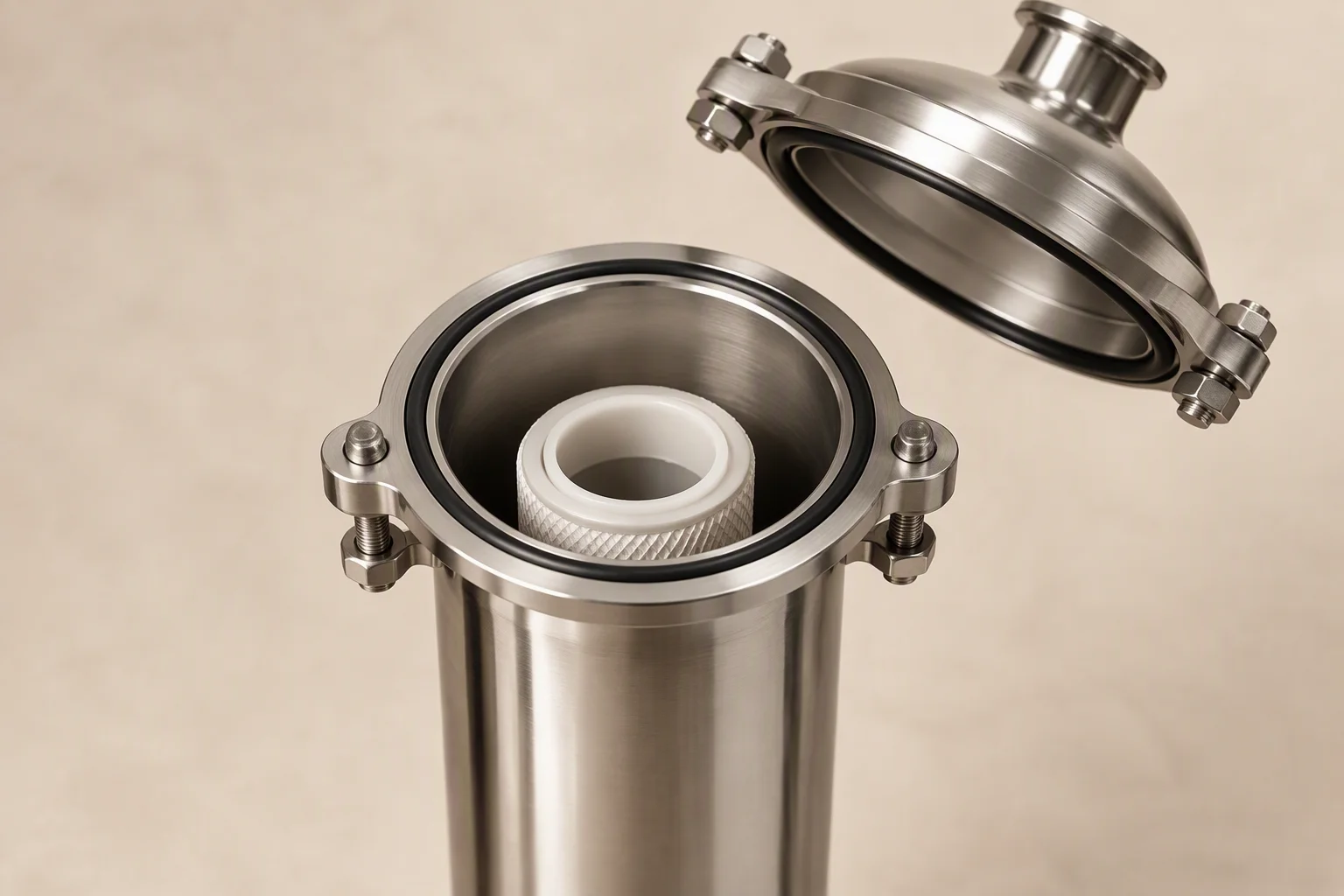
Every element change is an opportunity to open the loop. The lid seal is the part that pays for it.
From 100 µm down to 0.05 µm
100 µm
The coarse end. Holds the debris a first fill brings with it: swarf, packaging fibre, seal fragments from assembly.
First pass on a new build
10 µm
The bag stage on a loop with known debris in it. Cheap to change, and it takes the load off the fine stage behind.
Pre-filter on a dirty fill
5 µm
Where a loop starts being clean rather than merely less dirty. Useful as the first stage while a flush is running.
Mid flush
1 µm
The usual fine stage and the figure a loop is quoted on. It also loads fastest, so it is the step the pressure gauge is watching.
In service
0.45 µm
Beyond the loop. Used on a polishing side stream or a sample line, where the flow is small enough not to cost much pressure.
Side stream
0.2 µm
Polishing on a small branch only. On a full loop the pressure drop decides when it comes out.
Small branch
0.1 µm
A bench figure for a laboratory loop, not a facility one. Worth knowing so a specification asking for it can be questioned.
Laboratory scale
0.05 µm
The bottom step. Asking for it on a facility loop moves the question from filtration to hydraulics, and the answer changes with it.
The bottom step
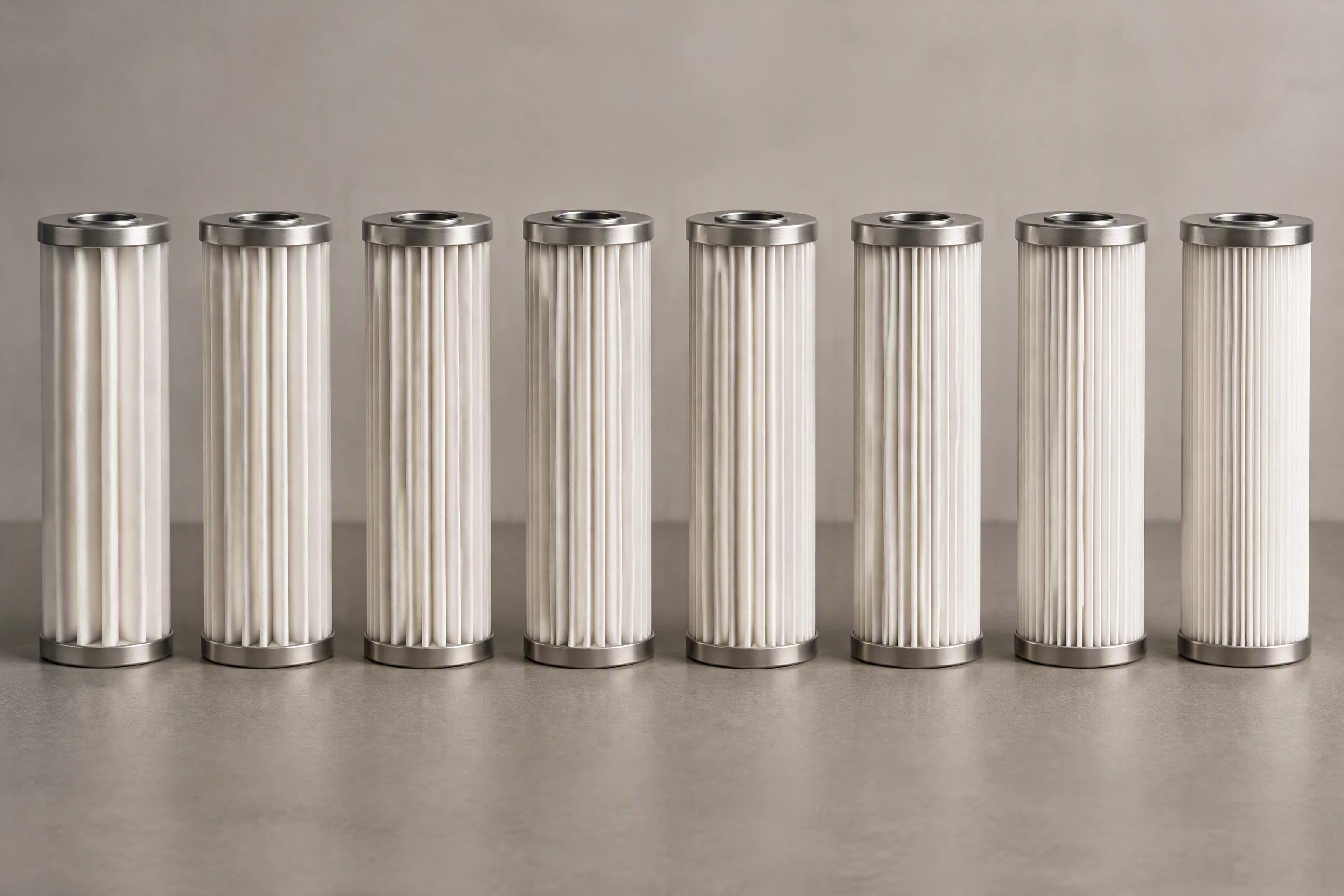
The ladder as stock. Two steps of it usually go into a loop; the other six exist so the two can be chosen rather than inherited.
The figures that decide it
| Item | Figure | Value | Unit | Condition it holds under |
|---|---|---|---|---|
| 01 | Loop targetBefore the first charge | ISO 4406 | 17/15/12 | Three code numbers, read as a set at one sampling. A higher class in any one of them is a different target. |
| 02 | Fine stageElement | 1 | µm | Absolute rating. The step that holds the target and the step that loads fastest. |
| 03 | Coarse end of the ladderElement | 100 | µm | Takes the load of a first fill so the fine stage is not spent on debris a coarse element could have held. |
| 04 | Element change pointHousing | 0.5 – 0.7 | bar | Differential across the housing, measured from the clean zero the element was run to before it shipped. |
| 05 | Housing design pressureShell | ≥ 1.0 | MPa | On the shell, above the working pressure of the loop it sits in. |
| 06 | Element lengths heldCartridge | 20 / 40 | in | Standard lengths, with a short element on a small branch where full flow would cost too much pressure. |
| 07 | ConductivityWater | µS/cm | range | Read on the same sample as the particle count, never as a separate visit. |
| 08 | pHWater | pH | scale | Moves when the fluid ages rather than when it is diluted. The pair is what tells the two apart. |
| 09 | System certificateAcross the lines | ISO 9001 | certified | Held across the supply network rather than by any one line. Verified before a line is scheduled. |
| 10 | Material certificateMetal parts | EN 10204 | 3.1 | For housings and fittings, traceable to the heat the material came from. |
Ten figures. The two read together every time are the particle count and the differential pressure: a count without its pressure cannot tell a clean loop from a bypassed one.
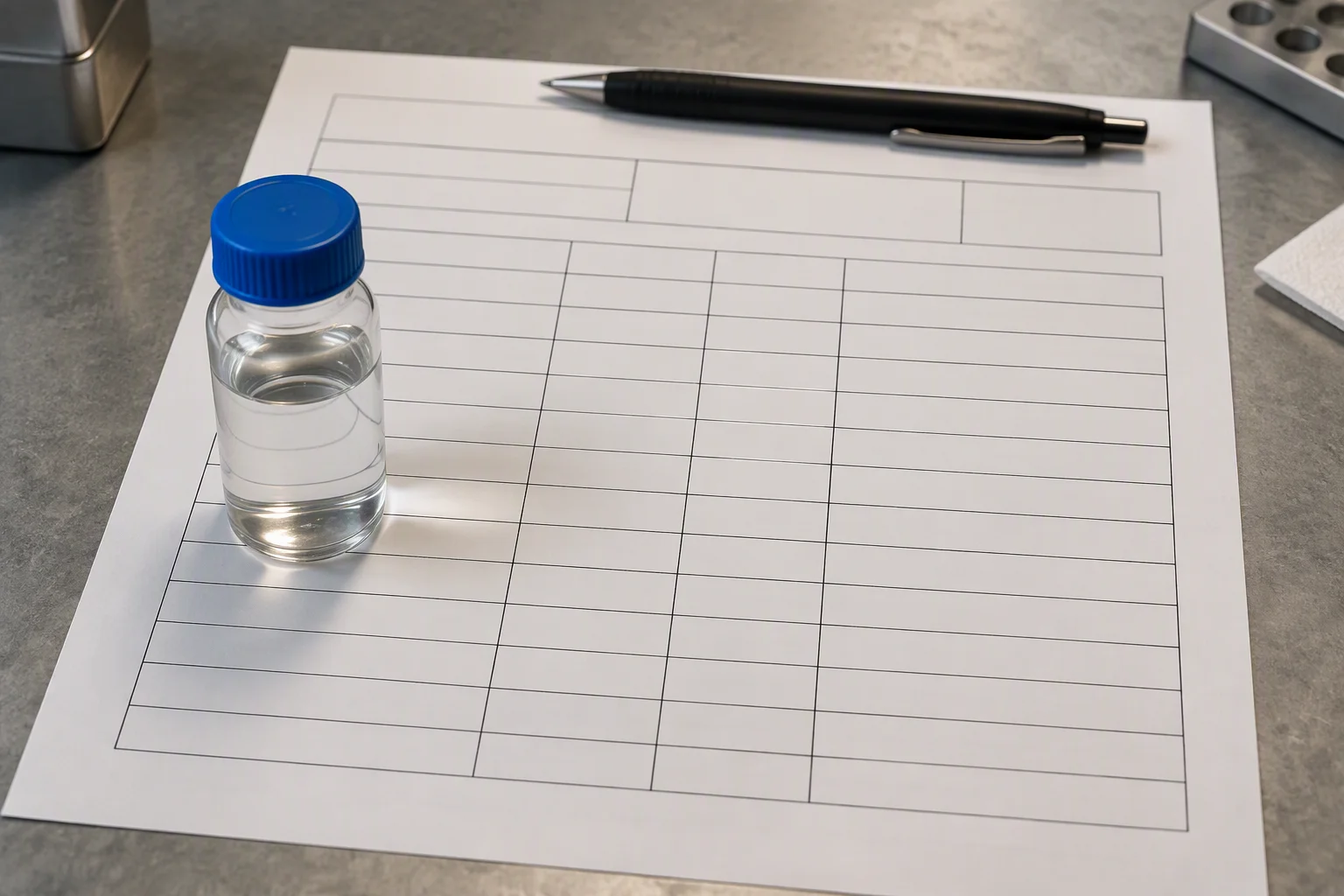
The figure that gets repeated is the one written beside its tapping, its pressure and its date.
What to do on the next flush
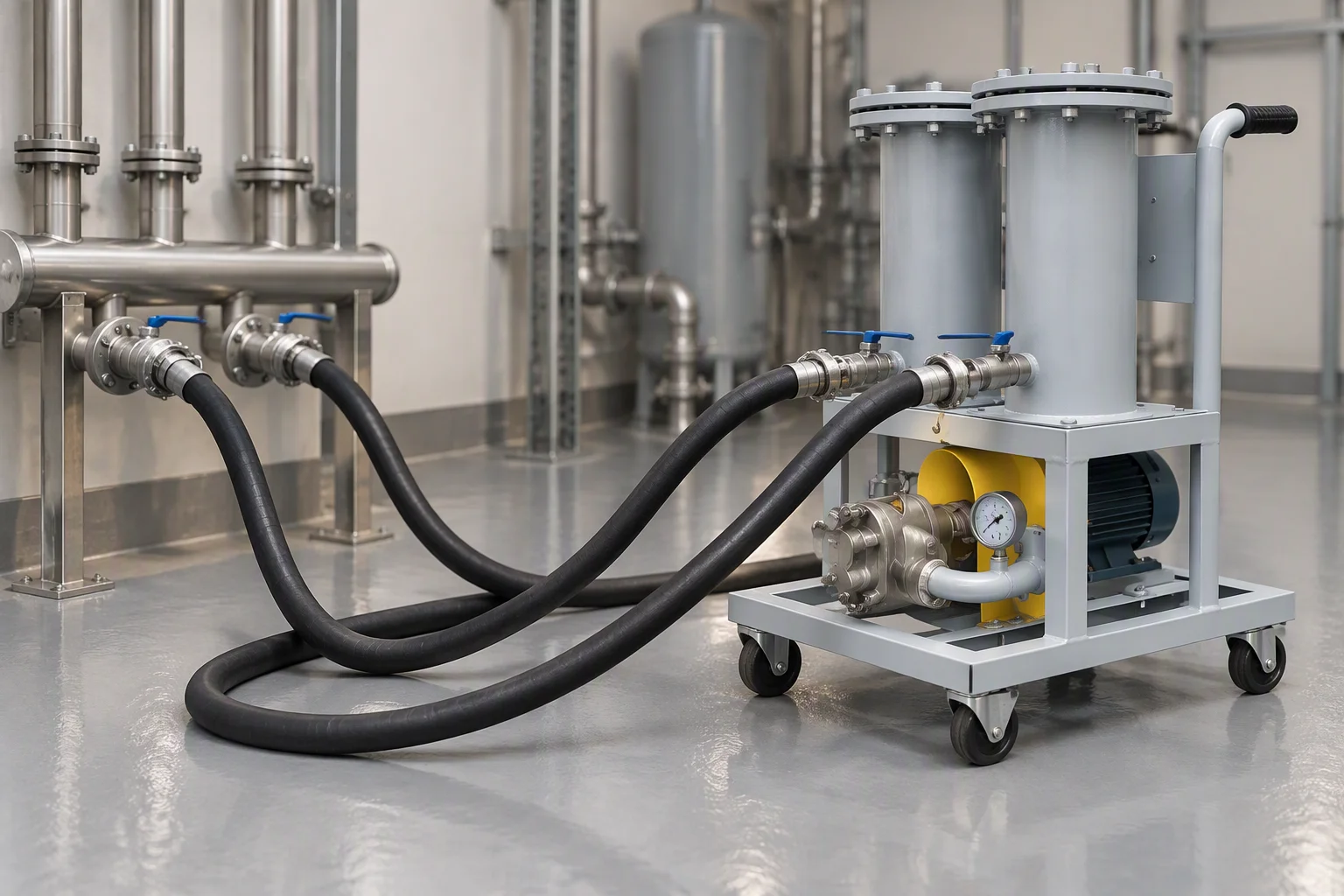
The flush is the only time the whole loop passes through one element at a controlled flow.
Flush at the flow the loop will run at
A flush run slowly cleans the pipe it passes through and misses the branch it never enters. The target is the loop's, not the cart's.
Write the record at the time, not afterwards
Three code numbers, the differential pressure and the tapping point, on one line. A record rebuilt from memory the following week is not a record.
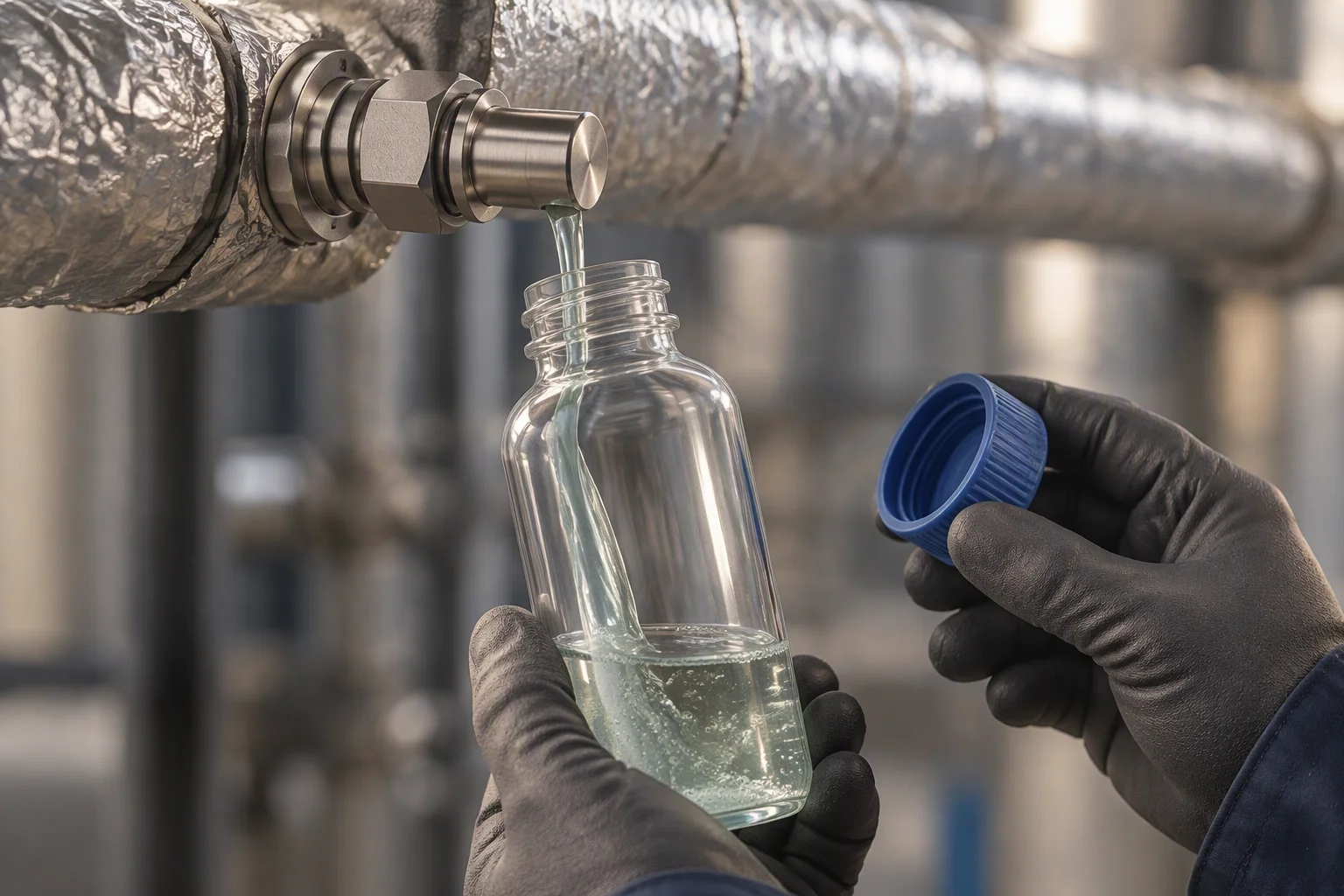
Draw it the same way every time. The method is part of the figure, and so is the person drawing it.
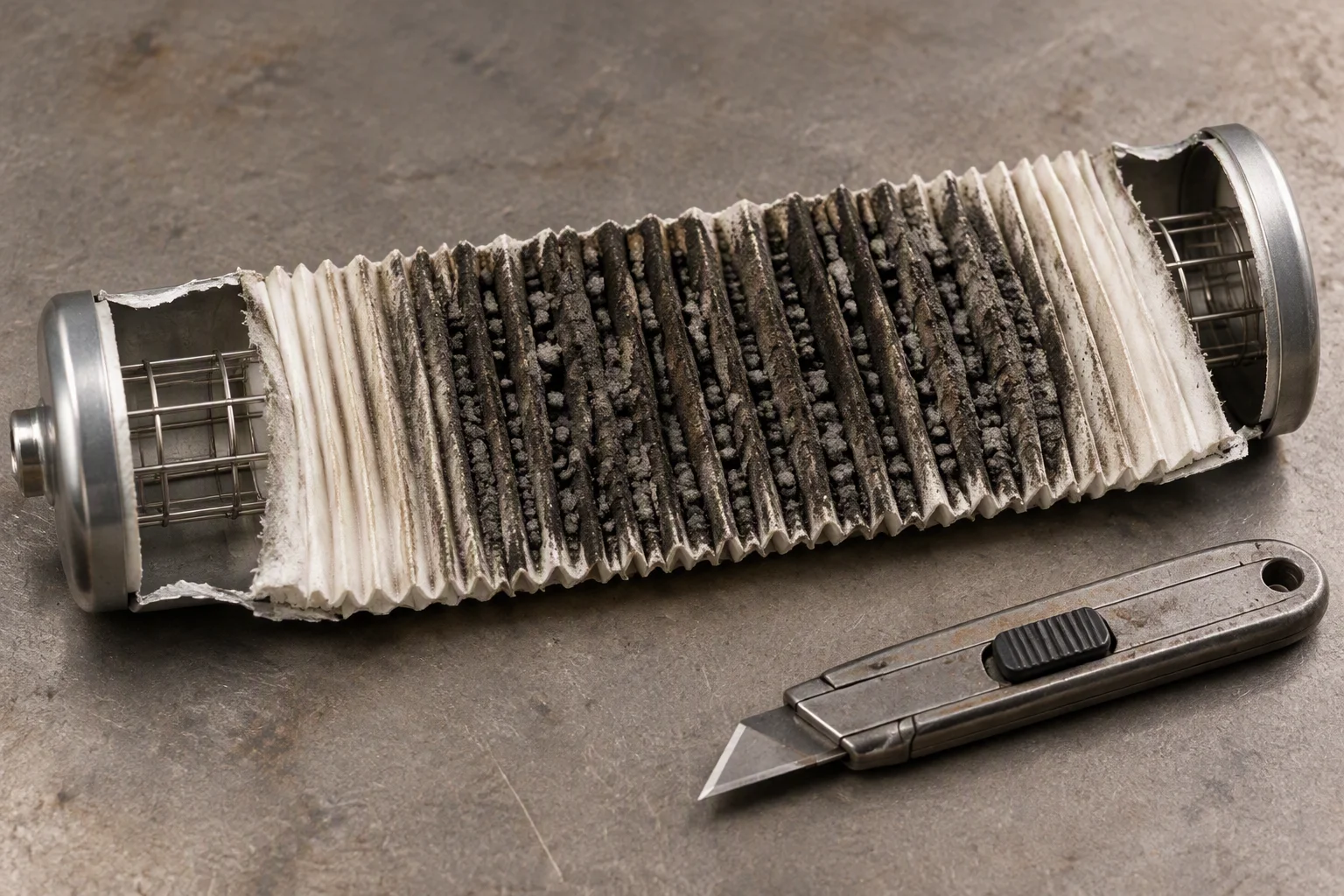
Cutting an element open costs one element and answers the question the count raises: what was it, and where did it come from.
The instruments this note is written against
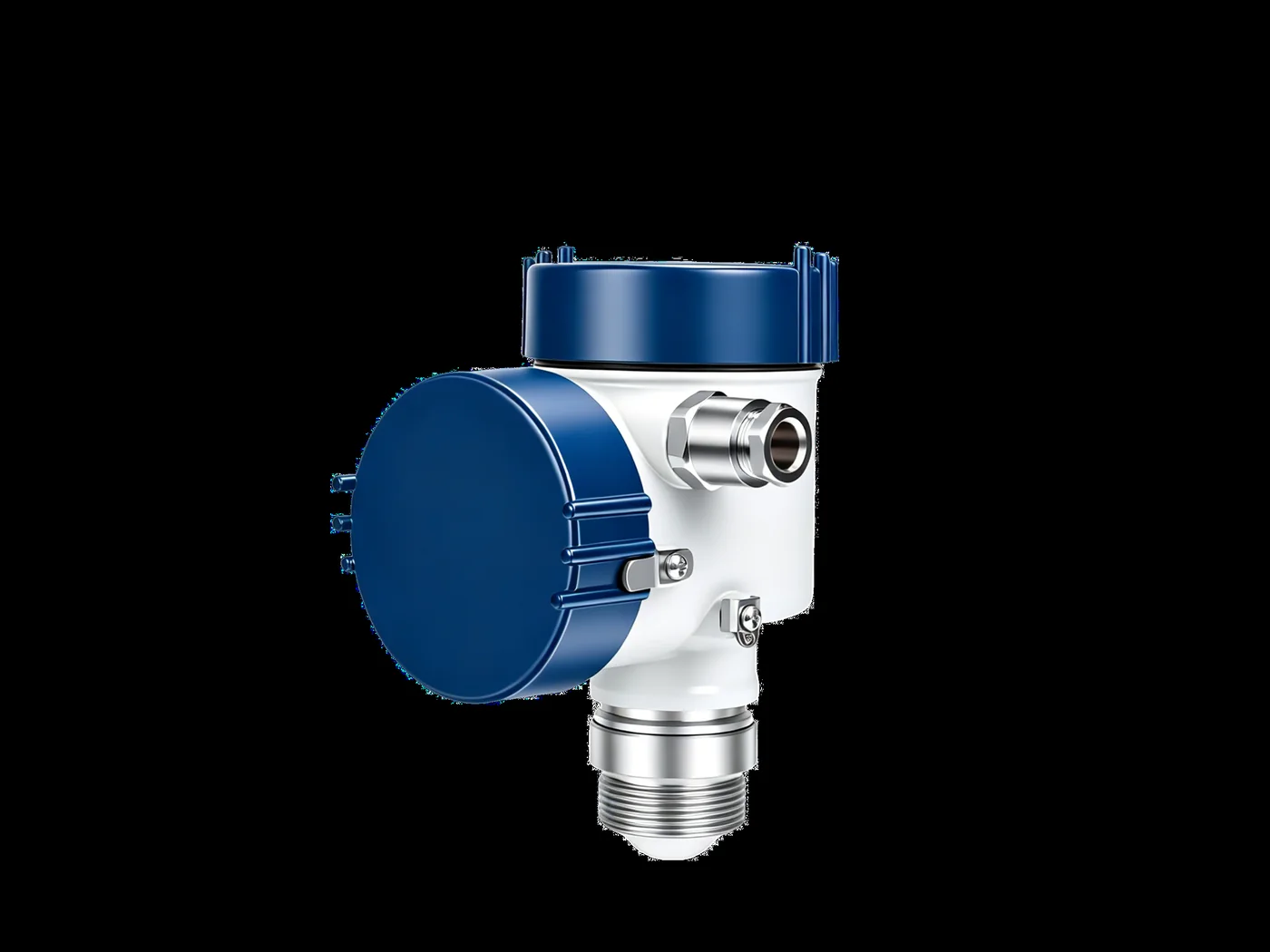
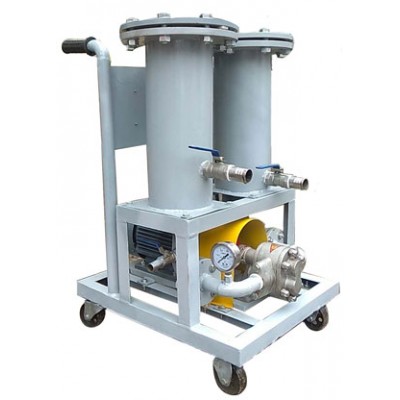
Both are supplier parts from the six lines on this site. The water side is scheduled on fluid quality monitoring, and the elements themselves on filter cartridges.
What this note does not cover
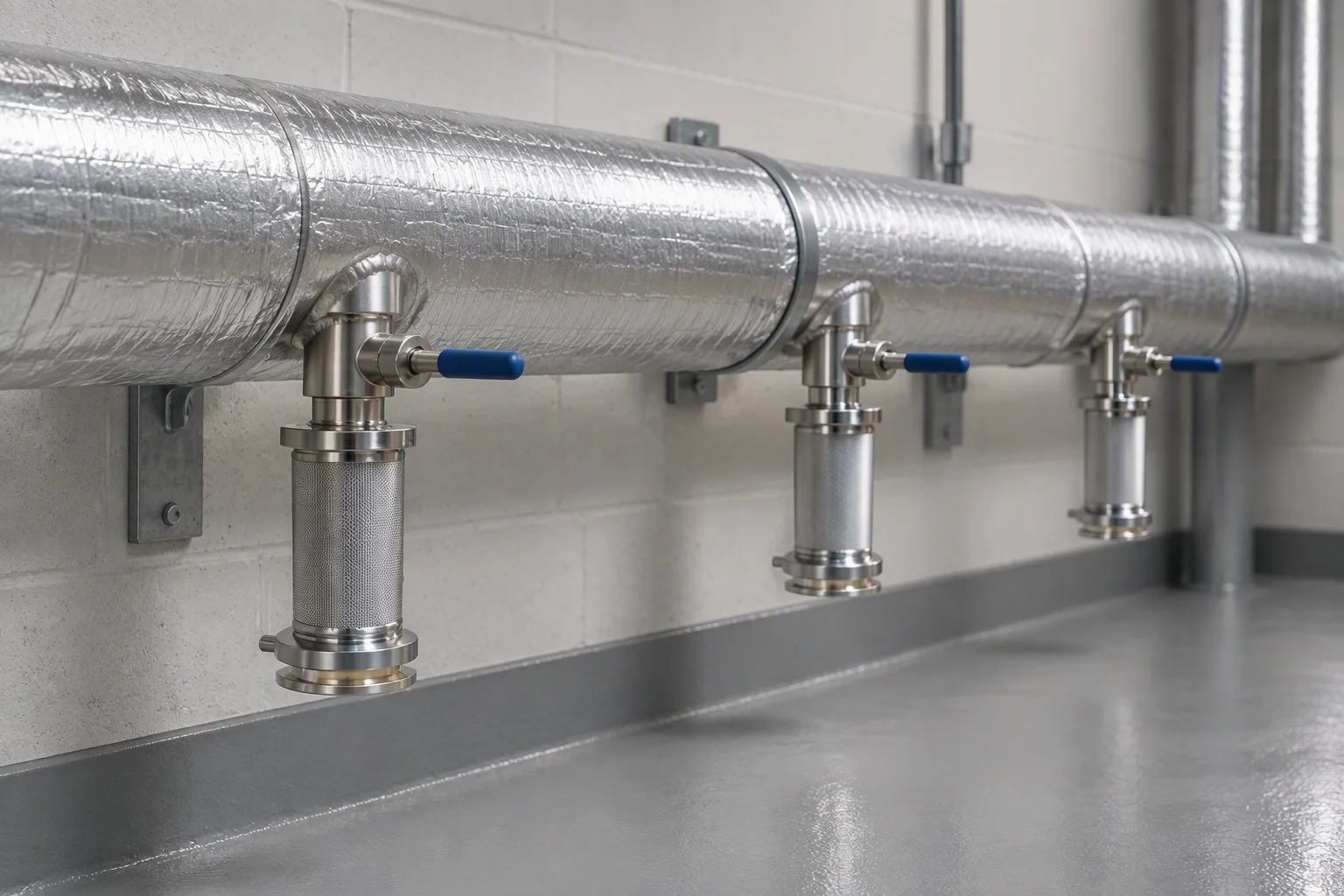
Three tappings on one run, three different figures, and all three defensible. Which one is the loop's figure depends on the question being asked.
Request this note as a sheet
The sampling discipline, the eight-step rating ladder, the ten-figure schedule and the element lengths held across the filtration line.
One business day, with the file attached.
Nothing else on this sheet is promised. The target above is the one this site is indexed on; a stricter one is a different schedule and is quoted against a request.
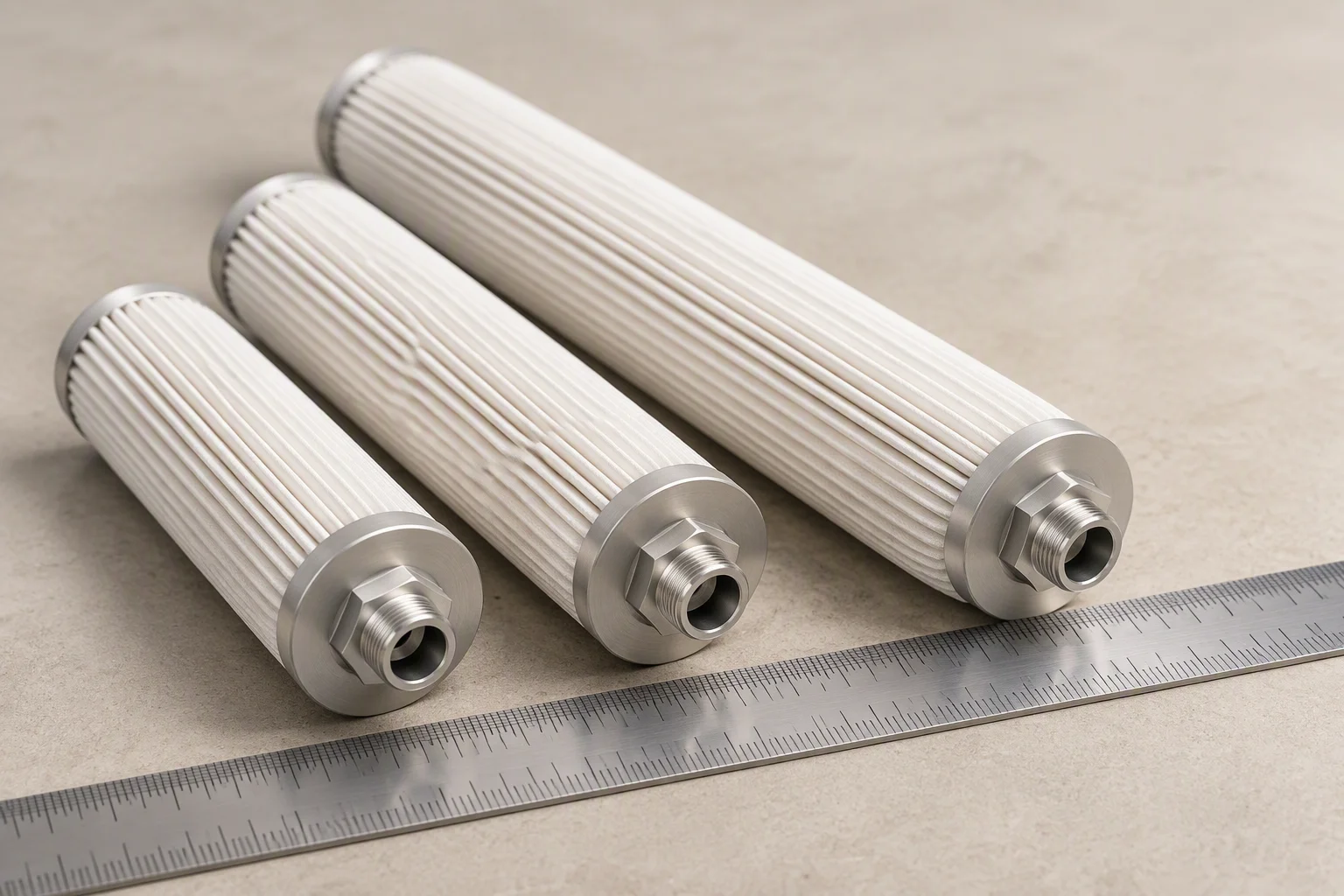
Length, rating, material and end cap. Four answers and the element is a stock item.

The header row is the part that makes the figures comparable: tapping, date, pressure, then the three numbers.