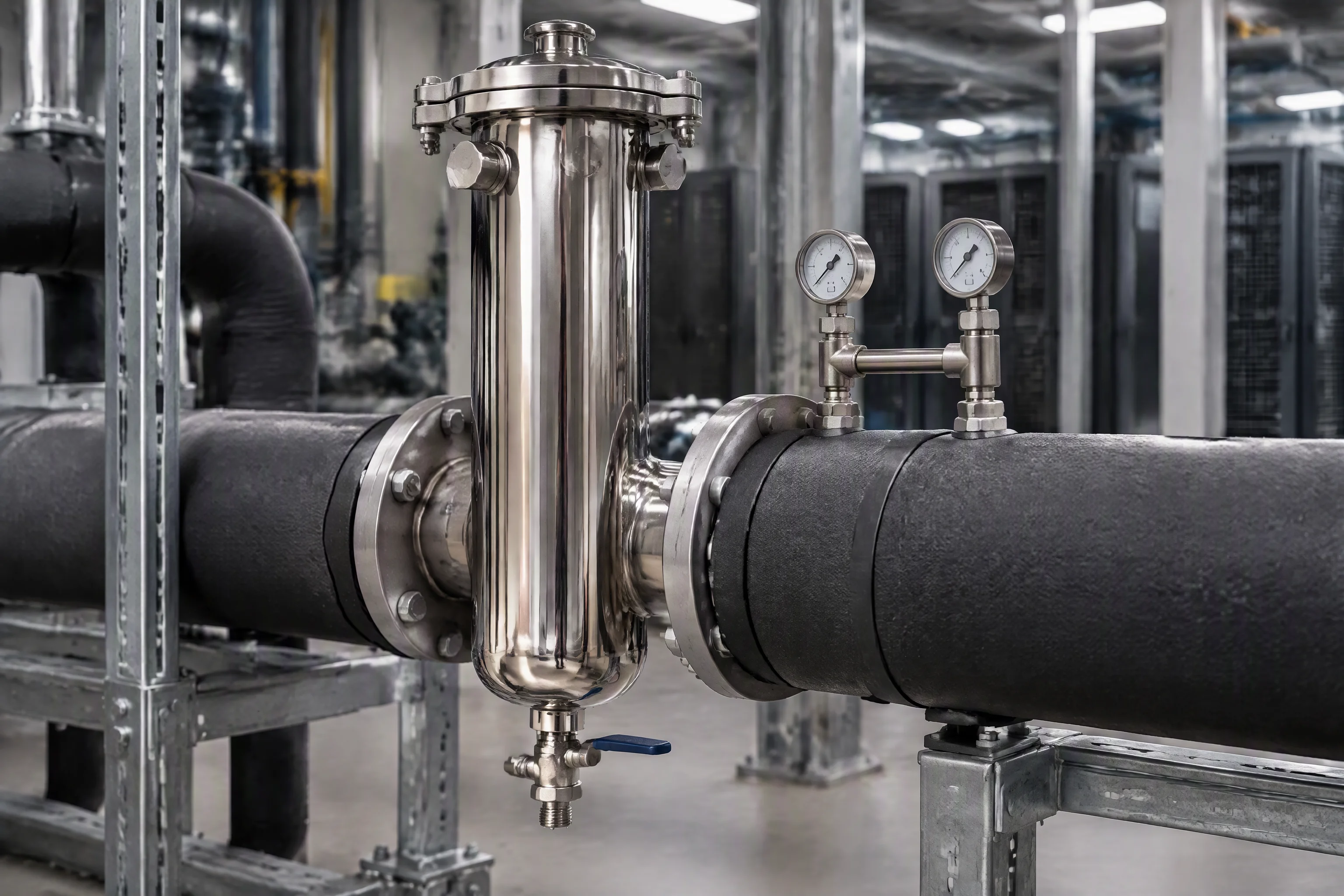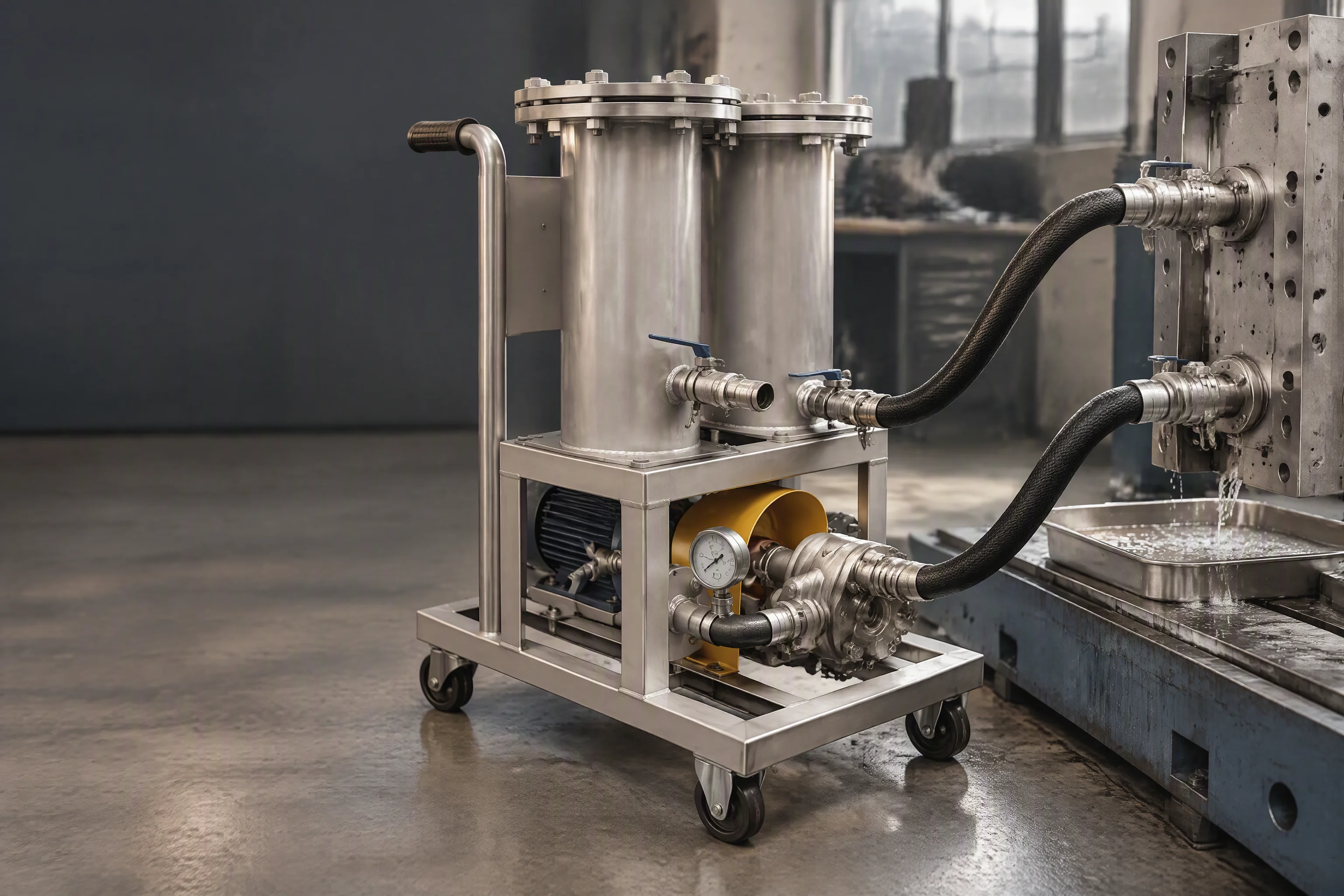
The duty cycle here is counted in couplings, not in hours.
A bench loop is opened and closed far more often than a data hall loop and holds a fraction of the fluid. We supply the loop itself, couplings, hose, seals, filtration and the instruments that read it, not the CDU and not the cold plate.
Repeated make-and-break wears the couplings A wrong glycol figure shows up weeks later Vibration fatigues the joint Many benches, low value each
What a bench loop is asked to survive
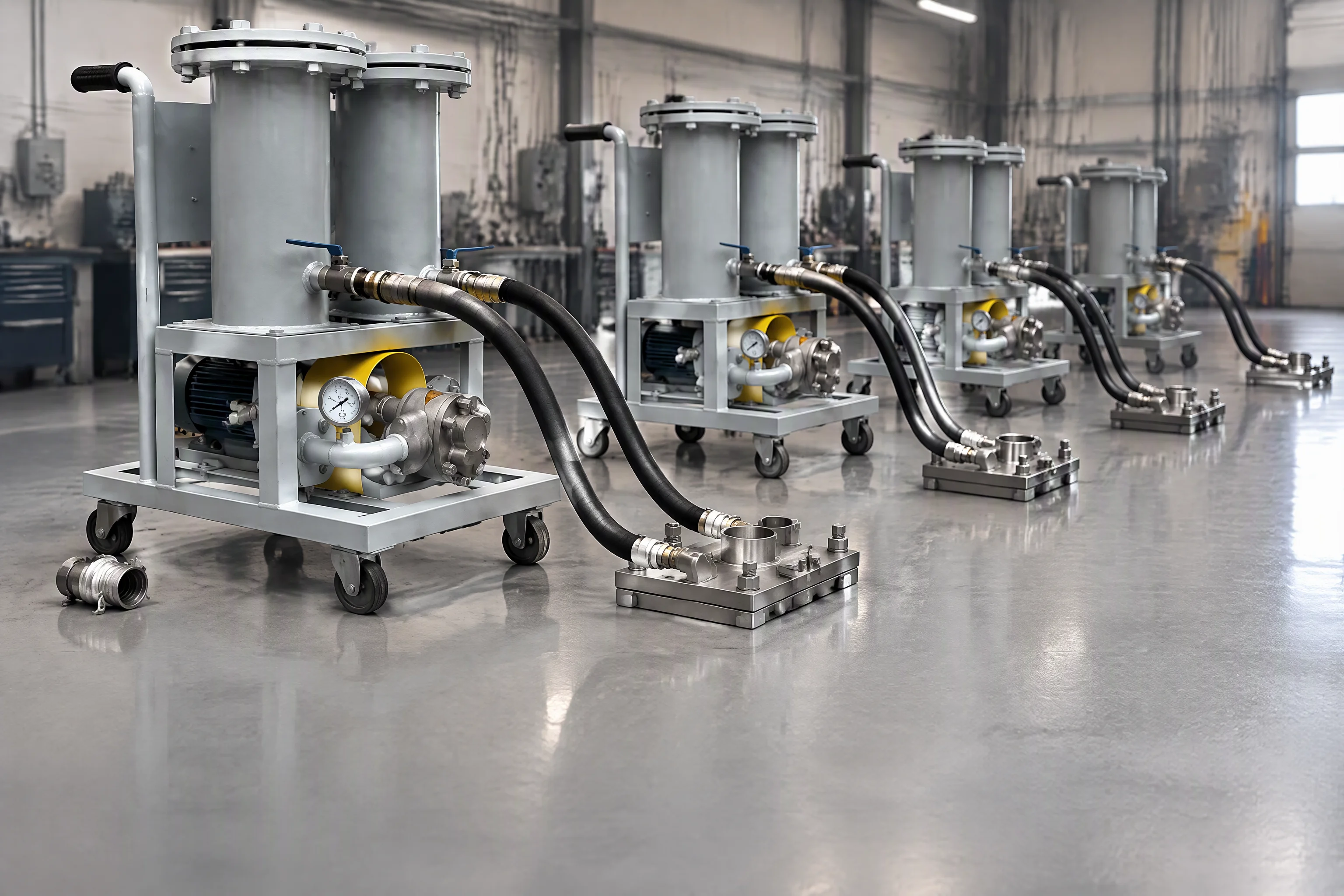
Four benches, one bay, and the same coupling on each of them. The wear that matters is not in the fluid: it is in how many times a day somebody opens the loop.
The bay as it runs. Every bench in this frame was built for one fixture, and every fixture swap goes through the same pair of couplings.
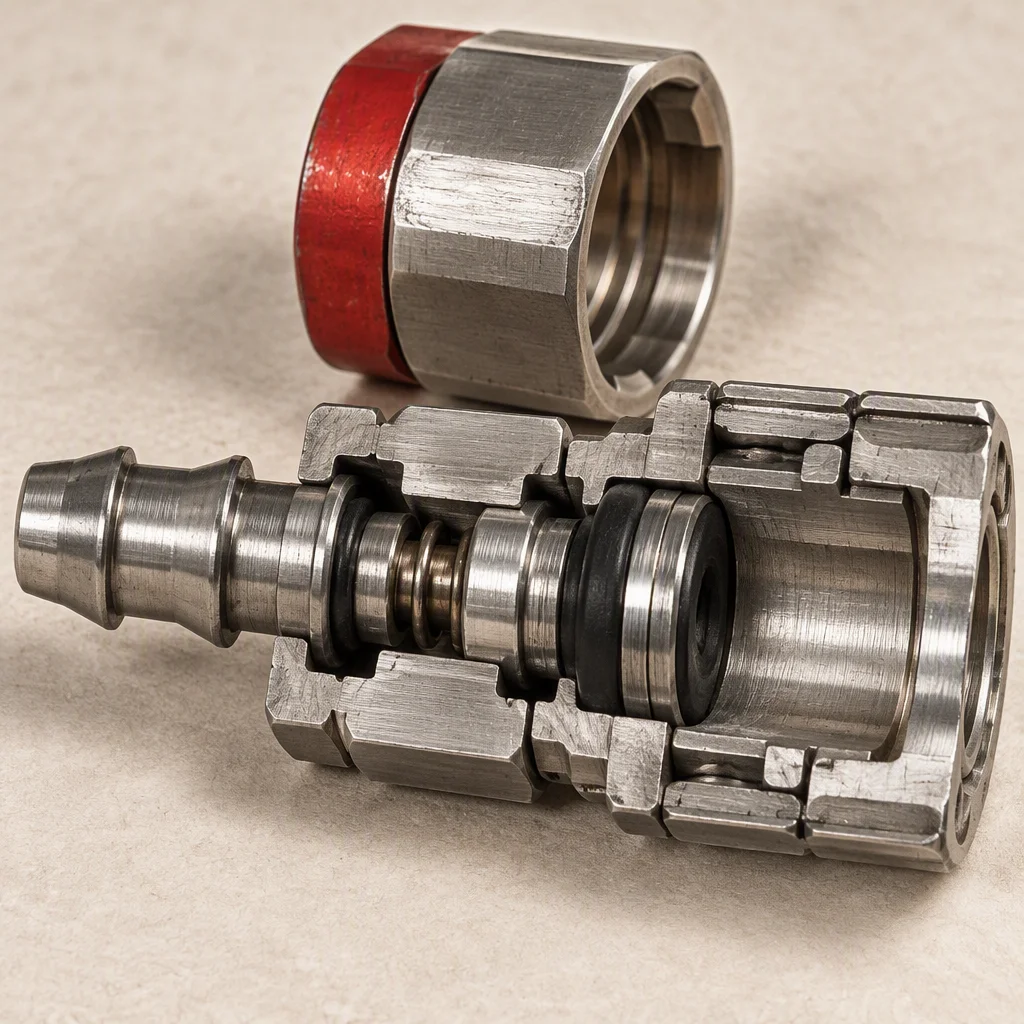
Repeated make-and-break does not fail a coupling in one go. It polishes one side of the collar and one band of the face, and the drip starts later.
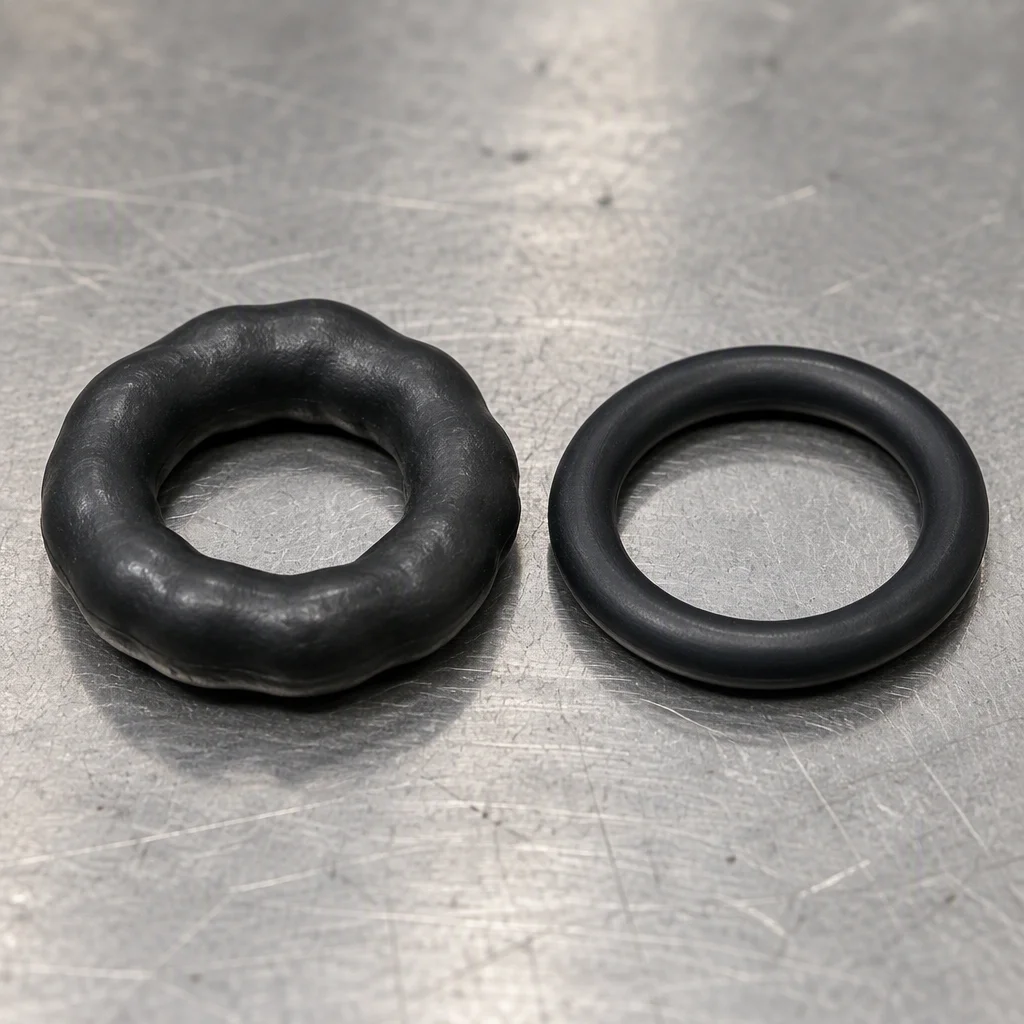
Two seals, one service interval apart. A glycol figure outside the quoted range swells or shrinks the elastomer, and neither shows up the same day.
The four anchors on this sheet · repeated make-and-break wears the couplings · a wrong glycol concentration shows up weeks later · vibration fatigues the joint, not the hose · many benches at low value each
The four anchors, written as conditions
| No | Pain | Condition | Value | Unit |
|---|---|---|---|---|
| 01 | Repeated make-and-break | Dry-break couplings, both faces | seal on each side | no drip |
| 02 | Wrong glycol concentration | Quoted coolant range of the elastomer | −40 ~ +99 | °C |
| 03 | Vibration fatigue | Hose working pressure and burst | 1.38 MPa · above 5.5 | MPa |
| 04 | Many benches, low value each | Standard lengths from stock | 500 m | custom runs |
| 05 | Bench cleanliness | Filtration on every bench loop | 0.05 – 100 µm | element ladder |
| 06 | The fine stage | Absolute rating held at the bench | 1 µm | absolute |
| 07 | Element change | Differential across the housing | 0.5 – 0.7 | bar |
| 08 | Fluid cleanliness | Charge held to the same target as a hall loop | ISO 4406 17/15/12 | three classes |
Read the first four rows as the anchors and the last four as what they drag in. A bench that is opened every shift needs filtration on the bench, not only at the fill: every break lets in what the room is carrying.
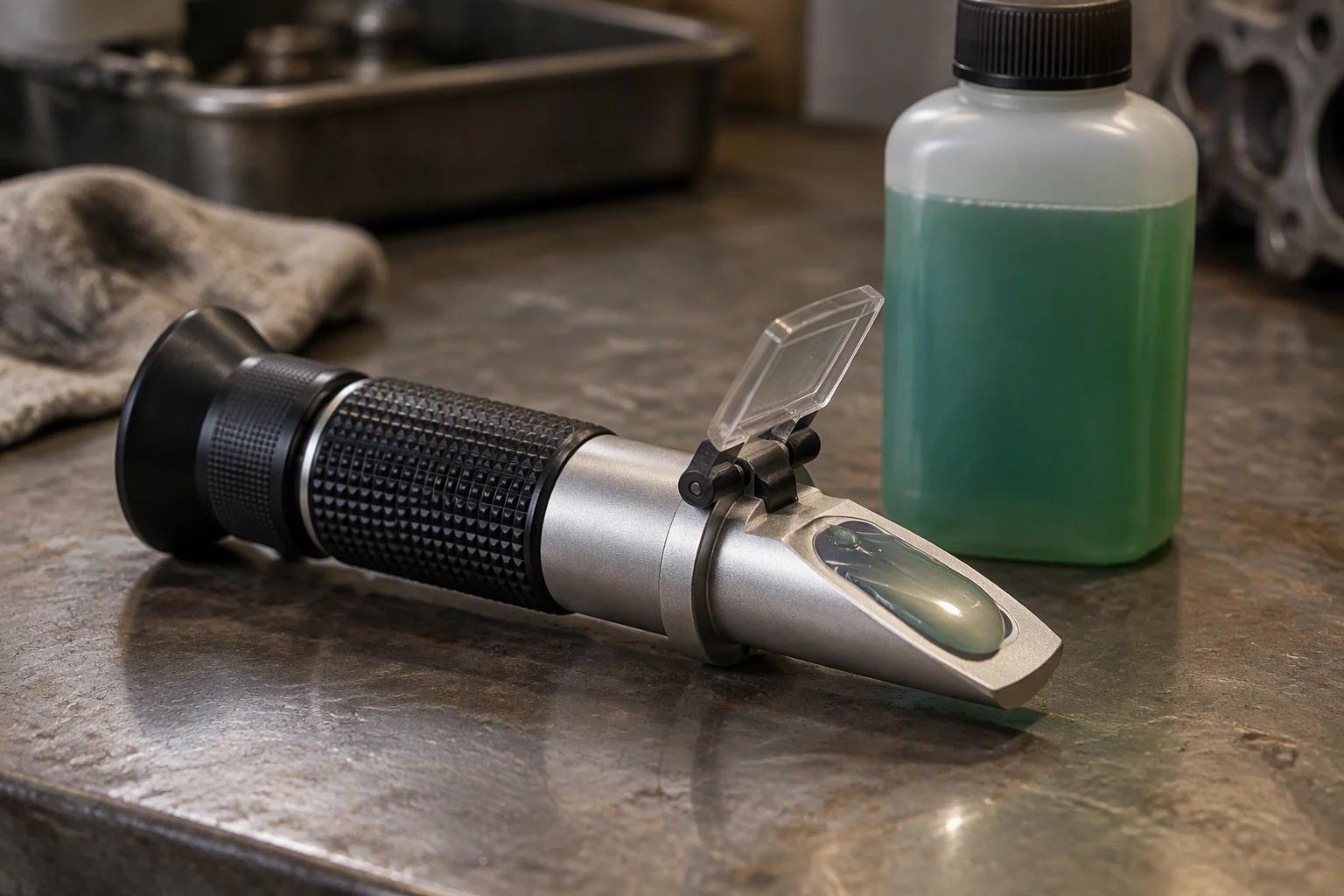
Concentration read at the fill, on the bench, while the loop is open. The failure is not the reading, it is skipping it.
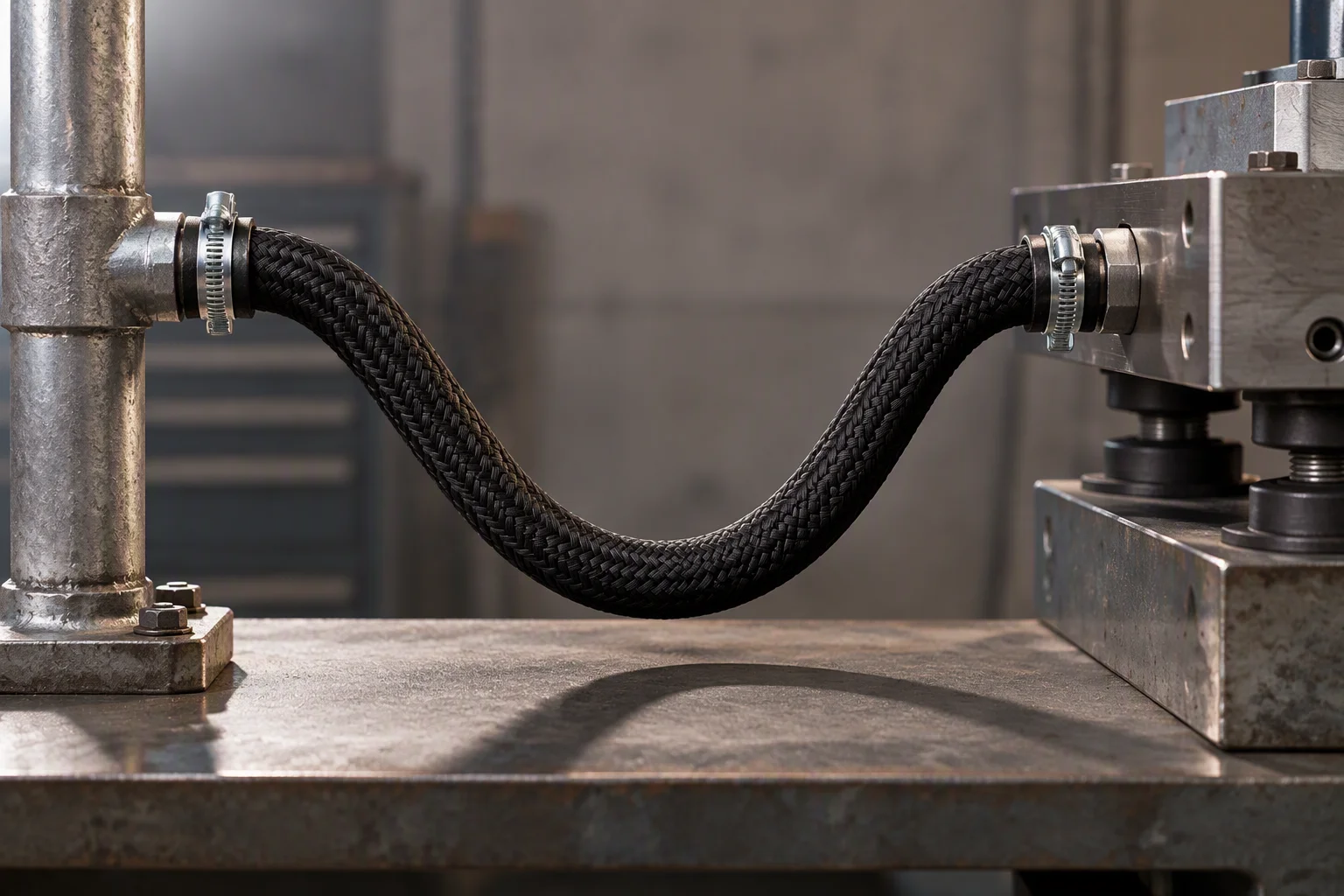
The service loop, and two clamps that let the hose move where it is designed to move. Vibration finds the fixed points first.
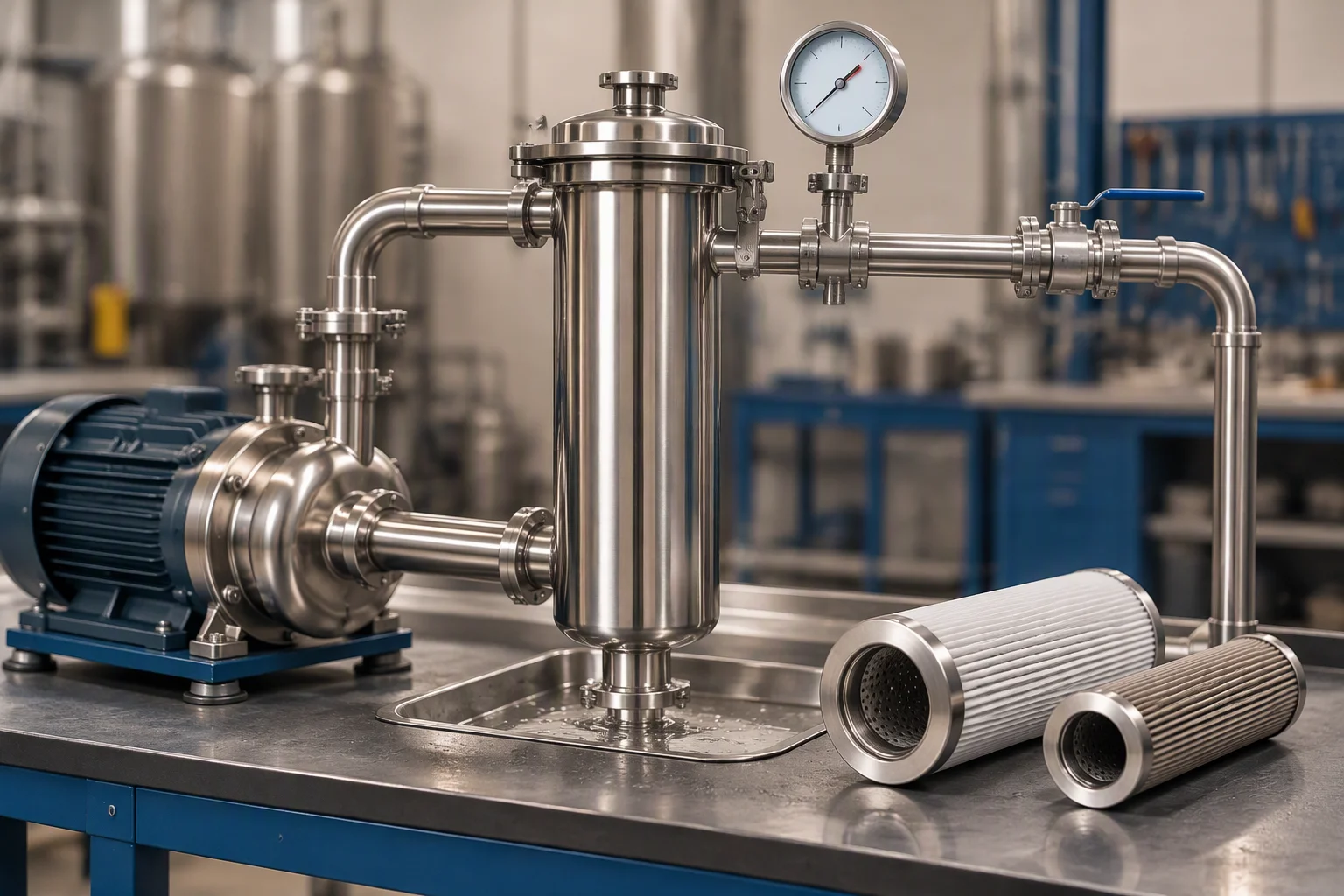
One housing per bench, not one per bay. A bench that is flushed through a shared rig is a bench whose history belongs to the rig.
The loop as it is drawn on a bench
Consumable positions
- 1Filter housing, on the supply leg, single stage per bench with a 1 µm fine element.
- 2Supply coupling. The half that is opened most often, and the one that wears first.
- 3Return coupling. Same duty, opposite face; the pair is replaced together, not one at a time.
- 4Sampling valve on the return, upstream of the reservoir so the sample is fluid that has been through the fixture.
- 5Drain at the lowest point of the run, so the flush water does not stay in the bench between campaigns.
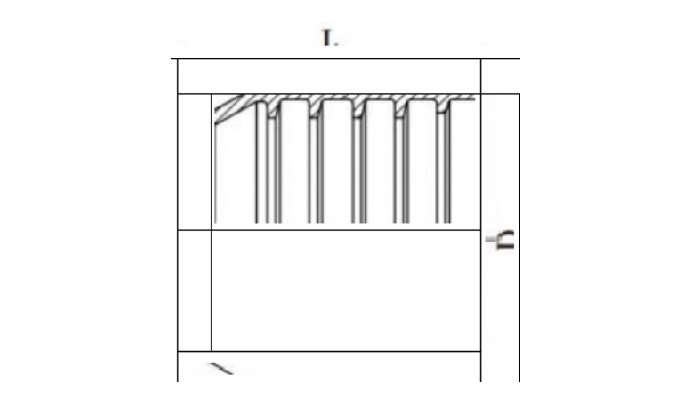
The gasket section on the coupling face. L and B are the two dimensions that decide whether a replacement seals the first time.
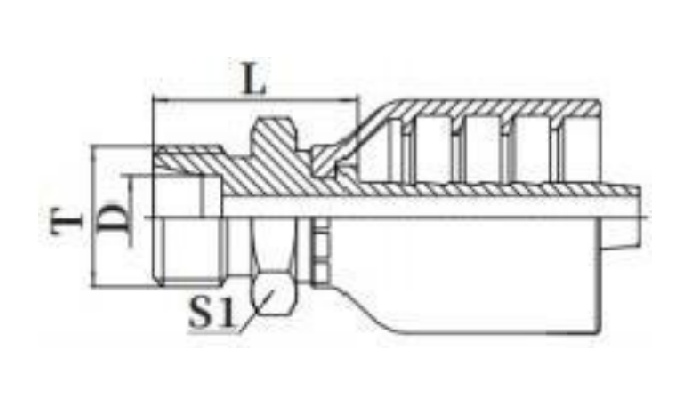
The tail behind the coupling. A bench that is opened every shift is a bench where this joint is made up over and over.
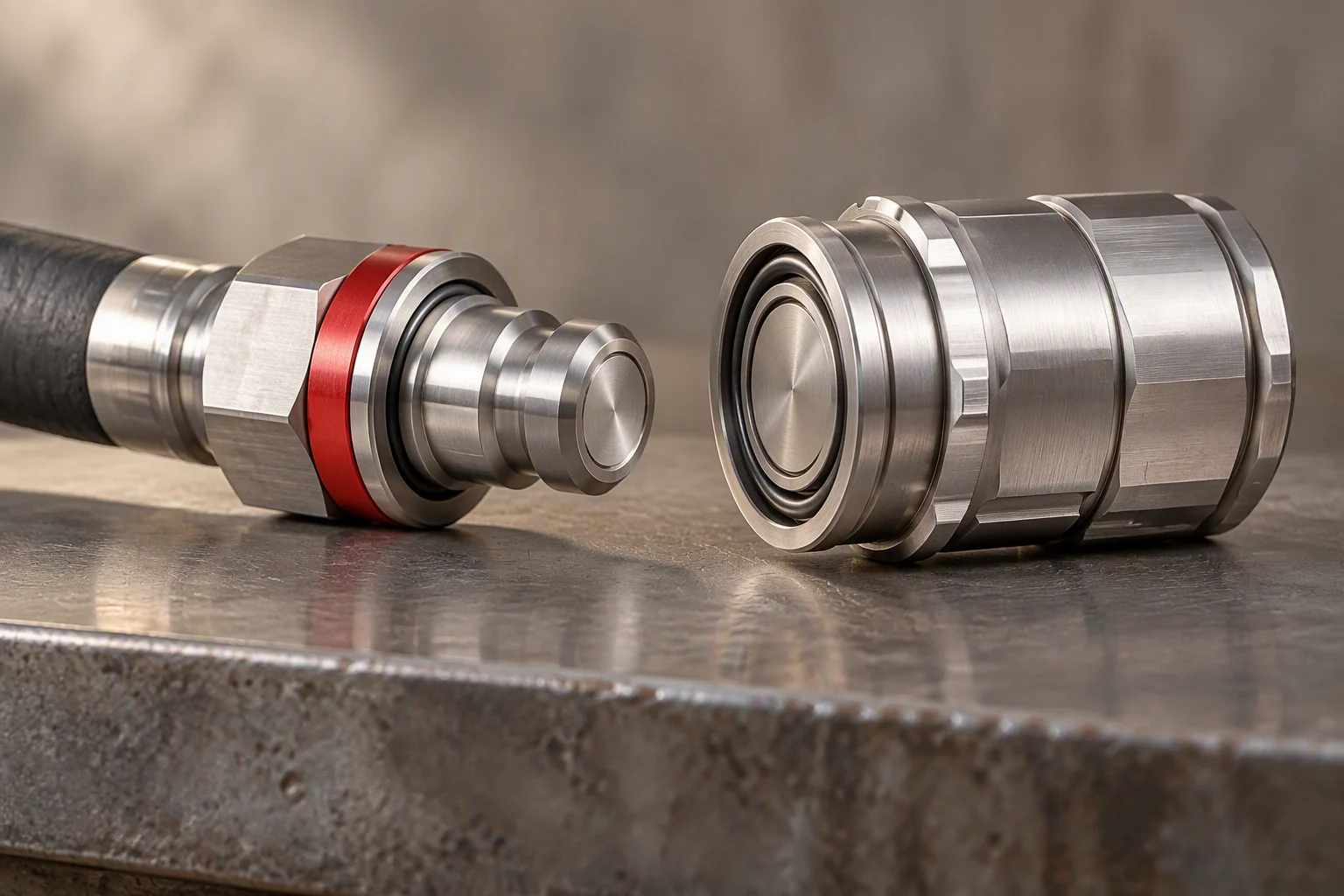
Both halves closed. A dry-break pair that is parted with one half open is a spill on the bench floor, not a drip in a tray.
The standards this sheet is quoted under
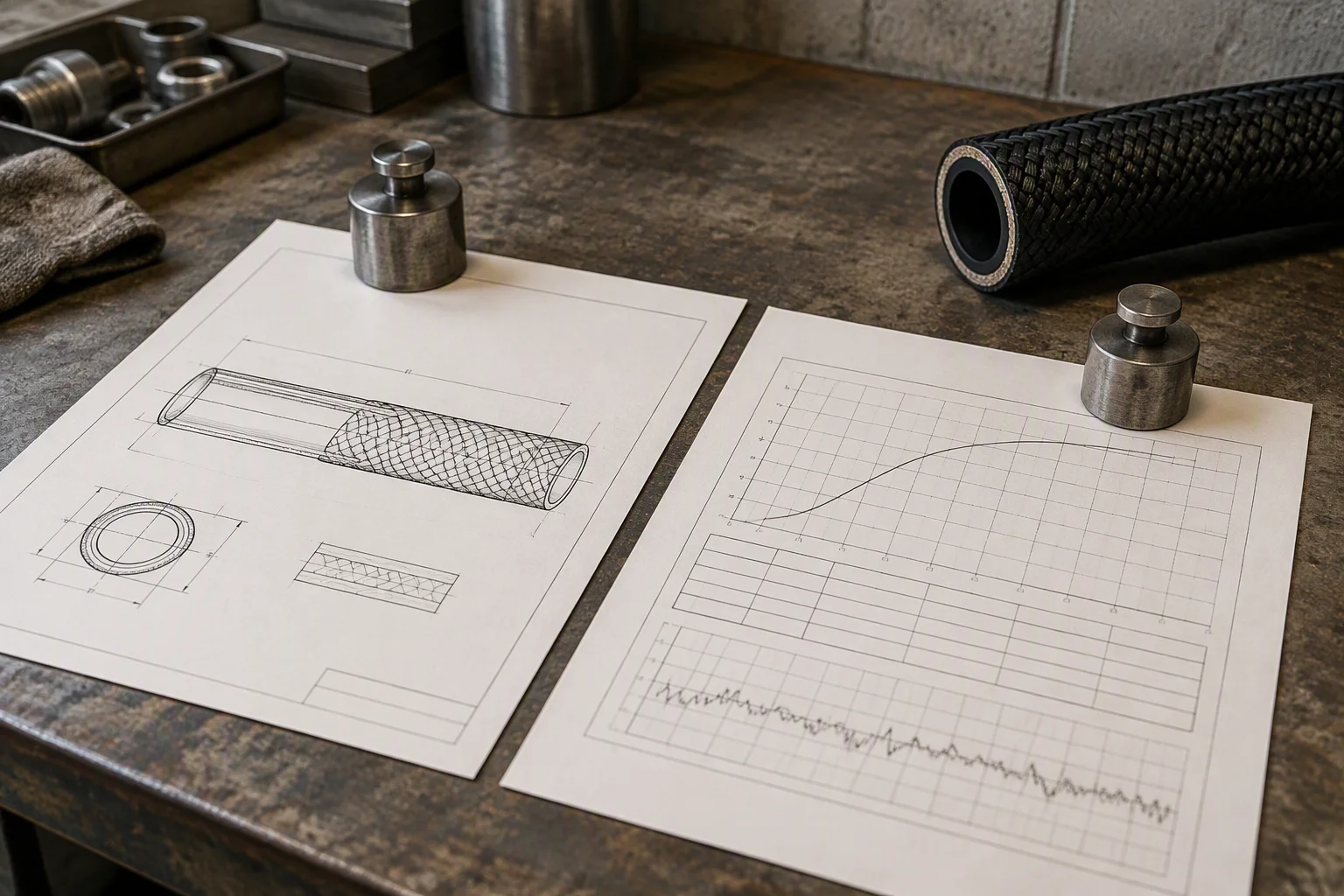
The two pages a bench customer actually files: the material certificate and the burst report.
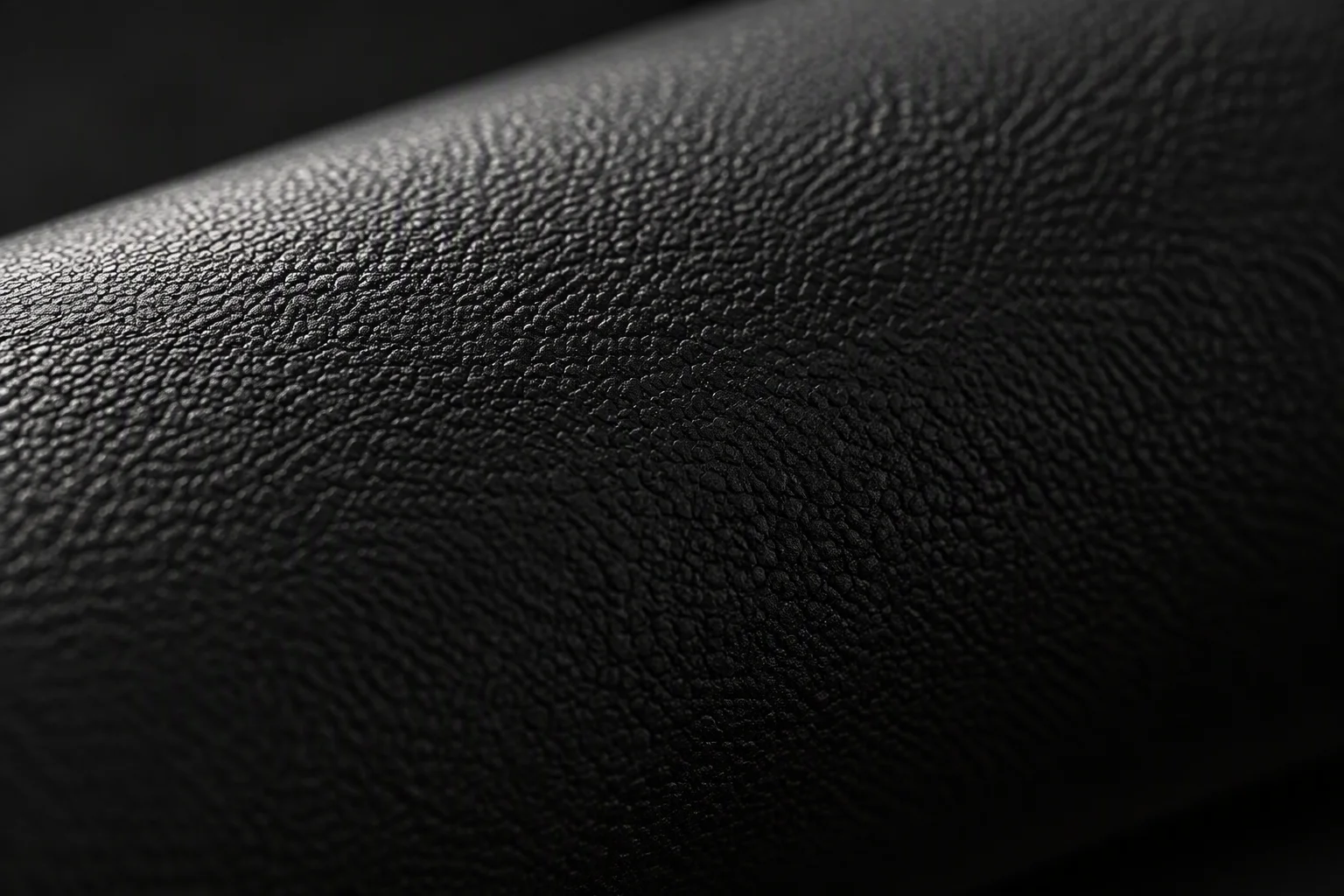
The cover of the UL 94 V-0 compound. It is the one layer of the wall that is never wetted and always inspected.
The three configuration forms we quote a bench on
These are the three shapes a bench loop is quoted in. No customer name and no project name is attached to any of them; the drawing and the consumable list are the record.
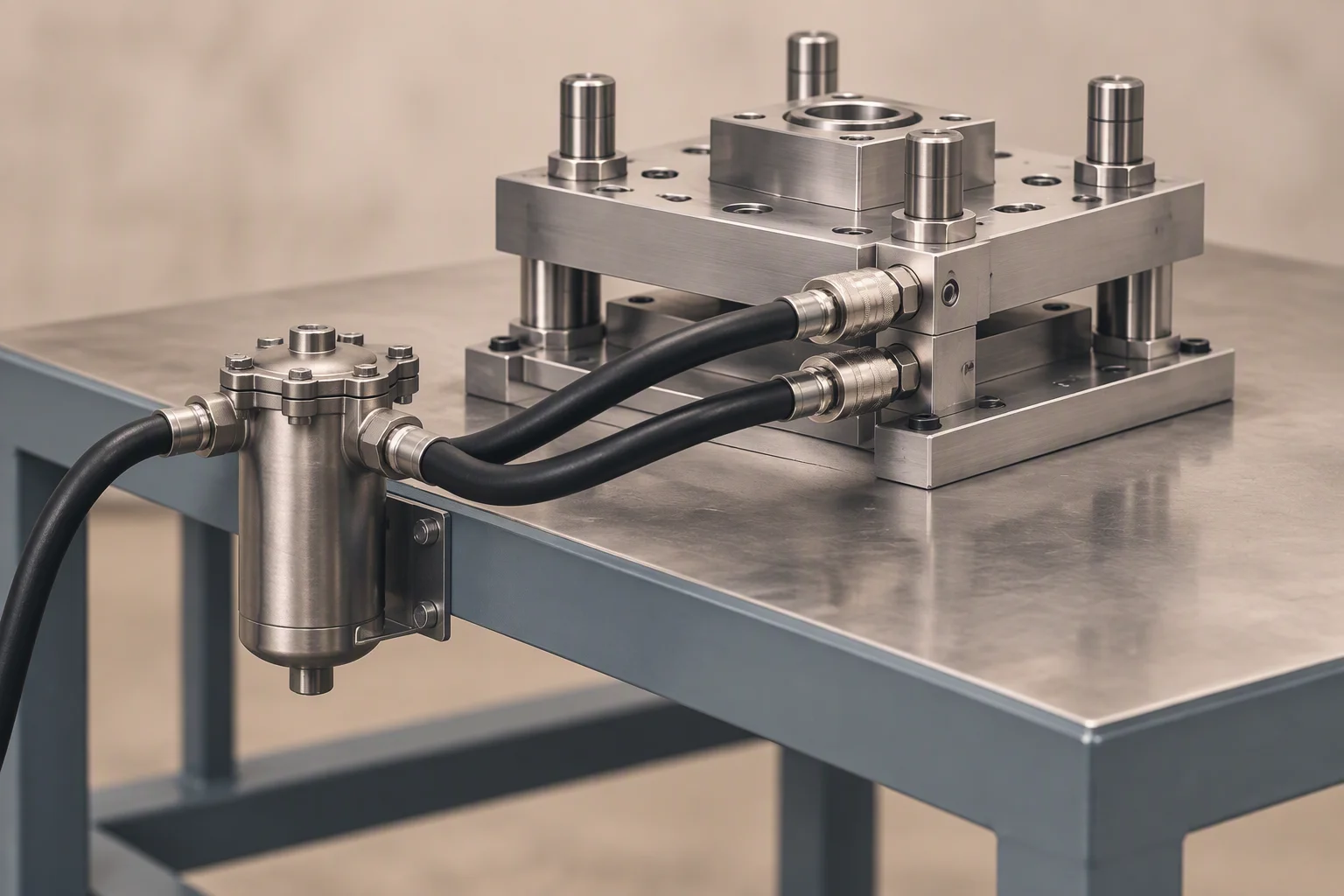
Form A · one fixture, one pair. The form most benches are, and the one where a wrong coupling half is found fastest.
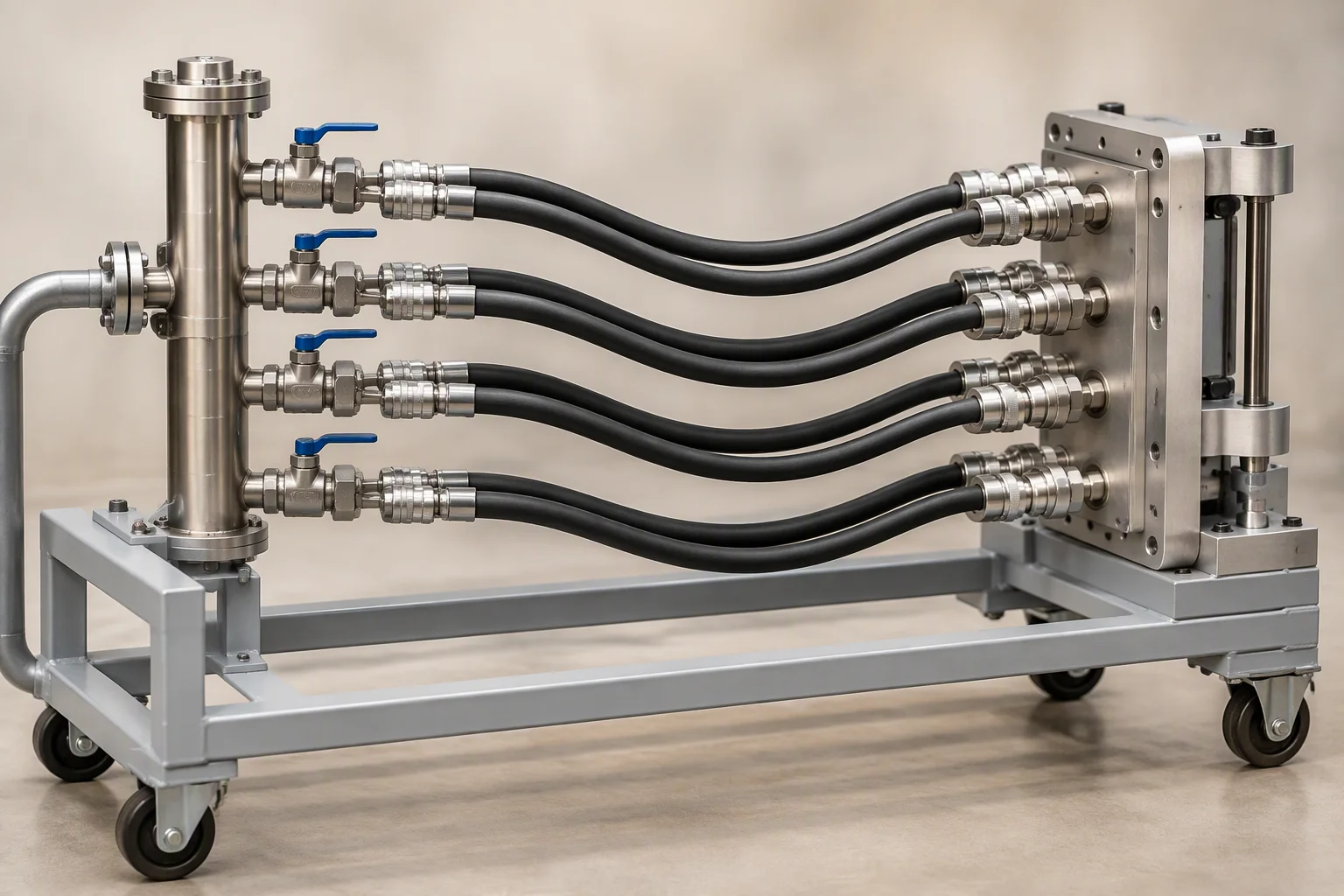
Form B · one fixture, four pairs. The manifold does the splitting, and every branch carries its own pair and its own valve.
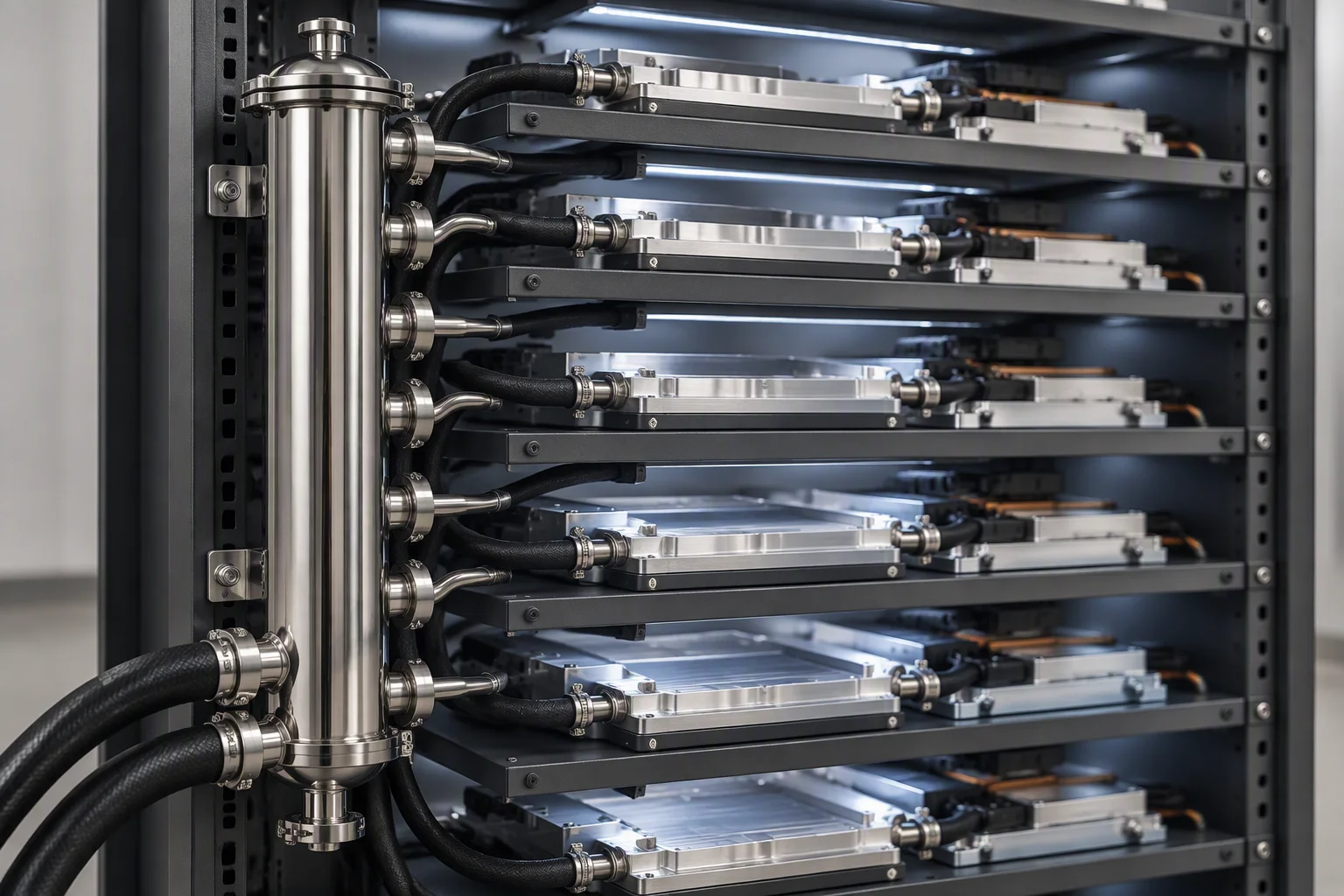
Form C · many plates, one pair. Lowest cost per bench and the highest number of make-and-breaks on the one pair that serves it.
A configuration form is quoted with its consumable list, its drawing and the delivery figures that apply to it: sampling 7–10 days, production 25–35 days, and standard lengths out of stock against 500 m on a custom run.
On this sheet · Quick disconnects · EPDM hose · Filter cartridges · Fill and flush
Request the bench loop file
Schedule A, the loop drawing, the material certificate and the burst report. Tick what you need.
One business day, with the file attached.
Nothing else on this sheet is promised. Price, stock and lead time are quoted against a request.
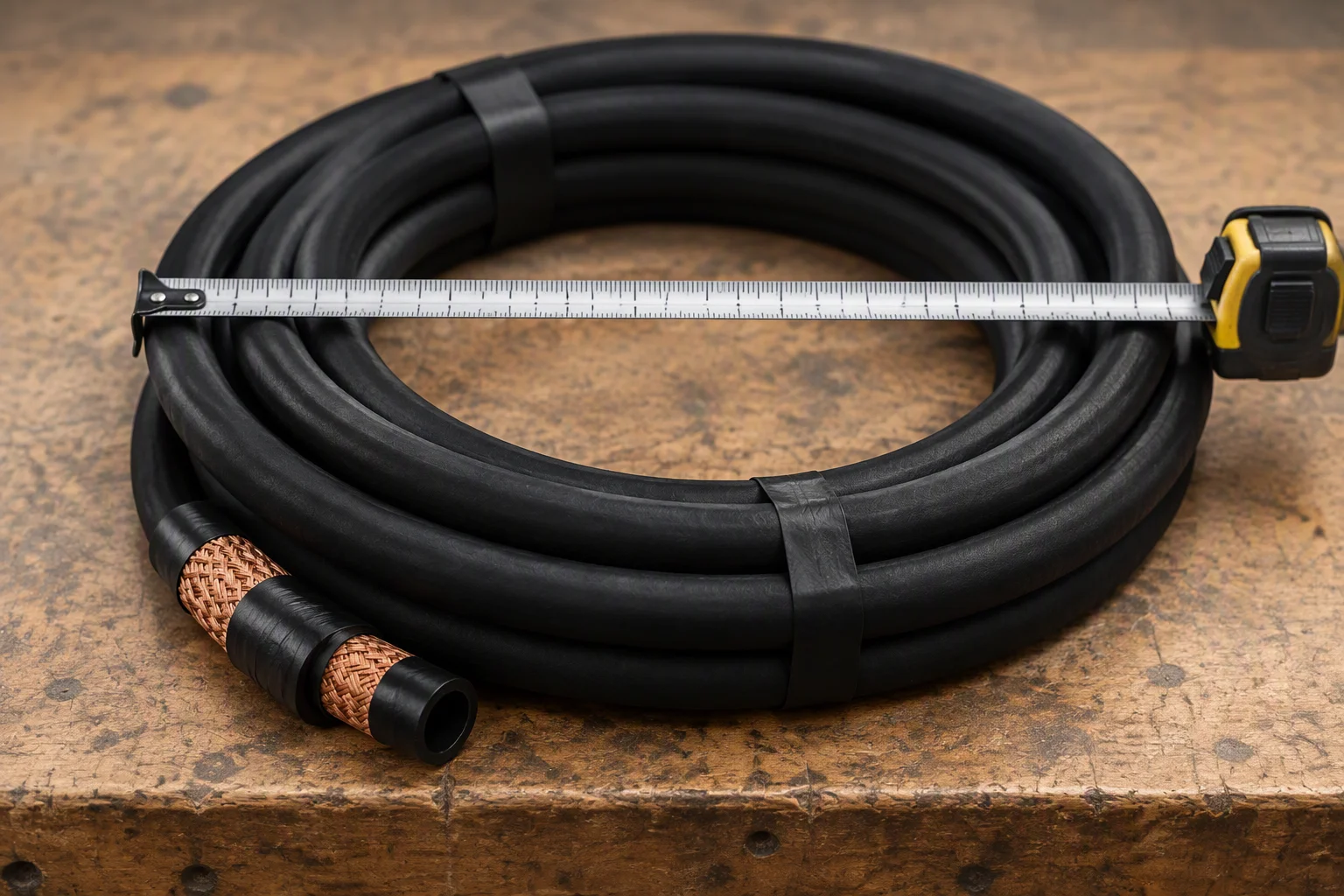
Cut to the drawing for the bench it is going on. Standard lengths ship out of stock the same week.
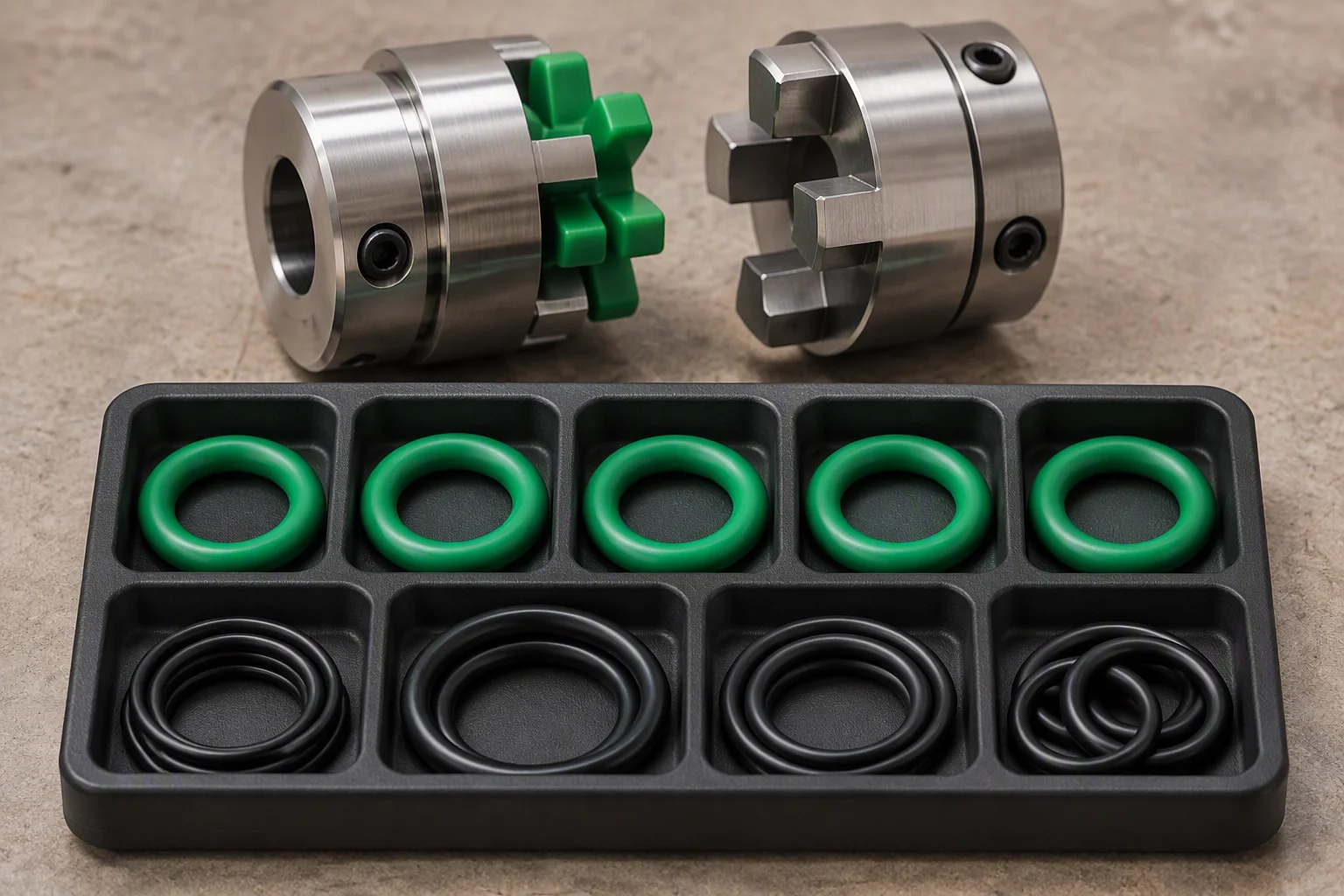
The rebuild kit. On a bench opened every shift, seals are ordered by the tray rather than by the piece.